
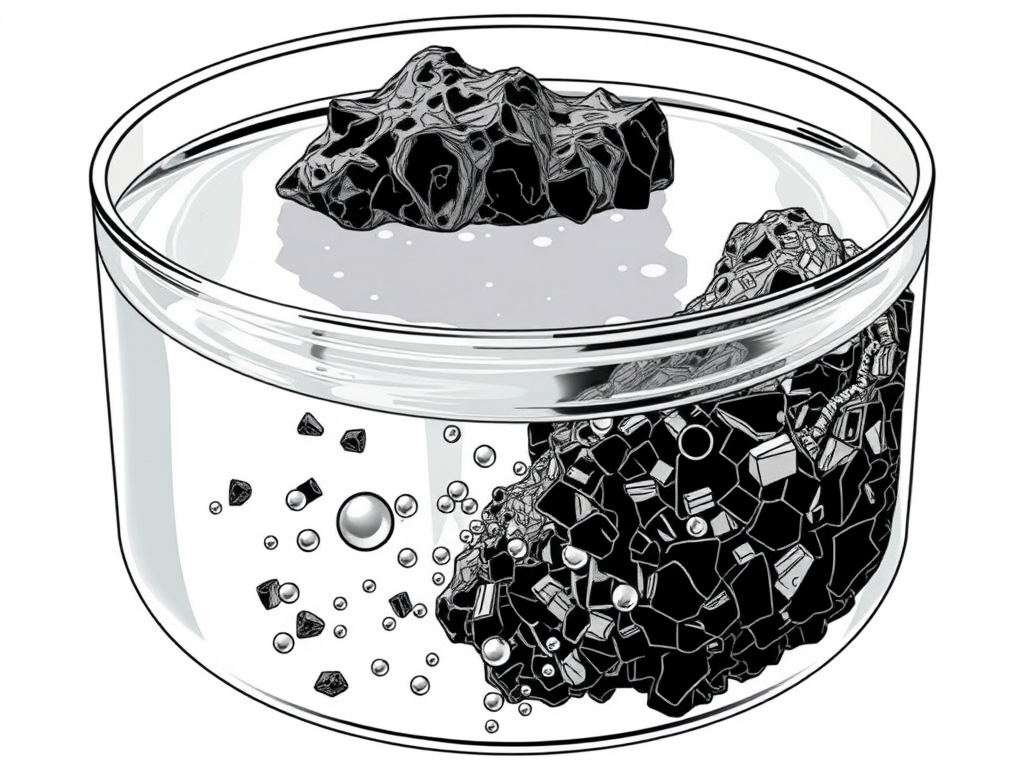
Lead contamination in water is a persistent environmental issue, threatening human health and ecosystems. Traditional removal methods can be costly and inefficient. A recent study published in Scientific Reports by Saeid Gitipour, Mahsa Sanaei, Razyeh Lak, and Abdolreza Karbassi investigates an innovative approach: using magnetic biocharBiochar is a carbon-rich material created from biomass decomposition in low-oxygen conditions. It has important applications in environmental remediation, soil improvement, agriculture, carbon sequestration, energy storage, and sustainable materials, promoting efficiency and reducing waste in various contexts while addressing climate change challenges. More to adsorb and remove lead (Pb(II)) from polluted water. This study highlights the potential of a low-cost, efficient, and reusable material for water remediation.
Magnetic biochar was synthesized by pyrolyzing a mixture of siderite and sawdust in an oxygen-free environment, enhancing its surface properties and introducing magnetic characteristics. This material exhibited a high specific surface area and a porous structure, making it an effective adsorbent. Unlike conventional biochar, which can be difficult to separate from water after use, magnetic biochar can be easily retrieved using a magnet, allowing for multiple reuse cycles.
The researchers conducted adsorption experiments under different conditions, including variations in pHpH is a measure of how acidic or alkaline a substance is. A pH of 7 is neutral, while lower pH values indicate acidity and higher values indicate alkalinity. Biochars are normally alkaline and can influence soil pH, often increasing it, which can be beneficial More and temperature. One of the key advantages of this magnetic biochar is its reusability. The material retained significant adsorption efficiency even after five desorption cycles, suggesting its potential for long-term application. Additionally, the magnetic properties, imparted by siderite-derived magnetite, simplify separation from treated water, addressing a major limitation of conventional biochar.
The implications of this research are significant. As industries continue to discharge heavy metals into water bodies, scalable and cost-effective remediation technologies are urgently needed. Magnetic biochar could provide an accessible and environmentally friendly solution for lead removal in wastewater treatment plants and contaminated sites. While further research is required to optimize large-scale applications, this study presents a promising step toward sustainable water purification.
Source: Gitipour, S., Sanaei, M., Lak, R., & Karbassi, A. (2025). Effective elimination of Pb (II) cations from wastewater and polluted water using siderite magnetic biochar. Scientific Reports, 15, 7912. https://doi.org/10.1038/s41598-025-92073-x



Leave a Reply