
Key Takeaways
- Scientists have developed a new cleaning material using an indigenous grass that effectively removes industrial pollutants from water.
- This material is highly successful at capturing toxic blue dye, which is a common and dangerous waste product from the textile industry.
- The cleaning agent has magnetic properties that allow it to be easily collected and removed from water after the purification process is finished.
- Using agricultural waste like giant grass provides an environmentally friendly way to recycle plant materials while fighting water pollution.
- The study demonstrates that this method works quickly and could help provide safer water for communities impacted by industrial manufacturing.
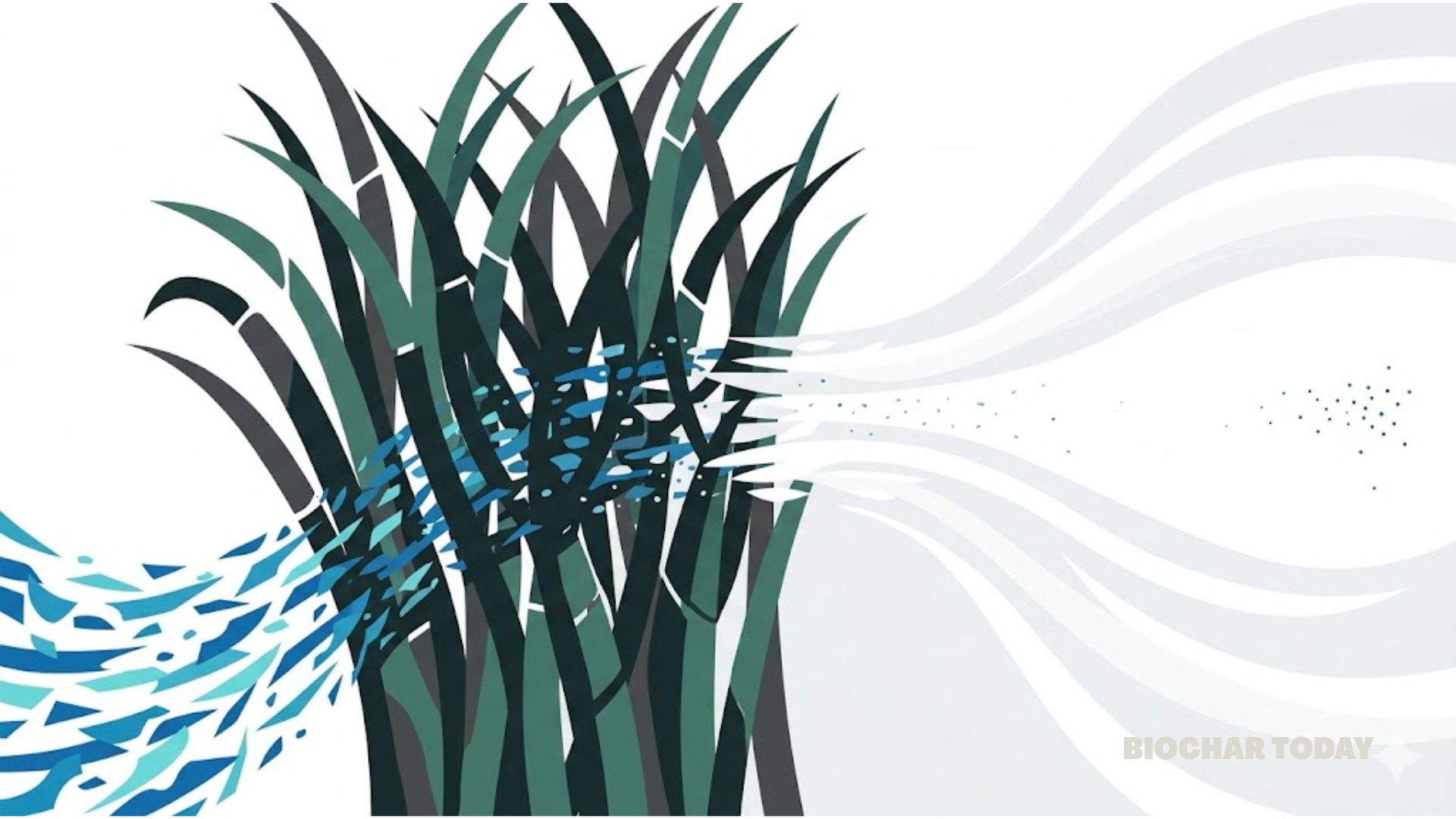
The research published in Scientific Reports by Jemal Fito Nure and an international team of environmental engineers introduces a sophisticated adsorbent designed to tackle the growing problem of textile industry pollution. The presence of synthetic dyes like methylene blue in water systems is a major global concern because these chemicals block sunlight from reaching aquatic plants and can cause serious health issues in humans. Traditional water treatment methods are often too expensive or require too much energy to be practical for widespread use. To address this, the researchers turned to giant grass, a plant indigenous to Ethiopia, as a sustainable source for creating biocharBiochar is a carbon-rich material created from biomass decomposition in low-oxygen conditions. It has important applications in environmental remediation, soil improvement, agriculture, carbon sequestration, energy storage, and sustainable materials, promoting efficiency and reducing waste in various contexts while addressing climate change challenges. More. By combining this grass-based charcoalCharcoal is a black, brittle, and porous material produced by heating wood or other organic substances in a low-oxygen environment. It is primarily used as a fuel source for cooking and heating. More with magnetite and graphitic carbon nitride, the team developed a composite that is not only highly efficient at catching pollutants but also magnetic. This magnetic quality is crucial because it allows the cleaning material to be easily pulled out of the water using an external magnet once the purification process is complete, preventing the adsorbent itself from becoming a new source of waste.
The effectiveness of this new material stems from its unique physical and chemical structure. The biochar framework provides a porous surface filled with cracks and holes that act like a sponge to trap dye molecules. Characterization tests revealed that the material has a high fixed carbon content of over fifty-five percent and a significant surface area, providing ample room for the dye to attach. When this material was tested under optimal conditions, it successfully removed ninety-three percent of methylene blue from the water. The study found that the best results occurred when the water was at a neutral acidity level and the material was allowed to work for approximately seventy-two minutes. This high level of performance is particularly impressive because it suggests the material could be a viable alternative to much more expensive commercial filtration systems.
A major highlight of the findings is how the different components of the composite work together to enhance the cleaning process. While plain biochar can sometimes struggle to catch multiple types of pollutants at once, the addition of graphitic carbon nitride improves the material’s surface activity and its ability to interact with complex organic compounds like dyes. Simultaneously, the iron oxide particles ensure the material remains physically strong and chemically stable. This ternary integration overcomes common limitations in earlier water treatment technologies, such as the difficulty of separating fine cleaning powders from treated water. The researchers used advanced statistical modeling to prove that the success of the dye removal was consistent and predictable, showing a very high signal-to-noise ratio in their experimental data. This mathematical validation gives confidence that the technology could eventually be scaled up for use in real-world industrial settings.
Beyond its immediate cleaning power, the study explored the sustainability and long-term use of the material. The researchers tested how many times the composite could be cleaned and reused. While the performance was excellent for the first cycle, removing over seventy-eight percent of the dye, the efficiency began to drop afterward as the tiny pores on the surface became saturated. This indicates that while the material is a powerful solution, its reusability is currently limited to the first three cycles where it maintains at least fifty percent removal. When the material finally reaches the end of its useful life, the authors suggest it can be safely managed through thermal mineralization at high temperatures or by being immobilized in cement for construction. This approach ensures that the entire lifecycle of the product remains environmentally responsible. Overall, the research provides a clear roadmap for using natural waste products to create high-tech solutions for pressing environmental challenges.
Source: Nure, J. F., Erkan, H. S., Babaee, S., Hassan, M., Mafa, P. J., & Tibabu, S. (2026). Developing giant grass biochar-Fe3O4-g-C3N4 composite for the adsorption of methylene blue from aqueous solutions. Scientific Reports.



Leave a Reply