
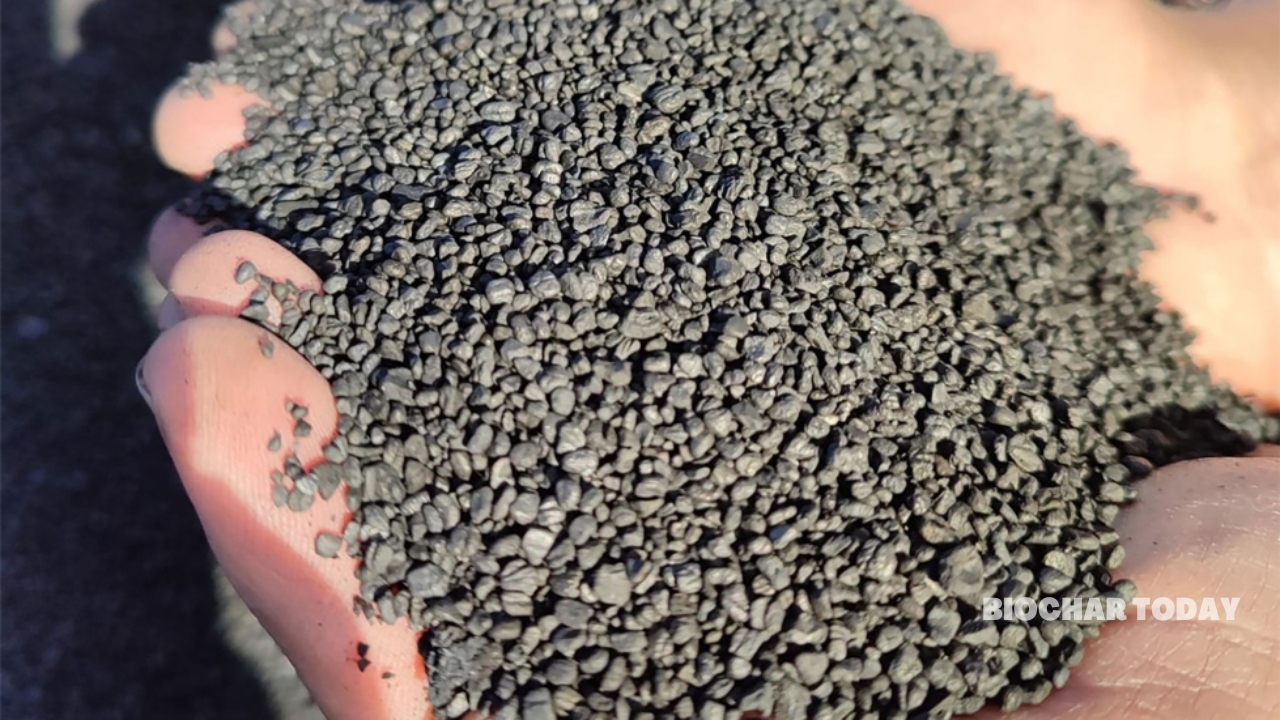
The City Council of Barcelona, in collaboration with the construction group Sorigué, has initiated a pilot project to test a sustainable pavement enriched with biocharBiochar is a carbon-rich material created from biomass decomposition in low-oxygen conditions. It has important applications in environmental remediation, soil improvement, agriculture, carbon sequestration, energy storage, and sustainable materials, promoting efficiency and reducing waste in various contexts while addressing climate change challenges. More derived from olive pits. This initiative, part of the “Cerdà” street renovation in the Eixample district, involves the application of a specialized asphalt mixture across a 2,000-square-meter area. By substituting traditional mineral fillers with biochar, the project aims to integrate carbon sequestration directly into urban infrastructure. This trial represents a significant step in Spain’s efforts to decarbonize municipal construction projects and evaluate the long-term durability of carbon-negative materials in high-traffic urban environments.
The primary challenge addressed by this pilot is the high carbon intensity of conventional asphalt production and urban paving. Traditional road construction relies heavily on mineral fillers and bitumen, processes that contribute substantially to greenhouse gas emissions. Furthermore, city administrations face the logistical hurdle of managing agricultural waste streams, such as the massive quantities of olive pits generated by Spain’s olive oil industry. Finding a functional, industrial-scale application for these byproducts that simultaneously offsets the carbon footprint of essential infrastructure has remained a technical and economic difficulty for urban planners and contractors alike.
To resolve these issues, Sorigué developed a proprietary asphalt mixture that incorporates biochar produced through the pyrolysisPyrolysis is a thermochemical process that converts waste biomass into bio-char, bio-oil, and pyro-gas. It offers significant advantages in waste valorization, turning low-value materials into economically valuable resources. Its versatility allows for tailored products based on operational conditions, presenting itself as a cost-effective and efficient More of olive pits. This biochar acts as a stable carbon sink, effectively “locking” carbon into the pavement for the duration of its lifecycle. The solution utilizes the biochar as a partial replacement for conventional aggregates, ensuring that the material meets the mechanical requirements for urban roads while drastically altering the carbon balance of the manufacturing process. This technical approach allows the city to repurpose an abundant local agricultural residue into a high-performance construction material.
The outcomes of the Barcelona pilot are notable, with preliminary data indicating a reduction in the pavement’s carbon footprint by up to 76 percent compared to traditional mixtures. Beyond the immediate emission reductions, the project provides a real-world testing ground to monitor the pavement’s resistance to wear, weather, and heavy traffic. If successful, this model offers a scalable blueprint for other Mediterranean cities to utilize agricultural waste for sustainable urban development. The collaboration between municipal authorities and private industry demonstrates a viable pathway for achieving climate neutrality through innovative material science and circular economy principles.



Leave a Reply