
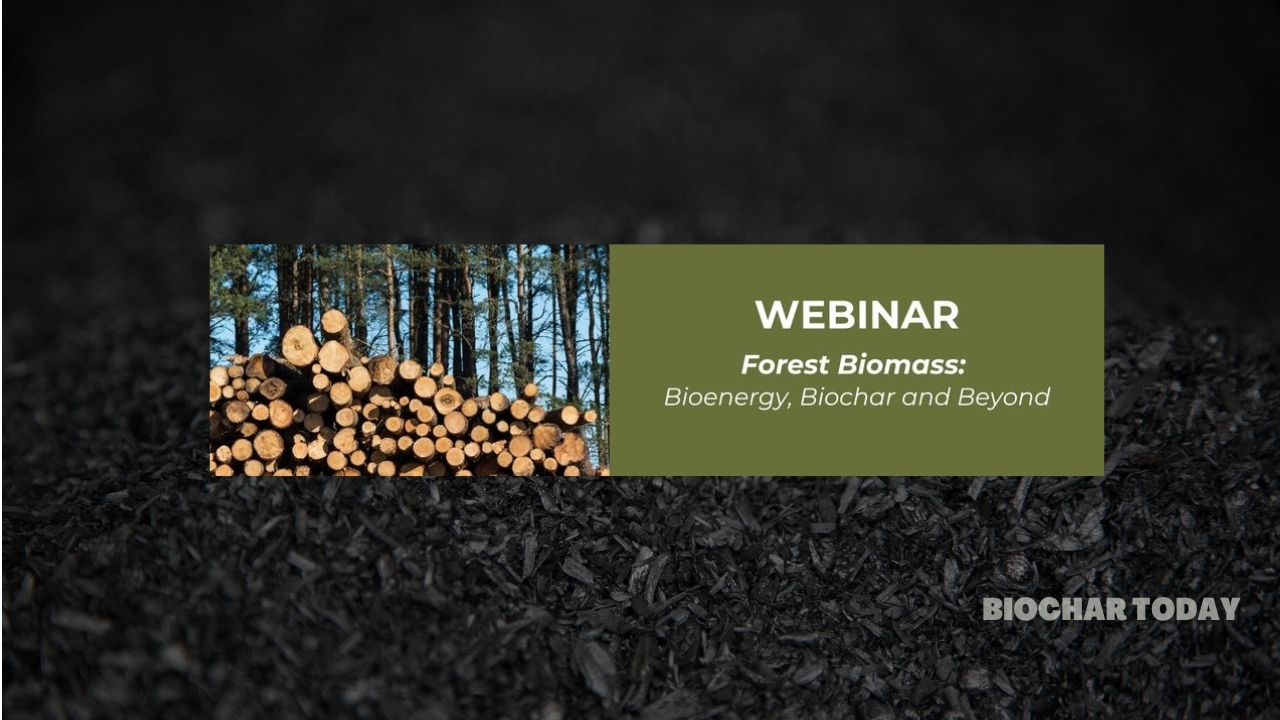
A specialized webinar, titled “Forest BiomassBiomass is a complex biological organic or non-organic solid product derived from living or recently living organism and available naturally. Various types of wastes such as animal manure, waste paper, sludge and many industrial wastes are also treated as biomass because like natural biomass these More: Bioenergy, BiocharBiochar is a carbon-rich material created from biomass decomposition in low-oxygen conditions. It has important applications in environmental remediation, soil improvement, agriculture, carbon sequestration, energy storage, and sustainable materials, promoting efficiency and reducing waste in various contexts while addressing climate change challenges. More and Beyond,” is scheduled to take place in Australia, featuring a panel of industry experts including Dr. Fabiano Ximenes, Melissa Rebbeck, and Andrew Lang. The event focuses on the emerging applications of forest biomass and the strategic implementation of pyrolysisPyrolysis is a thermochemical process that converts waste biomass into bio-char, bio-oil, and pyro-gas. It offers significant advantages in waste valorization, turning low-value materials into economically valuable resources. Its versatility allows for tailored products based on operational conditions, presenting itself as a cost-effective and efficient More technology within the Australian forestry sector. The presentations aim to provide a comprehensive overview of how timber residues can be reclassified from waste products into high-value commodities. By integrating biochar production with energy generation and carbon removal credits, the session seeks to establish a clear framework for enhancing resource efficiency and industry development.
The primary challenge addressed by the event is the economic and environmental inefficiency associated with low-value forest residues and timber waste. Historically, the forestry industry has struggled with the disposal of these materials, which often represent a significant logistical cost and a lost opportunity for revenue. Furthermore, the industry faces increasing pressure to improve sustainability outcomes and contribute to climate goals. The complexity of converting these diverse feedstocks into standardized, marketable products while navigating the constraints of the Australian regulatory and geographical landscape has hindered the widespread adoption of biomass-to-value pathways.
To resolve these challenges, the panel proposes the adoption of scalable, continuous pyrolysis systems and wood biomass technologies. Melissa Rebbeck’s presentation specifically details the transformation of waste streams into a triple-revenue model: biochar, renewable thermal energy, and certified carbon removal credits. Dr. Ximenes provides the necessary context on feedstockFeedstock refers to the raw organic material used to produce biochar. This can include a wide range of materials, such as wood chips, agricultural residues, and animal manure. More roles and constraints, while Andrew Lang integrates European case studies to demonstrate how timber waste can be successfully converted into electricity and fuels. This technical synergy allows for a circular economy approach where residues are processed on-site or at regional hubs to maximize value extraction.
The outcomes of implementing these strategies include the creation of new revenue streams and strengthened long-term climate benefits for the Australian forestry sector. By utilizing carbon removal credits and renewable energy, companies can offset operational costs and improve their ESG (Environmental, Social, and Governance) profiles. The use of case studies serves to de-risk the investment for industry stakeholders by providing empirical evidence of system scalability and resource efficiency. Ultimately, these advancements position forest biomass as a cornerstone of the regional bioeconomy, facilitating a transition toward higher-value industrial outputs and more robust sustainability standards.



Leave a Reply