
Key Takeaways
- Leftover wood waste from eucalyptus trees can be turned into an effective material that purifies polluted water.
- The engineered material rapidly attracts and captures dissolved aluminum ions from contaminated water supplies.
- The water purification process works best under mild acidity and releases heat while binding pollutants naturally.
- The material can be washed with a mild acidic solution and reused multiple times while maintaining high cleaning efficiency.
- Converting forestry waste into a water cleaning agent offers a cost-effective and environmentally friendly treatment option.
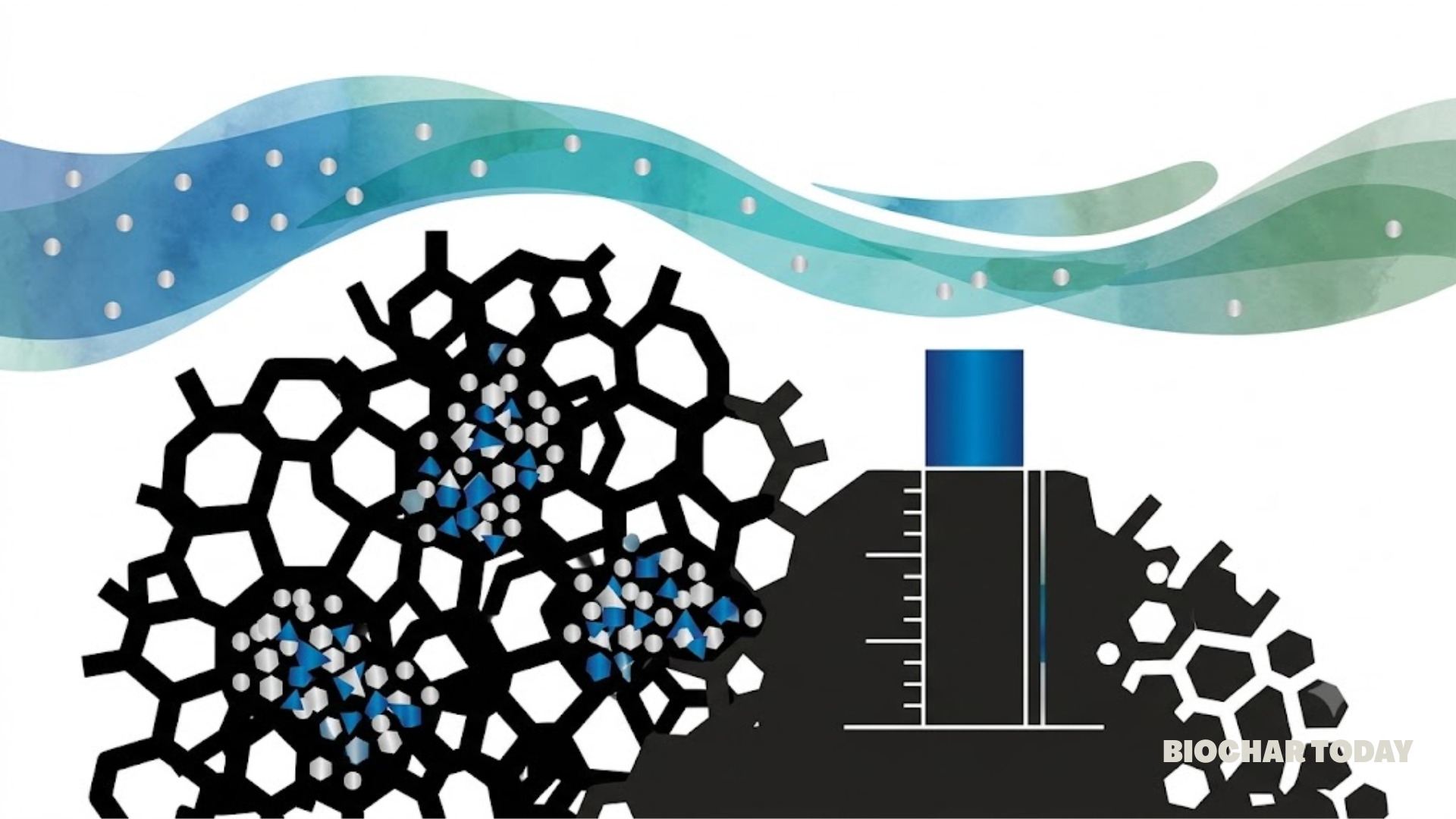
In a study published in Reaction Kinetics, Mechanisms and Catalysis, researchers Ahmed Salim, Maha Adel, Oumaima Mjahed, El mehdi El Handaoui, Mohamed Bennar, Amina Alaoui, Abderrahim Jrifi, Mohamed Tahiri, and Omar Tanane revealed a promising solution for removing toxic metal pollutants from water systems. Aluminum contamination in natural water supplies poses significant environmental and human health risks, particularly because excess exposure links to severe neurodegenerative conditions. Conventional water treatment processes often leave behind residual aluminum amounts that exceed safe international drinking guidelines. To address this persistent challenge, the research team transformed abundant eucalyptus wood waste into a highly efficient porous biocharBiochar is a carbon-rich material created from biomass decomposition in low-oxygen conditions. It has important applications in environmental remediation, soil improvement, agriculture, carbon sequestration, energy storage, and sustainable materials, promoting efficiency and reducing waste in various contexts while addressing climate change challenges. More adsorbent capable of extracting aluminum ions from contaminated solutions.
The converted biochar demonstrated exceptional structural and chemical properties that drive its high purification performance. Characterization revealed a mesoporous architecture with an average pore size of 3.82 nanometers and a specific surface area of 18.37 square meters per gram. This structural configuration provides an extensive network of accessible pathways that allow aluminum ions to diffuse rapidly into the inner binding sites of the material. Additionally, spectroscopic testing confirmed that the surface of the biochar is rich in oxygen-bearing functional groups, including hydroxyl, carboxyl, and carbonyl chemical groups. These surface functional groups act as active binding targets, forming stable chemical complexes and facilitating electrostatic interactions with dissolved aluminum ions.
PDF+ 4
The experimental results highlight the remarkable speed and efficiency of the adsorption process. The biochar achieved rapid pollutant uptake, absorbing 80 percent of the total aluminum content within just 30 minutes of contact time. Full equilibrium occurred within 90 minutes, demonstrating kinetics well suited for real-world continuous water purification systems. Operational testing established that the highest removal efficiency occurs at a pHpH is a measure of how acidic or alkaline a substance is. A pH of 7 is neutral, while lower pH values indicate acidity and higher values indicate alkalinity. Biochars are normally alkaline and can influence soil pH, often increasing it, which can be beneficial More level of 5.0, where the biochar surface carries an optimal negative charge that strongly attracts positively charged aluminum ions. At an optimal adsorbent dosage of 0.3 grams per liter, the biochar achieved an 88 percent removal efficiency and an adsorption capacity of 73 milligrams per gram under standard testing conditions.
The equilibrium findings proved that the biochar possesses an extraordinary overall adsorption capacity. Mathematical modeling revealed that the process aligns closely with monolayer chemical adsorption across a uniform surface, yielding a maximum theoretical capacity of 139.2 milligrams of aluminum per gram of biochar. When tested across higher initial pollutant concentrations, the material reached an experimental capacity of 142 milligrams per gram. This performance significantly outperforms conventional treatment materials reported in scientific literature, such as commercial activated carbonActivated carbon is a form of carbon that has been processed to create a vast network of tiny pores, increasing its surface area significantly. This extensive surface area makes activated carbon exceptionally effective at trapping and holding impurities, like a molecular sponge. It is commonly More, agricultural date pit adsorbents, and specialized synthetic resins, which typically record capacities below 55 milligrams per gram.
Thermodynamic evaluations provided further insight into the fundamental behavior of the purification process. The chemical interaction between the biochar and aluminum ions is spontaneous and exothermic, releasing 38.53 kilojoules per mole of energy during binding. Because the reaction releases heat, lower ambient temperatures favor higher pollutant uptake, with adsorption capacity reaching 85 milligrams per gram at 20 degrees Celsius compared to 62 milligrams per gram at 60 degrees Celsius. Furthermore, kinetic mathematical models confirmed that chemical bonding, involving valence electron sharing between surface functional groups and metal ions, serves as the primary rate-limiting step in pollutant removal.
In addition to high performance, the eucalyptus biochar exhibited outstanding durability and practical economic viability. Recycling tests demonstrated that the material can be regenerated using a simple dilute hydrochloric acid wash. Over five consecutive adsorption and desorption cycles, the biochar retained 78 percent of its original removal capacity, starting from 92 percent in the first cycle and gradually decreasing to 78 percent by the fifth cycle. This strong recyclability, combined with the abundance of low-cost wood waste biomassBiomass is a complex biological organic or non-organic solid product derived from living or recently living organism and available naturally. Various types of wastes such as animal manure, waste paper, sludge and many industrial wastes are also treated as biomass because like natural biomass these More, positions eucalyptus biochar as a highly sustainable, powerful, and scalable candidate for industrial wastewater remediation.
Source: Salim, A., Adel, M., Mjahed, O., El Handaoui, E. M., Bennar, M., Alaoui, A., Jrifi, A., Tahiri, M., & Tanane, O. (2026). Eucalyptus wood waste-derived biochar for aluminum adsorption: kinetic, equilibrium, and thermodynamic studies for heavy metal remediation. Reaction Kinetics, Mechanisms and Catalysis.




Leave a Reply