
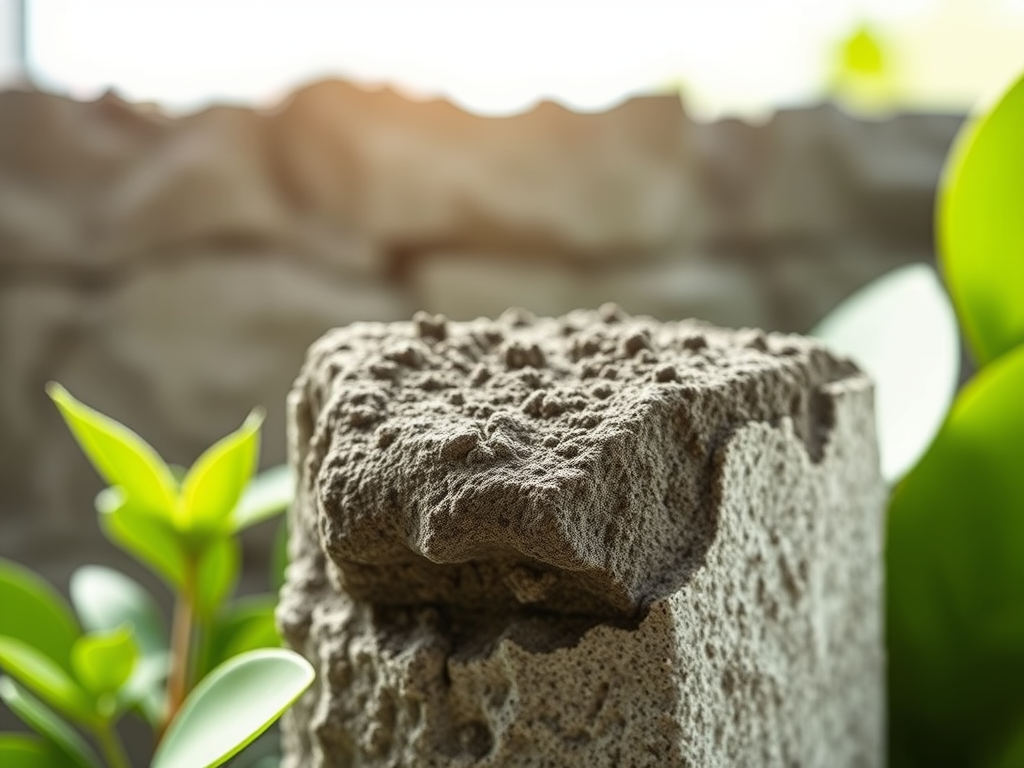
The global construction industry faces a significant challenge in reducing its carbon footprint, with cement production being a major contributor to CO2 emissions. In response, researchers are actively seeking sustainable alternatives that not only lessen environmental impact but also enhance material performance. A groundbreaking study published in Results in Engineering by Israr Ahmad, Faheem Butt, and Anwar Khitab investigates the promising application of biocharBiochar is a carbon-rich material created from biomass decomposition in low-oxygen conditions. It has important applications in environmental remediation, soil improvement, agriculture, carbon sequestration, energy storage, and sustainable materials, promoting efficiency and reducing waste in various contexts while addressing climate change challenges. More derived from Prosopis juliflora, an invasive plant species, as a sustainable additive in cement mortar. Their findings reveal that small additions of this unique biochar can lead to notable improvements in mechanical, physical, and durability properties, offering a dual advantage for a more eco-friendly construction sector.
The biochar used in this study was produced through pyrolysisPyrolysis is a thermochemical process that converts waste biomass into bio-char, bio-oil, and pyro-gas. It offers significant advantages in waste valorization, turning low-value materials into economically valuable resources. Its versatility allows for tailored products based on operational conditions, presenting itself as a cost-effective and efficient More at 600∘C under limited oxygen, successfully retaining a high 83% stable carbon, indicating its potential for long-term carbon sequestration. This high carbon content positions P. juliflora biochar competitively against other biomass-derived biochars, such as rice husk (36-53% carbon) and cassava (37-42% carbon), even at lower pyrolysis temperatures compared to some high-carbon alternatives. The process of converting an invasive species like P. juliflora into a value-added material addresses a dual challenge: managing an ecological threat and developing sustainable building materials. The study evaluated various dosages of biochar (0%, 0.05%, 0.1%, 0.15%, and 0.2% by cement weight) over 90 days. The results consistently pointed to the 0.1% biochar dosage as optimal for enhancing mortar performance. At this precise concentration, compressive strength increased by 11.5%, flexural strength by 21%, and density by 3.5% when compared to the control samples. This enhancement in strength at low dosages can be attributed to the rough and elongated surface morphology of biochar particles, which facilitates mechanical interlocking and improved bonding with the cement matrix. Additionally, biochar’s porous structure and high surface area allow it to absorb and retain mixing water , which is gradually released to aid internal curing and promote continued hydration , ultimately contributing to matrix densification.
The positive impact of biochar extends beyond mechanical properties to crucial aspects of durability. The 0.1% biochar dosage led to a significant 21% reduction in porosityPorosity of biochar is a key factor in its effectiveness as a soil amendment and its ability to retain water and nutrients. Biochar’s porosity is influenced by feedstock type and pyrolysis temperature, and it plays a crucial role in microbial activity and overall soil health. Biochar More compared to the control. This initial decrease in porosity is linked to the biochar particles filling micro-voids and refining the microstructure of the cementitious composite. Lower porosity is critical for improving the material’s resistance to external environmental factors. Further durability tests reinforced these findings. X-ray Diffraction (XRD) and carbonation tests revealed reduced calcium carbonate formation and improved carbonation resistance. The 0.1% biochar dosage showed the least carbonation depth, indicating optimal resistance to CO2 diffusion. This is due to biochar enhancing internal curing and reducing CO2 penetration into the matrix. Freeze-thaw tests also demonstrated enhanced durability due to reduced permeability from the pore-refining effect. The 0.1% dosage retained 93.8% of its compressive strength after 100 cycles, compared to 89.9% for the control.
Thermal tests showed a dual effect: at lower dosages ( ≤ 0.1%), biochar acted as a dehydration promoter, facilitating moisture escape and leading to increased mass loss (e.g., 3.62% at 0.1% biochar). In contrast, at higher dosages (> 0.1%), biochar functioned as a thermal insulator, slowing heat transfer or adsorbing moisture, thereby reducing mass loss. This helped minimize microcracking and preserve strength at elevated temperatures (up to 450∘C). The improved residual bending strength at high temperatures was attributed to the crack-bridging effect of biochar. These benefits are closely tied to the densification and pore refinement of the cement matrix, achieved without increasing the cement content. While promising, increasing biochar content beyond the optimal 0.1% generally led to a slight decline in strength and an increase in porosity. This is likely due to particle agglomeration and an increase in total pore volume at higher concentrations. Despite this, performance still remained superior to the control.
This research highlights P. juliflora biochar as a promising, waste-derived alternative to conventional additives. It offers a synergistic benefit by enhancing mortar performance and reducing the construction sector’s carbon footprint, aligning with circular economy principles and global sustainability goals like SDG 11 (Sustainable Cities and Communities), SDG 12 (Responsible Consumption and Production), and SDG 13 (Climate Action). Future research will delve into its performance in blended cements and specialized concrete applications, along with life cycle and techno-economic analyses to further scale its adoption globally.
Source: Ahmad, I., Butt, F., & Khitab, A. (2025). Enhancing cementitious systems with biochar derived from invasive Prosopis juliflora. Results in Engineering, 27, 106208.



Leave a Reply