
Key Takeaways
- Researchers successfully grew Spirulina microalgae using household wastewater, turning a waste product into a valuable resource for clean energy and bioplastics.
- The process produces a natural blue pigment that can be used in the food and medicine industries, while the leftover material is turned into eco-friendly plastic.
- The final stage of the process creates biocharBiochar is a carbon-rich material created from biomass decomposition in low-oxygen conditions. It has important applications in environmental remediation, soil improvement, agriculture, carbon sequestration, energy storage, and sustainable materials, promoting efficiency and reducing waste in various contexts while addressing climate change challenges. More, a stable form of carbon that helps clean the environment and can be used for better soil health.
- Algae-based plastics created in this study are biodegradable, meaning they break down naturally without harming the planet like traditional plastics do.
- This “zero-waste” approach helps reduce carbon emissions, moving us closer to global goals for a healthier and more sustainable environment.
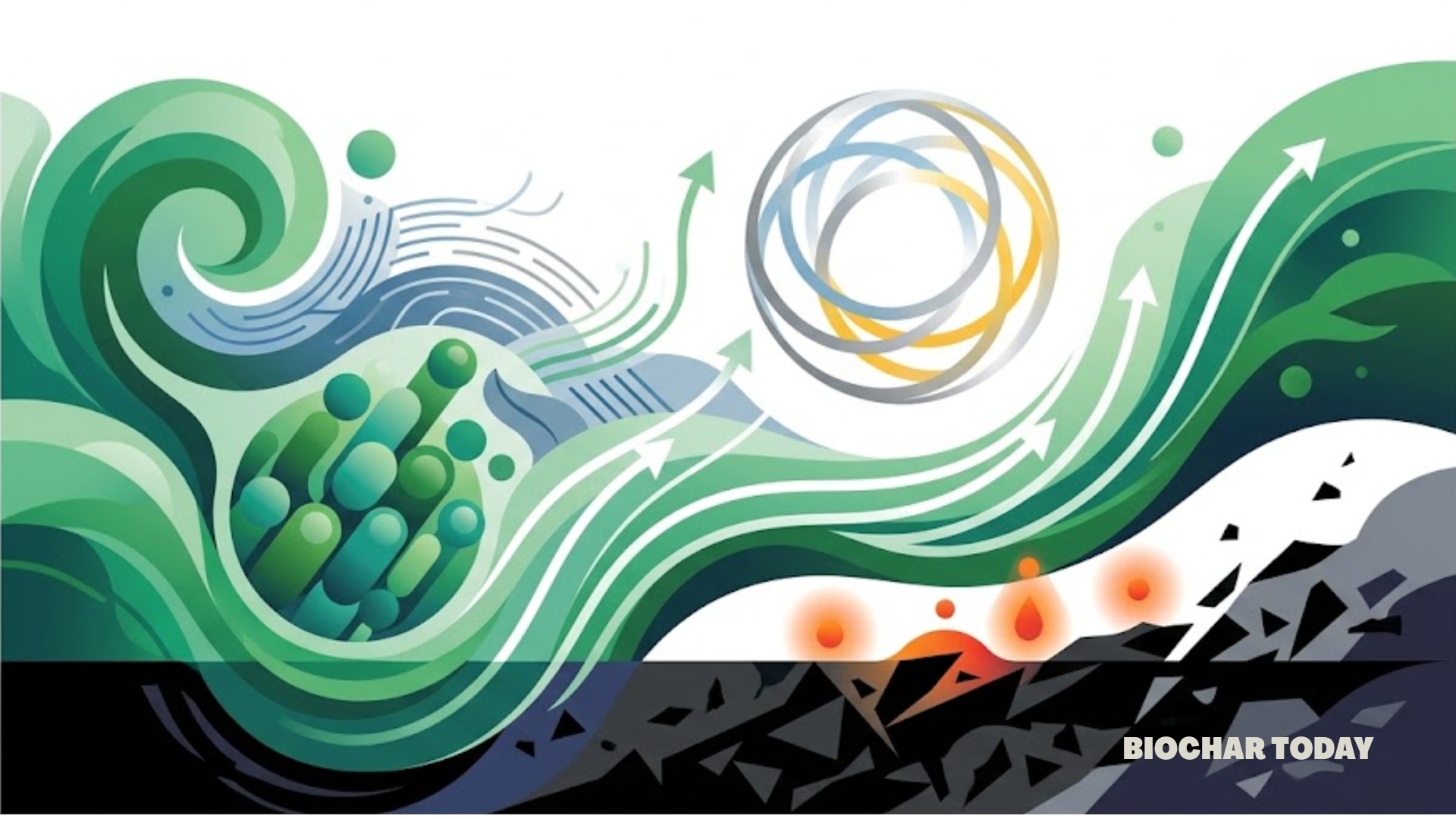
In a pioneering study published in the journal DeCarbon, lead author Agila E and a multidisciplinary team of researchers from Saveetha University and international partners explore a sustainable solution to the dual crises of plastic pollution and wastewater management. The unregulated growth of cities has led to a massive rise in human-made waste, with plastic surface deposition potentially tripling by 2060. To address this, the researchers utilized the microalgal species Spirulina to treat domestic wastewater while simultaneously developing high-value bioproducts. This integrated biorefinery approach demonstrates how wastewater can serve as an efficient medium for microalgae cultivation, facilitating nutrient removal and the production of biopolymers and biochar. This method not only valorizes waste but also contributes significantly to the global goal of carbon neutrality by capturing carbon dioxide during the algal growth phase.
The research findings reveal that Spirulina is highly effective at utilizing the nutrients present in domestic wastewater to build biomassBiomass is a complex biological organic or non-organic solid product derived from living or recently living organism and available naturally. Various types of wastes such as animal manure, waste paper, sludge and many industrial wastes are also treated as biomass because like natural biomass these More. Over a 16-day cultivation period in an open raceway system, biomass productivity rose steadily, reaching a maximum concentration of 0.83 grams per liter by the twelfth day. This peak yield highlights the proficiency of microalgae in recycling organic pollutants and inorganic compounds found in urban effluent. Following the harvest, the researchers successfully extracted phycocyanin, a valuable blue pigment with pharmacological properties, achieving a highest recovery of 22.5 milligrams per liter using a methanol-water solvent mixture. This initial extraction phase ensures that the most lucrative components of the algae are recovered before the remaining material is processed into structural products.
A critical outcome of the study is the successful transformation of the residual algal biomass into polyhydroxyalkanoate (PHA) bioplastics. Structural analysis through infrared spectroscopy confirmed that the Spirulina-derived PHA possesses functional groups similar to standard biodegradable polymers. The resulting bioplastic films exhibited a uniform thickness of 0.12 millimeters and demonstrated promising physical properties, including a water solubility rate of approximately 33 percent. These characteristics indicate that the material is both stable during use and prone to natural decomposition under the right environmental conditions. Unlike traditional petrochemical plastics, these algal-based alternatives are derived from renewable sources and do not contribute to long-term environmental persistence, offering a viable path for the sustainable packaging and biomedical industries.
The final stage of the valorization process involves the thermochemical conversion of the remaining biomass into functional biochar through a process called torrefaction. The study achieved a biochar yield of 31 percent by heating the residual matter to 250 degrees Celsius in an inert nitrogen environment. Thermal behavior analysis showed that this torrefied biochar possesses high fixed carbon content and improved thermal stability compared to raw biomass. This carbon-rich material serves multiple purposes, including hazardous pollutant adsorptionBiochar has a remarkable ability to attract and hold onto pollutants, like heavy metals and organic chemicals. This makes it a valuable tool for cleaning up contaminated soil and water. More in water treatment and soil remediation to improve agricultural productivity. By integrating these various production streams, the researchers have established a “zero-waste” framework that maximizes the utility of microalgal biomass while providing a renewable alternative to fossil fuels.
Ultimately, this study proves that domestic wastewater can be transformed from an environmental liability into a primary feedstockFeedstock refers to the raw organic material used to produce biochar. This can include a wide range of materials, such as wood chips, agricultural residues, and animal manure. More for the green economy. The ability to produce pigments, bioplastics, and biochar from a single algal culture grew in waste-enriched water provides a financially feasible and environmentally friendly model for future biorefineries. While challenges remain in optimizing PHA yields and managing the variability of wastewater composition, this research provides a clear roadmap for large-scale waste valorization. As the demand for bio-based materials continues to grow, such integrated systems will be essential for reducing our reliance on synthetic chemicals and achieving a truly circular bioeconomy that protects both human health and the global ecosystem.
Source: Agila, E., Goel, M., Kumar, G., VP, C., Priya, V. V., Ngamcharussrivichai, C., Flora, G., & Veeramuthu, V. (2026). Biochar Production with concomitant biopolymer accumulation of Microalgae-Based Wastewater treatment for carbon neutrality. DeCarbon, 100162.



Leave a Reply