
Key Takeaways
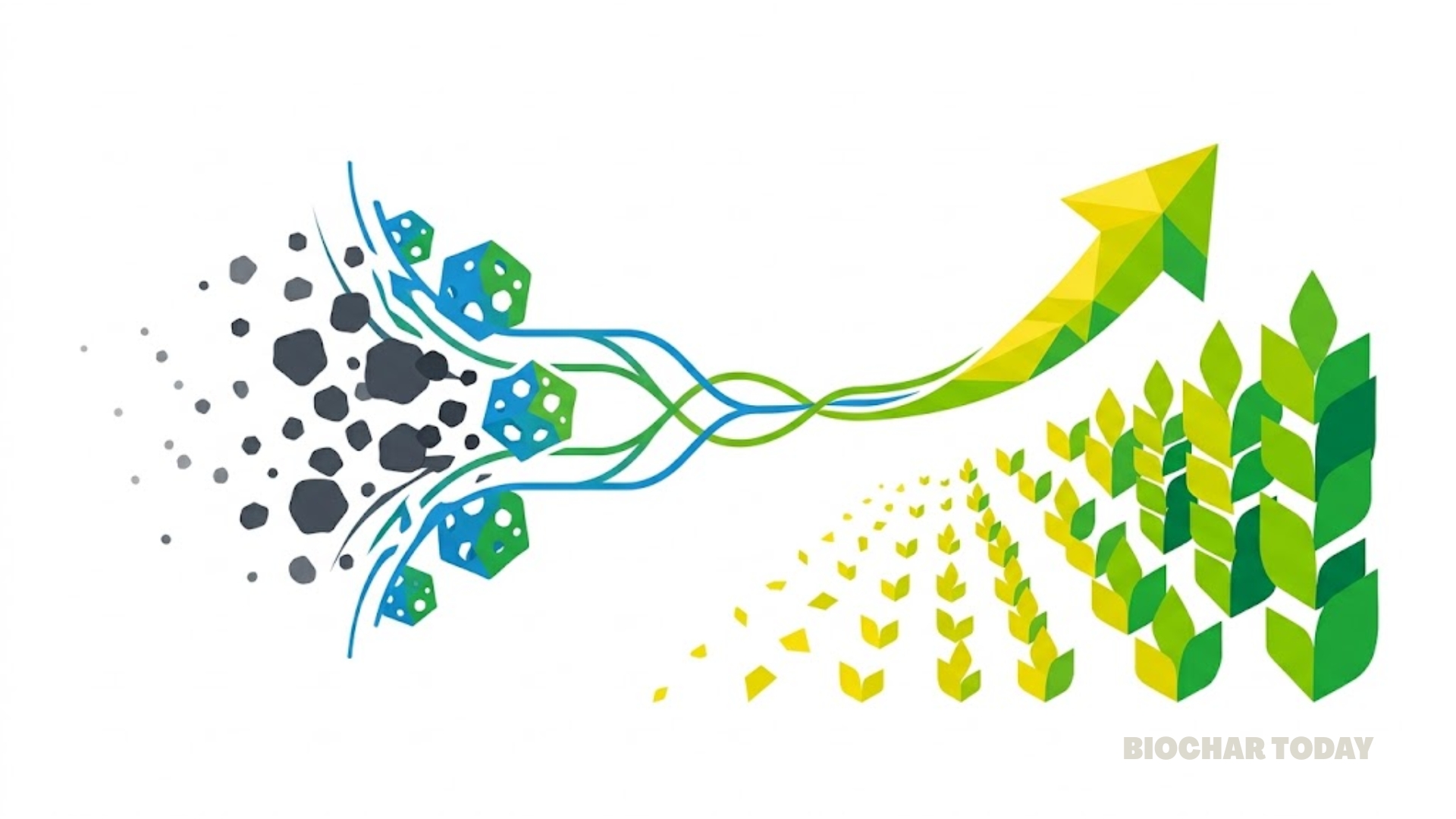
- Converting agricultural waste into biocharBiochar is a carbon-rich material created from biomass decomposition in low-oxygen conditions. It has important applications in environmental remediation, soil improvement, agriculture, carbon sequestration, energy storage, and sustainable materials, promoting efficiency and reducing waste in various contexts while addressing climate change challenges. More helps clean the environment and improves soil health for better food production.
- Applying biochar to farmland can significantly increase the amount of food grown, in some cases doubling the harvest of common crops.
- This material acts like a powerful sponge that can remove nearly all harmful chemicals and heavy metals from contaminated water.
- Using biochar in the soil helps trap carbon for a very long time, which helps in the global effort to combat climate change.
- Making biochar also produces renewable energy like oils and gases that can be used to power homes and businesses.
In a comprehensive review published in the journal Next Sustainability, authors Subhash Babu, Raghavendra Singh, Devideen Yadav, and several other researchers from prominent Indian agricultural institutes explore the transformative role of biochar within a circular bioeconomy. The contemporary global food system currently contributes up to twenty-five percent of all greenhouse gas emissions, creating an urgent need for waste-free production methods. Biochar, a carbon-rich material produced by heating organic waste in the absence of oxygen, has emerged as a primary tool to address this crisis. By turning agricultural residues that are often burned in open fields into a stable form of carbon, researchers have identified a path to simultaneously improve food security and environmental quality. This transition is essential for meeting international sustainability targets and protecting the natural resources required for future generations.
The research quantifies significant agronomic benefits, noting that biochar application can lead to dramatic improvements in crop productivity and resource efficiency. For instance, the study highlights that maize yields can increase by ninety to one hundred and fifty percent, while water use efficiency can rise by as much as one hundred and forty percent. Other crops like groundnuts and wheat also show notable gains when biochar is integrated into soil management. These improvements are largely attributed to the ability of biochar to enhance the physical structure of the soil, increase its capacity to hold water, and improve the availability of essential nutrients. By modifying soil acidity and supporting beneficial microbial growth, biochar creates a more resilient growing environment that can withstand stresses like drought or poor soil quality, directly supporting the livelihoods of small-scale farmers.
Beyond the farm, biochar serves as an exceptionally effective medium for cleaning polluted water and managing hazardous waste. The researchers report that biochar can remove between forty-six and ninety-five percent of heavy metals, such as lead and arsenic, from contaminated water sources. It is also highly effective at trapping organic pollutants like pesticides, herbicides, and even modern emerging threats like microplastics and pharmaceuticals. In specific tests, corn straw biochar was able to remove over ninety-five percent of microplastics from water. This capability makes it an affordable and scalable solution for providing clean water in regions where traditional treatment infrastructure is lacking. By capturing these toxins before they enter the food chain, biochar protects human health and restores aquatic ecosystems that have been damaged by industrial and agricultural runoff.
The climate mitigation potential of biochar is perhaps its most significant long-term contribution, as it offers a way to actively remove carbon dioxide from the atmosphere and store it in the ground for centuries. The study indicates that for every one thousand kilograms of crop residue converted into biochar, approximately nine hundred and twenty kilograms of carbon dioxide equivalent are sequestered. Additionally, treating soil with biochar can reduce emissions of nitrous oxide, a potent greenhouse gas, by as much as ninety-five percent in certain conditions. This dual action of storing carbon while preventing the release of other harmful gases makes it a powerful ally in the fight against global warming. Furthermore, the production process itself generates renewable energy in the form of bio-oil and syngasSyngas, or synthesis gas, is a fuel gas mixture consisting primarily of hydrogen and carbon monoxide. It is produced during gasification and can be used as a fuel source or as a feedstock for producing other chemicals and fuels. More, providing a clean alternative to fossil fuels that can be used for heating and power generation in rural communities.
Ultimately, the integration of biochar into a circular bioeconomy creates a self-sustaining loop where waste becomes a valuable resource. The researchers conclude that while biochar is not a single solution for every environmental problem, its diverse applications across food, water, and energy sectors make it a cornerstone of sustainable development. By creating new markets for agricultural waste and generating employment through the pyrolysisPyrolysis is a thermochemical process that converts waste biomass into bio-char, bio-oil, and pyro-gas. It offers significant advantages in waste valorization, turning low-value materials into economically valuable resources. Its versatility allows for tailored products based on operational conditions, presenting itself as a cost-effective and efficient More industry, biochar technology provides a roadmap for economic growth that does not come at the expense of the planet. As global awareness of these benefits grows, the biochar market is expected to expand significantly, offering a realistic and scientifically validated pathway toward a cleaner, more food-secure, and climate-resilient world by the end of the decade.
Source: Babu, S., Singh, R., Yadav, D., Rathore, S. S., Yadav, D. K., Kumar, S., Wani, O. A., & Venkatramanan, V. (2026). Agricultural waste-derived biochar in a circular bioeconomy: Implications for food security, climate mitigation, and sustainable development goals. Next Sustainability, 7, 100326.




Leave a Reply