
Key Takeaways
- Recycled plant matter like corncobs and coconut shells can be processed into specialized charcoalCharcoal is a black, brittle, and porous material produced by heating wood or other organic substances in a low-oxygen environment. It is primarily used as a fuel source for cooking and heating. More that acts as an eco-friendly filter to trap tiny plastic fragments found in water.
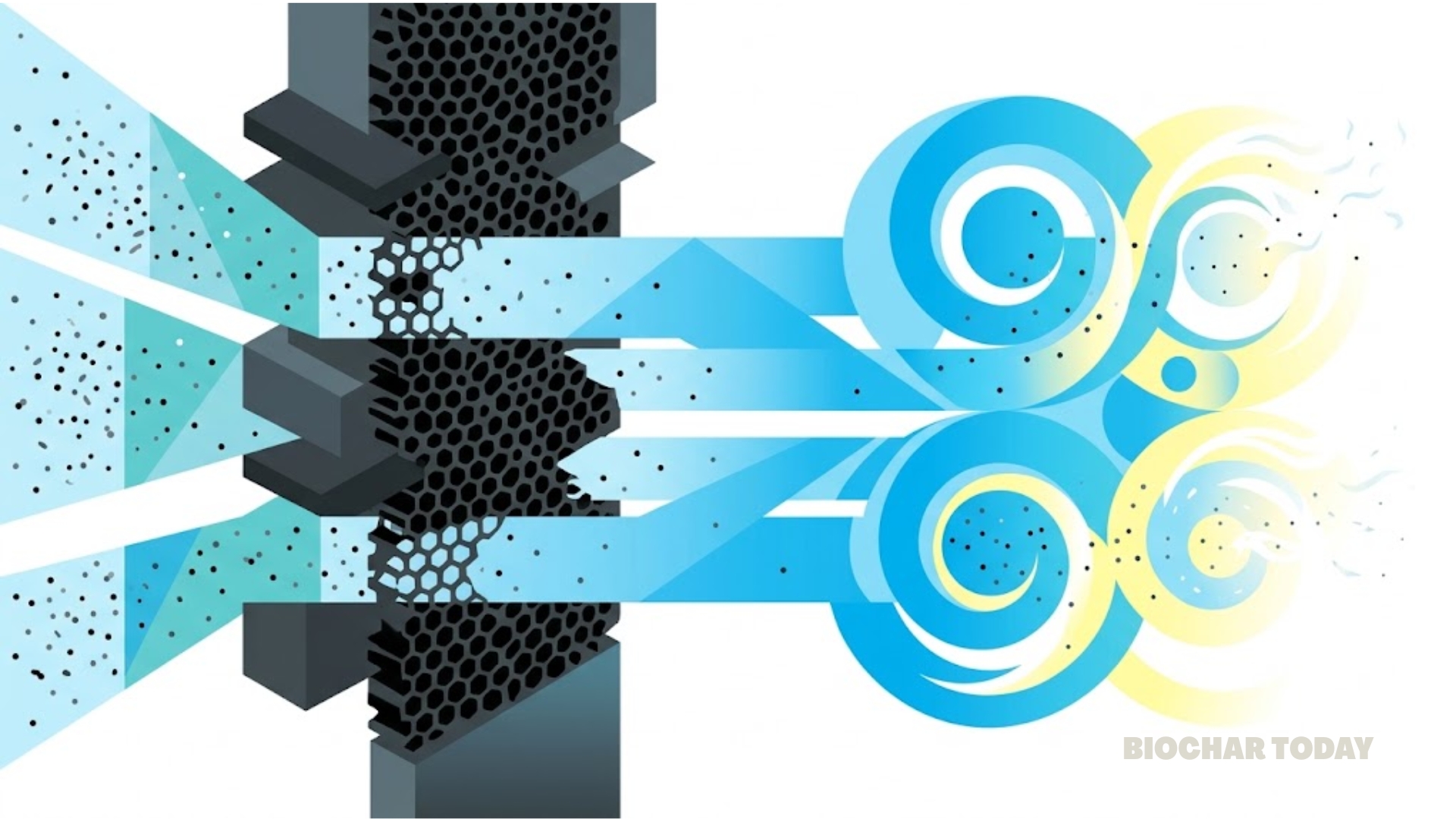
- This specialized charcoal operates through multiple surface forces that physically pull, snare, and hold onto invisible plastic particles dissolved in aquatic networks.
- Modifying the charcoal with iron compounds produces a magnetic material that can pull out ninety-five percent or more of plastic debris within minutes.
- Combining these charcoal filters with advanced light or electrical treatments can successfully destroy up to ninety percent of captured plastic particles, turning them into safer elements.
In a comprehensive review published in the Middle East Journal of Applied Science and Technology, authors Peter Mafimisebi, Akinbobola Ogundiran, Saeed Muhammad, and Niniola Olateju evaluated the performance of biochar-based adsorbents for filtering micro- and nanoplastics from water systems. Micro- and nanoplastics have emerged as persistent and ubiquitous contaminants in aquatic environments due to their small size, chemical stability, and strong affinity for toxic pollutants, posing significant risks to ecosystems and human health. Because conventional water treatment technologies are largely ineffective for their removal, scientists are focusing heavily on engineered biocharBiochar is a carbon-rich material created from biomass decomposition in low-oxygen conditions. It has important applications in environmental remediation, soil improvement, agriculture, carbon sequestration, energy storage, and sustainable materials, promoting efficiency and reducing waste in various contexts while addressing climate change challenges. More as a low-cost, eco-friendly, and efficient adsorbent. The research highlights that the physical and chemical properties of the material determine its ultimate filtration success. By assessing diverse biomassBiomass is a complex biological organic or non-organic solid product derived from living or recently living organism and available naturally. Various types of wastes such as animal manure, waste paper, sludge and many industrial wastes are also treated as biomass because like natural biomass these More feedstocks and engineered varieties, the study outlines how optimized carbon-based platforms can successfully tackle the escalating global crisis of plastic pollution in water bodies.
The findings show that the adsorption of plastic particles onto biochar occurs primarily through five distinct mechanisms: pore filling, electrostatic interaction, surface complexation, hydrophobic interaction, and electron donor-acceptor interactions. High-temperature biochars produced around seven hundred and fifty degrees Celsius exhibit significantly larger surface areas, enhanced pore filling, and a reduction in polar carbonyl groups, allowing them to achieve an impressive removal efficiency of approximately ninety-nine percent within just four minutes. Under these conditions, the material acts as a strong electron donor because of its abundant free electrons, which promotes tight interactions with the aromatic rings found in common polymer backbones. Additionally, chemical modifications such as alkyl group functionalization on rice straw base materials facilitated heightened surface activity, yielding a total plastic removal efficiency of ninety-nine point five six percent in experimental settings.
A major outcome of the compiled research highlights that iron-modified and corncob-derived biochars consistently exhibit superior adsorption capacities compared to unmodified alternatives. For instance, magnetic biochars engineered at five hundred degrees Celsius reported a removal capacity of ninety-five point two percent for tiny nanoplastics. These iron-biochar composites allow for rapid physical interception and easy magnetic recovery, and experiments showed they could be reused up to three times while maintaining high efficacy. Furthermore, subjecting corncob materials to acid oxidation treatments at high temperatures increases oxygen-containing functional groups and expands the specific surface area, which enhances hydrogen bonding to optimize plastic extraction.
Despite these remarkable laboratory extraction rates, the paper notes that simply trapping plastic particles does not completely eliminate the environmental hazard, which has prompted researchers to integrate filtration with advanced degradation processes. When spent biochar loaded with polystyrene nanoplastics was integrated with magnesium-aluminum double oxides, it enabled simultaneous adsorption and photocatalytic breakdown, achieving degradation efficiencies exceeding ninety percent under ultraviolet irradiation. Similarly, electrocatalytic treatments using iron-modified lignin-based magnetic biochars facilitated the total breakdown of microplastics into shorter-chain hydrocarbons and oxygenated intermediates, paving the way for chemical upcycling. Other thermal recovery methods revealed that re-pyrolyzing plastic-loaded biochar successfully regenerates the filter material while converting the trapped plastic residues into stable carbon-rich resources. However, the authors emphasize that translating these high capacities to real-world infrastructure remains a challenge, as complex environmental water matrices, ionic strength fluctuations, and competing organic matter can suppress these theoretical efficiencies.
Source: Mafimisebi, P., Ogundiran, A., Muhammad, S., & Olateju, N. (2026). Biochar-Based Adsorbents for Micro- and Nanoplastics Removal from Water: A Critical Review on Mechanistic Insights, Challenges, and Future Perspectives. Middle East Journal of Applied Science & Technology (MEJAST), 9(1), 89-102.




Leave a Reply