

Carbon removal registry Isometric has initiated a public consultation period for Version 1.1 of its BiocharBiochar is a carbon-rich material created from biomass decomposition in low-oxygen conditions. It has important applications in environmental remediation, soil improvement, agriculture, carbon sequestration, energy storage, and sustainable materials, promoting efficiency and reducing waste in various contexts while addressing climate change challenges. More Production in Distributed and Small Scale Projects Module. Led by Chief Science Officer Stacy Kauk, the organization is introducing an updated framework designed to integrate a wider array of decentralized projects into its scientific registry. This administrative and regulatory expansion opens the module to more diverse kiln configurations and varied project structures. By establishing these guidelines, the initiative intends to hold distributed operations to the exact same rigorous quality and verification standards typically reserved for industrial-scale operations.
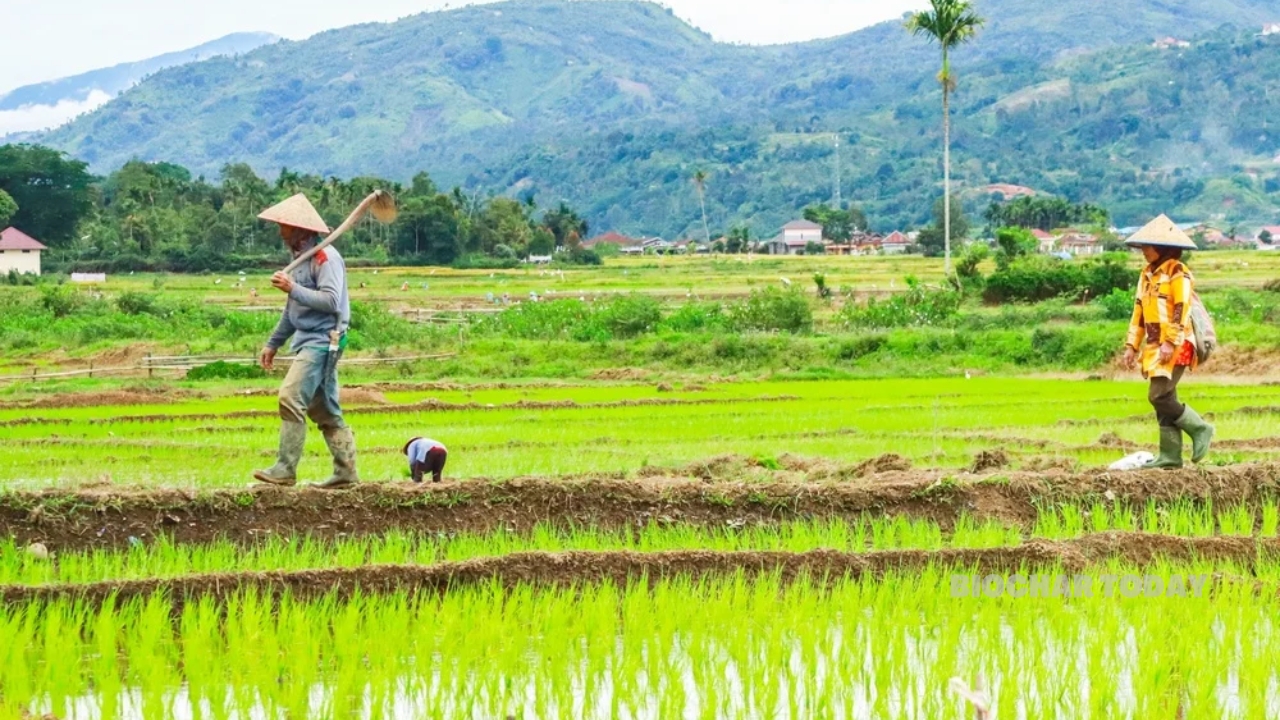
The primary challenge addressed by this expanded protocol is the historical difficulty of certifying small-scale, decentralized projects without compromising scientific rigor or incurring prohibitive operational costs. Distributed projects usually operate in rural environments where abundant agricultural or forestry residues exist, but where centralized, industrial-scale infrastructure is entirely absent. Historically, the carbon market has struggled to track, measure, and verify the highly fragmented data generated across numerous isolated, small-scale kilns. Consequently, smaller project developers have faced significant barriers to entry, leaving a vast volume of localized biomassBiomass is a complex biological organic or non-organic solid product derived from living or recently living organism and available naturally. Various types of wastes such as animal manure, waste paper, sludge and many industrial wastes are also treated as biomass because like natural biomass these More residues underutilized and cutting off rural communities from the financial incentives of the carbon removal market.
To resolve these measurement and infrastructure limitations, Isometric’s updated module introduces an integrated compliance framework that leverages new automation technologies and strict standard operating procedures. The solution incorporates automated data collection and automated kiln operation to streamline monitoring, reporting, and verification across dispersed geographies. It also establishes new provisions for facility grouping, allowing independent small-scale operators to consolidate their reporting into a single, large-scale project structure. Furthermore, the protocol implements a dual approach to quantification: it mandates direct measurement where operationally viable and applies conservative discounting where direct tracking is impossible, ensuring that every issued credit remains scientifically verifiable.
The immediate outcome of this framework expansion is the opening of the certification pathway for a much broader demographic of international distributed suppliers. Prominent small-scale developers Carboneers and Varaha have already signed on as the foundational suppliers to issue carbon removal credits under the updated module. By participating in this framework, these organizations can now deliver fully traceable, high-integrity carbon credits to the compliance and voluntary markets. This commercial onboarding demonstrates that small-scale, rural operations can successfully meet stringent institutional baselines, ultimately providing rural farming communities with a verifiable pathway to generate new revenue streams through localized carbon removal.



Leave a Reply