
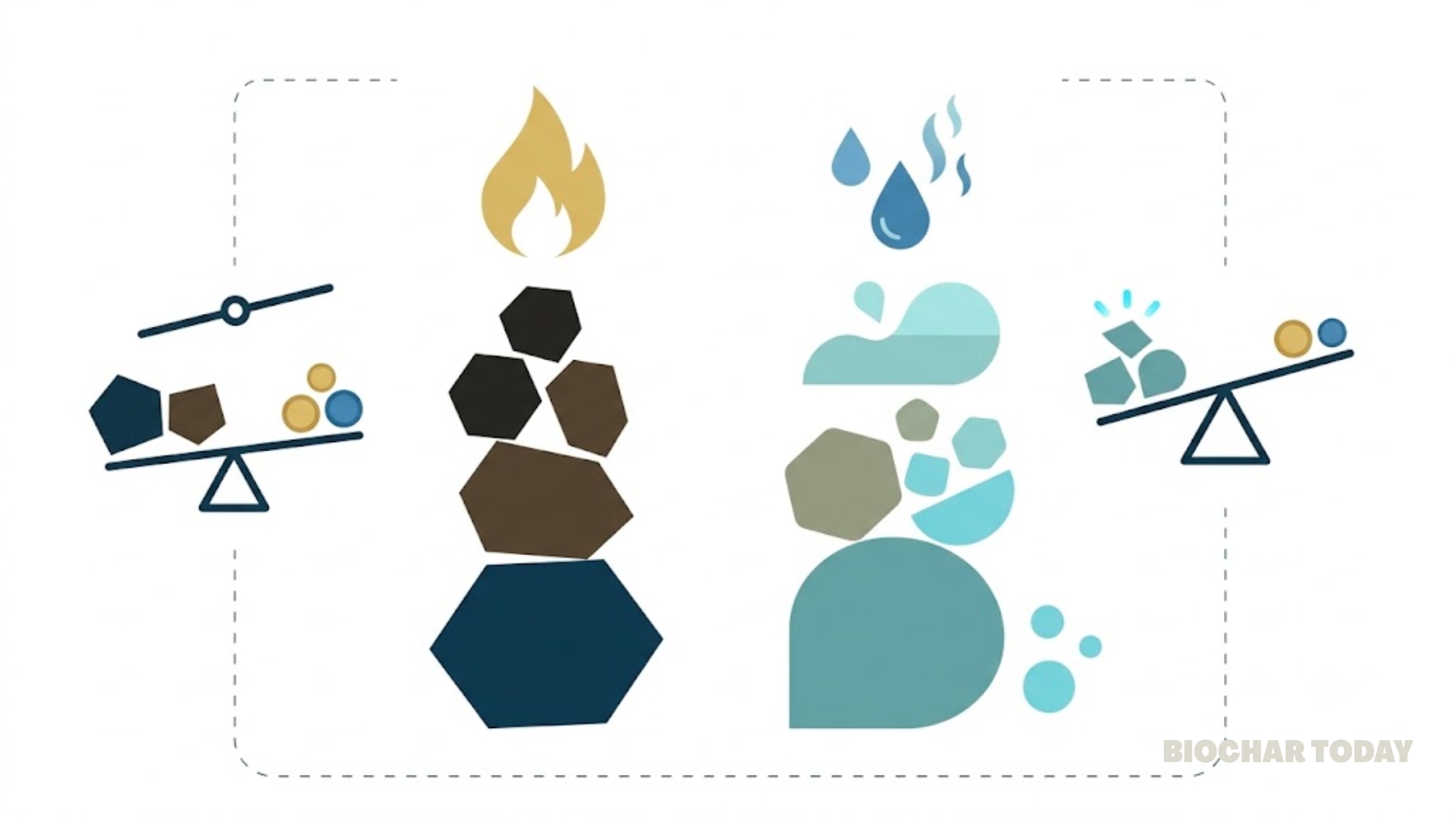
Key Takeaways
- Direct pyrolysisPyrolysis is a thermochemical process that converts waste biomass into bio-char, bio-oil, and pyro-gas. It offers significant advantages in waste valorization, turning low-value materials into economically valuable resources. Its versatility allows for tailored products based on operational conditions, presenting itself as a cost-effective and efficient More is the most financially practical method for turning invasive seaweed into solid carbon materials.
- Direct drying before high-temperature heating yields more than double the profit margin of wet processing systems.
- Liquid handling and wastewater treatment create the largest financial barriers for two-stage wet thermal systems.
- Receiving payment fees to accept raw seaweed can significantly reduce the overall processing costs for both technologies.
- Processing temperatures strongly impact total product yield and overall plant profitability.
Large accumulations of Sargassum macroalgae across coastal waters create severe environmental, public health, and economic difficulties. As the decomposing seaweed releases toxic gases near shorelines, municipal governments face rising cleanup expenses and damaged tourism sectors. Converting collected biomassBiomass is a complex biological organic or non-organic solid product derived from living or recently living organism and available naturally. Various types of wastes such as animal manure, waste paper, sludge and many industrial wastes are also treated as biomass because like natural biomass these More into valuable biocharBiochar is a carbon-rich material created from biomass decomposition in low-oxygen conditions. It has important applications in environmental remediation, soil improvement, agriculture, carbon sequestration, energy storage, and sustainable materials, promoting efficiency and reducing waste in various contexts while addressing climate change challenges. More provides a productive alternative to landfilling, yet the high initial water content of seaweed presents an engineering trade-off between thermal drying and liquid-phase processing. In a study published in the journal Processes by authors Robert W. Cheatham, Eva Shealy, Russell C. Smith, and M. Toufiq Reza, researchers modeled two thermal conversion pathways using identical daily inputs of raw seaweed to determine which method delivers financial viability.
The economic evaluation established that direct dry pyrolysis, designated as Case 1, generated 7,373.88 kilograms per hour of biochar from a daily feed rate of 1,525.50 wet tonnes of seaweed. In contrast, the hydrothermal pyrolysis system, known as Case 2, yielded only 4,222.68 kilograms per hour of hydro-biochar. The initial capital requirement for Case 1 was 250,015.00 dollars, whereas Case 2 required 587,254.00 dollars due to the added need for pressure-rated reactors, specialized slurry pumps, and internal heat exchangers. Equipment for handling and storing dry solids accounted for nearly eighty percent of the capital expenditure in direct pyrolysis, while reactor systems comprised nearly sixty percent of capital costs in the hydrothermal system.
Operating expenses created an even wider financial gap between the two technical configurations. Direct pyrolysis required an annual manufacturing cost of 4.83 million dollars, driven mostly by raw material acquisition and the energy needed to evaporate initial moisture before thermal treatment. Conversely, hydrothermal processing required 12.95 million dollars annually in manufacturing costs. Although hydrothermal treatment reduced front-end evaporation needs, the process required extensive liquid recycling, freshwater additions, and wastewater treatment, which added over eight million dollars per year in operational burdens compared to direct pyrolysis.
Financial modeling over a twelve-year project lifetime showed that direct pyrolysis reached its financial breakeven threshold during year five, ultimately accumulating a net present value of 9.62 million dollars. The hydrothermal pathway maintained negative cash flows throughout the twelve years, ending with a net present value of negative 66.04 million dollars. The required product selling price to break even was calculated at 99.82 dollars per tonne for direct pyrolysis, aligning closely with current market valuations. Hydrothermal pyrolysis required a breakeven selling price of 457.78 dollars per tonne, indicating that the wet processing method cannot compete financially without external environmental subsidies, carbon credits, or tipping fees collected for accepting raw waste.
Sensitivity analyses revealed that raw seaweed acquisition costs and processing temperatures exerted the strongest influence on minimum selling prices. Collecting a tipping fee of 25.00 dollars per tonne would reduce the required breakeven price for direct biochar to 17.20 dollars per tonne, while raising the hydrothermal temperature from 220 to 260 degrees Celsius increased its required selling price to over 1,300 dollars per tonne. Changes in natural gas prices, nitrogen costs, interest rates, and tax rates caused minor impacts on overall economics. Direct dry pyrolysis stands as the superior processing route for converting coastal seaweed into solid carbon materials under current market conditions.
Source: Cheatham, R. W., Shealy, E., Smith, R. C., & Reza, M. T. (2026). Economic Assessment Comparison of Biochar and Hydrothermal Biochar Production Processes from Sargassum. Processes, 14(15), 2403.





Leave a Reply