
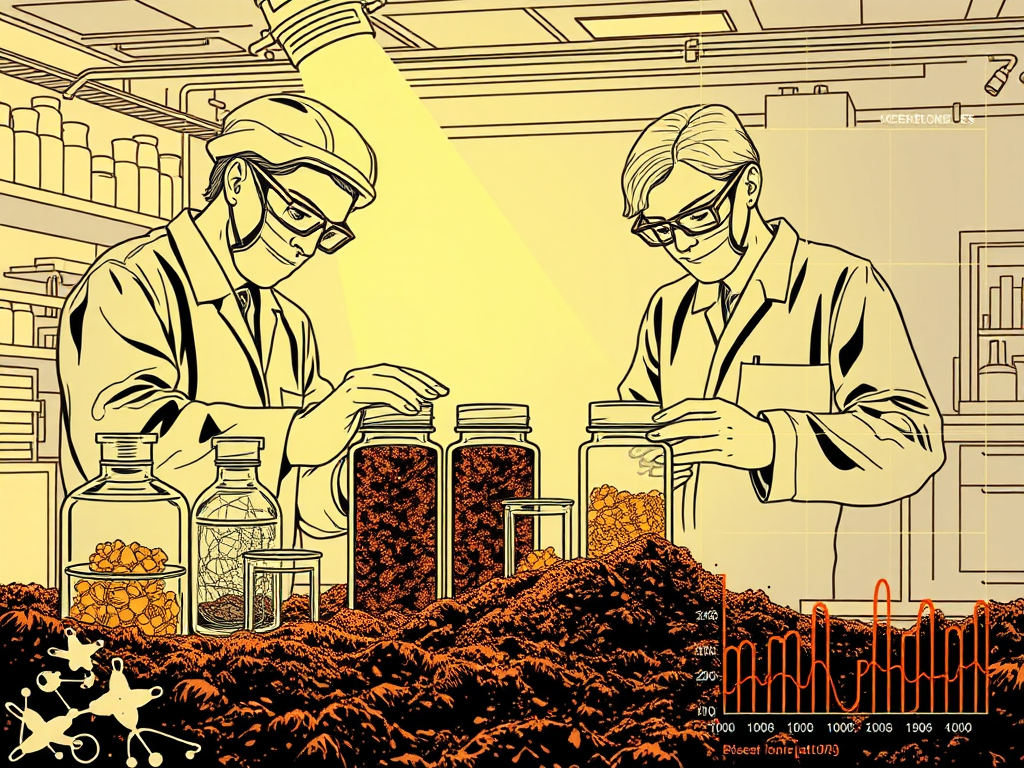
In a study published in the Proceedings of the 2024 10th International Conference on Advances in Energy Resources and Environment Engineering (ICAESEE 2024), researchers Shuting Wang and Jinchun Xue explored the effectiveness of a biocharBiochar is a carbon-rich material created from biomass decomposition in low-oxygen conditions. It has important applications in environmental remediation, soil improvement, agriculture, carbon sequestration, energy storage, and sustainable materials, promoting efficiency and reducing waste in various contexts while addressing climate change challenges. More composite material for heavy metal removal. The research focused on the composite’s ability to remove copper from contaminated soil and improve soil health.
Heavy metals from mining and industrial activities pose a significant environmental threat. These pollutants can accumulate in the environment and living organisms, causing serious health risks. Finding effective and affordable ways to remove heavy metals from contaminated soil is crucial. Biochar has emerged as a promising tool for environmental cleanup. To enhance its effectiveness, researchers created a composite material (nZVI@BC) by combining biochar with zero-valent iron nanoparticles (nZVI).
The study revealed that nZVI@BC is effective in adsorbing copper from contaminated soil. The adsorption process involves chemical interactions between the composite material and copper ions, effectively trapping the pollutant. The composite’s adsorption capacity was 1.65 times higher than that of biochar alone, demonstrating the enhanced effectiveness of nZVI@BC. Beyond removing copper, nZVI@BC also improved the overall health of the contaminated soil. It increased the soil’s pHpH is a measure of how acidic or alkaline a substance is. A pH of 7 is neutral, while lower pH values indicate acidity and higher values indicate alkalinity. Biochars are normally alkaline and can influence soil pH, often increasing it, which can be beneficial More, making it less acidic, and enhanced electrical conductivity, both of which are important for soil fertility and plant growth.
The research also considered the economic aspect of using nZVI@BC. The study found that applying nZVI@BC at a 5% concentration is a cost-effective way to improve the physicochemical properties of acidic soil. This research demonstrates the potential of nZVI@BC as a tool for remediating heavy metal-contaminated soils. The composite material effectively removes copper and improves soil health, offering a promising avenue for environmental cleanup and sustainable soil management.
Source: Wang, S., & Xue, J. (2025). The Study on the Fixation Effect of nZVI@BC on Cu. Proceedings of the 2024 10th International Conference on Advances in Energy Resources and Environment Engineering (ICAESEE 2024), 36, 386-393



Leave a Reply