
Key Takeaways
- The Problem. Wastewater often contains a toxic mix of heavy metals (like cadmium) and organic pollutants (like dyes or antibiotics), which are difficult to remove together.
- The Solution. “Engineered biochar”—a low-cost, carbon-rich material from waste biomassBiomass is a complex biological organic or non-organic solid product derived from living or recently living organism and available naturally. Various types of wastes such as animal manure, waste paper, sludge and many industrial wastes are also treated as biomass because like natural biomass these More that is specially modified—can effectively adsorb both types of contaminants at the same time.
- The “Smart” Mechanism. Engineering creates a “bridging effect,” where an adsorbed pollutant (like a dye) acts as a bridge to help capture another pollutant (like a metal), dramatically increasing removal efficiency.
- Massive Performance Gains. In one case, an engineered biocharBiochar is a carbon-rich material created from biomass decomposition in low-oxygen conditions. It has important applications in environmental remediation, soil improvement, agriculture, carbon sequestration, energy storage, and sustainable materials, promoting efficiency and reducing waste in various contexts while addressing climate change challenges. More removed 6.1 times more cadmium and 5.4 times more zinc than its simple, unmodified version. Another simultaneously removed 90% of BPA and 70% of Cr⁶⁺ from water.
- Economic Viability. While the base material, biochar, is already 80% cheaper than activated carbonActivated carbon is a form of carbon that has been processed to create a vast network of tiny pores, increasing its surface area significantly. This extensive surface area makes activated carbon exceptionally effective at trapping and holding impurities, like a molecular sponge. It is commonly More, the review finds that engineering it for high performance is an economically viable and sustainable strategy for water remediation.
Our wastewater is a complex “toxic cocktail”. Industrial, agricultural, and domestic activities release a soup of contaminants into our water systems, with heavy metals and organic pollutants being two of the most significant threats. On their own, each is a problem. But together, they can react, become more toxic, and pose a substantial challenge for traditional water treatment. A comprehensive review by Nana Wang, Bing Wang, and colleagues, published in the journal Biochar X, synthesizes the rapidly growing research on a powerful and cost-effective solution: engineered biochar.
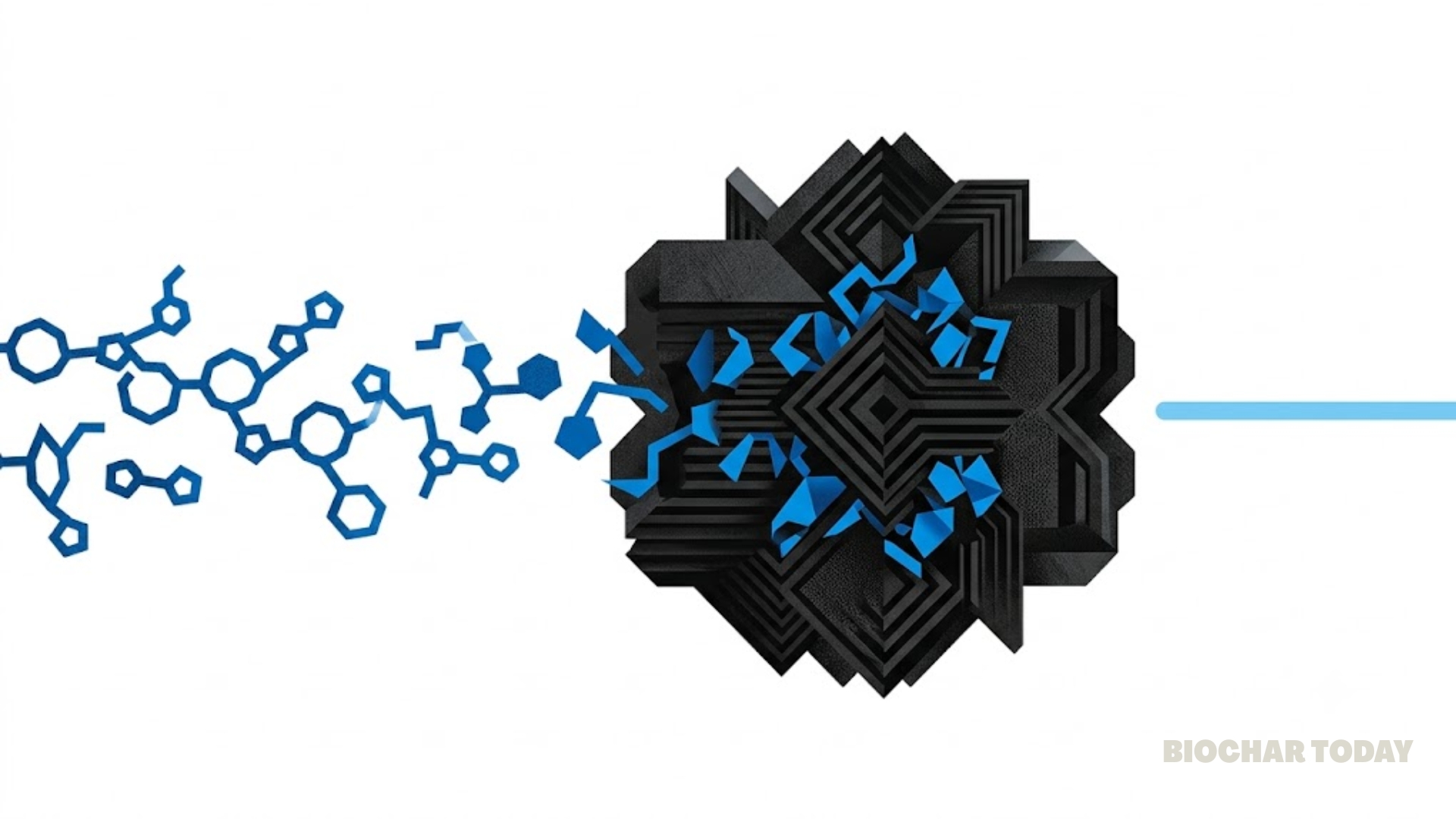
“Pristine” biochar is a good adsorbent, the review highlights that its real power is unlocked through “engineering”. Scientists can functionalize biochar by adding metal oxides, polymers, or graphene composites to its surface. This process enhances its stability, recyclability, and, most importantly, its adsorption efficiency.
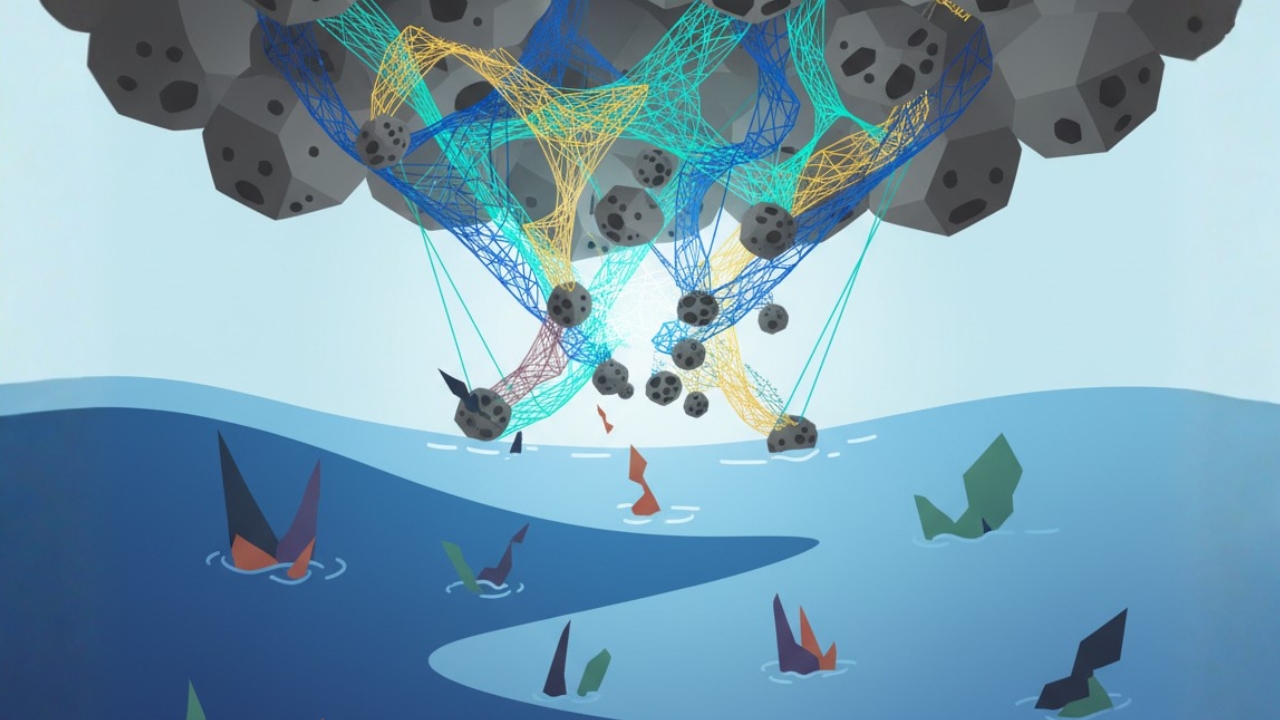
The review explains that these modifications create a material that is much more than a simple sponge. While mechanisms like pore filling and electrostatic attraction play a part, the real magic for simultaneous removal is the “bridging effect”. This is where the engineering truly shines. A metal ion or an organic pollutant will first adsorb to the biochar. It then acts as an active “bridge” to grab a different type of pollutant from the water, forming a stable ternary complex on the biochar’s surface. In this synergistic system, the pollutants essentially help capture each other, leading to far greater removal than either could achieve alone.
The quantitative results highlighted in the review are striking. One study it examines synthesized a magnetic bamboo biochar with dual-chelating agents (EDTA and chitosan) to remove dyes and heavy metals. This engineered biochar had an adsorption capacity of 305.4 mg/g for methyl orange dye. More impressively, its co-adsorption capabilities were 6.1 times higher for cadmium and 5.4 times higher for zinc compared to the unmodified magnetic biochar. This demonstrates the massive performance boost from the bridging mechanism.
This “smart sponge” approach works for a wide array of pollutants. The review points to another study that tackled antibiotics and heavy metals, a common and dangerous combination. A bentonite-activated sludge biochar showed high simultaneous adsorption capacities for both the antibiotic norfloxacin (89.36 mg/g) and copper (104.10 mg/g). In another powerful example, a biochar activated with phosphoric acid was tested on water containing both bisphenol A (BPA), a notorious endocrine disruptor, and toxic Cr⁶⁺. The material successfully removed 90% of the BPA and 70% of the Cr⁶⁺ at the same time.
This level of performance might sound expensive, but the review concludes it is an economically viable and sustainable technology. The base material, biochar, is estimated to be significantly cheaper than the current gold standard, activated carbon—costing around USD $246 per ton versus $1,500 per ton. While the engineering process adds cost, the resulting material is so effective it provides a clear return on investment. For example, one modified biochar’s production cost rose to $5.14/kg, but its arsenic adsorption capacity rocketed from 25 µg/g to 960 µg/g, a nearly 40-fold increase in performance. This review makes a strong case that engineered biochar is no longer just a research curiosity but a mature, practical, and powerful tool ready for large-scale application in healing our polluted waterways.
Source: Wang, N., Wang, B., Wang, H., Wu, P., Hassan, M., Wang, S., & Zhang, X. (2025). Engineered biochar for simultaneous removal of heavy metals and organic pollutants from wastewater: mechanisms, efficiency, and applications. Biochar X, 1, e008.


Leave a Reply