
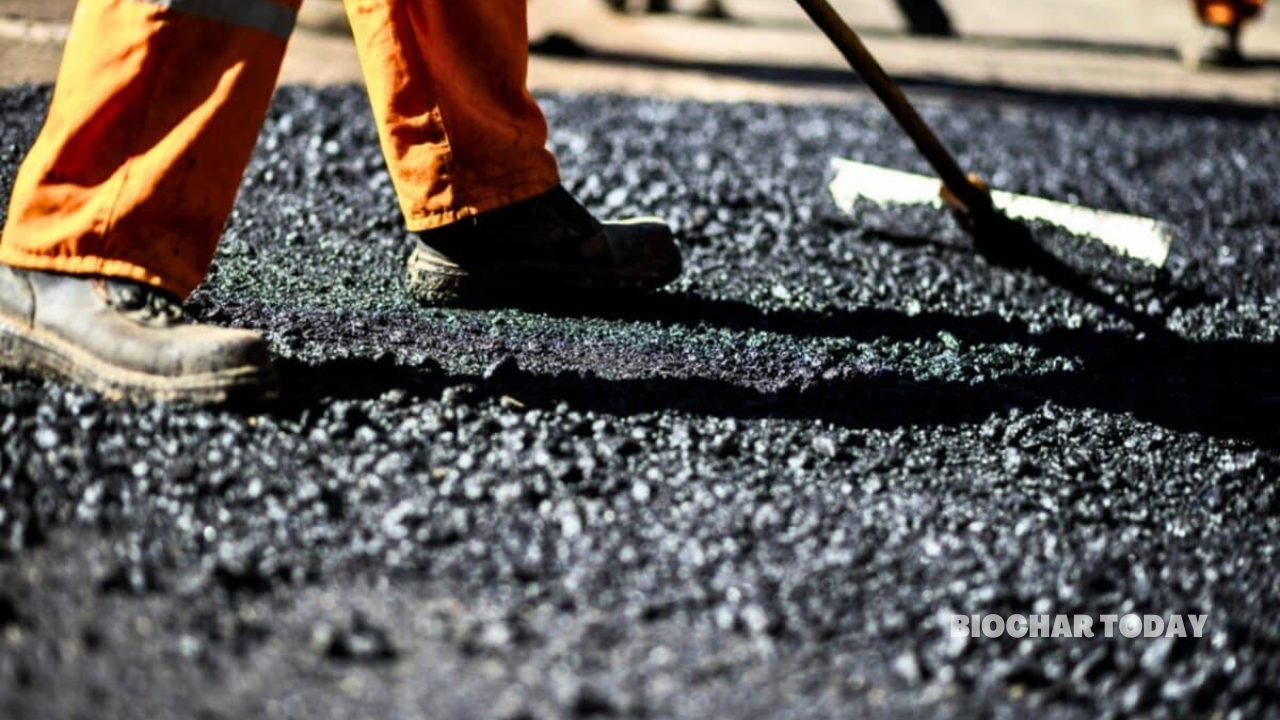
The Barcelona City Council, through its BIT Habitat foundation, has initiated a pilot project to decarbonize urban infrastructure using biochar-infused asphalt. Developed by a consortium including the Polytechnic University of Catalonia and construction firms Agustí i Masoliver, SA (AMSA) and Asfaltos y Construcciones Elsan, SA (ELSAN), the project utilizes biocharBiochar is a carbon-rich material created from biomass decomposition in low-oxygen conditions. It has important applications in environmental remediation, soil improvement, agriculture, carbon sequestration, energy storage, and sustainable materials, promoting efficiency and reducing waste in various contexts while addressing climate change challenges. More derived from olive pits and pine remnants as a replacement for traditional mineral fillers. A 2,000-square-meter trial section has been installed on Cerdà Street in the Eixample district to evaluate the material’s durability under standard urban traffic and environmental conditions. This initiative aligns with Spain’s broader climate objectives, specifically Barcelona’s mandate for climate neutrality by 2030.
The primary challenge addressed by this project is the significant carbon footprint associated with conventional road construction and the management of agricultural waste. Asphalt production and pavement installation have historically been difficult areas to decarbonize within municipal carbon accounting. Furthermore, the Spanish olive oil industry generates vast quantities of olive pits; if left to decompose or if incinerated for energy, these pits release stored CO2 back into the atmosphere. The challenge lies in finding a functional, scalable application for this waste that simultaneously reduces the reliance on raw mineral aggregates in high-traffic infrastructure.
The solution involves the application of pyrolysisPyrolysis is a thermochemical process that converts waste biomass into bio-char, bio-oil, and pyro-gas. It offers significant advantages in waste valorization, turning low-value materials into economically valuable resources. Its versatility allows for tailored products based on operational conditions, presenting itself as a cost-effective and efficient More to convert olive pits and wood residues into biochar, a stable, carbon-rich solid. By integrating this biochar into the asphalt mix, the researchers at the Polytechnic University of Catalonia have replaced 100 percent of the traditional mineral filler. This process effectively sequesters the carbon that the olive trees captured during their growth, locking it into the city’s physical infrastructure for the duration of the pavement’s service life. The resulting material is designed to be fully recyclable, supporting a circular economy by transforming an agricultural byproduct into a high-performance building component.
Preliminary outcomes indicate that the biochar-asphalt mixture achieves a 75 to 76 percent reduction in carbon emissions compared to standard paving materials. Laboratory testing suggests that the mixture maintains the structural integrity required for urban roads while offering enhanced water resistance and recyclability. The Cerdà Street pilot is currently providing critical data on how the material withstands traffic abrasion and thermal stress. If successful, this partnership demonstrates a viable procurement path for Mediterranean cities to utilize local agricultural waste streams to meet stringent climate adaptation and decarbonization targets.



Leave a Reply