
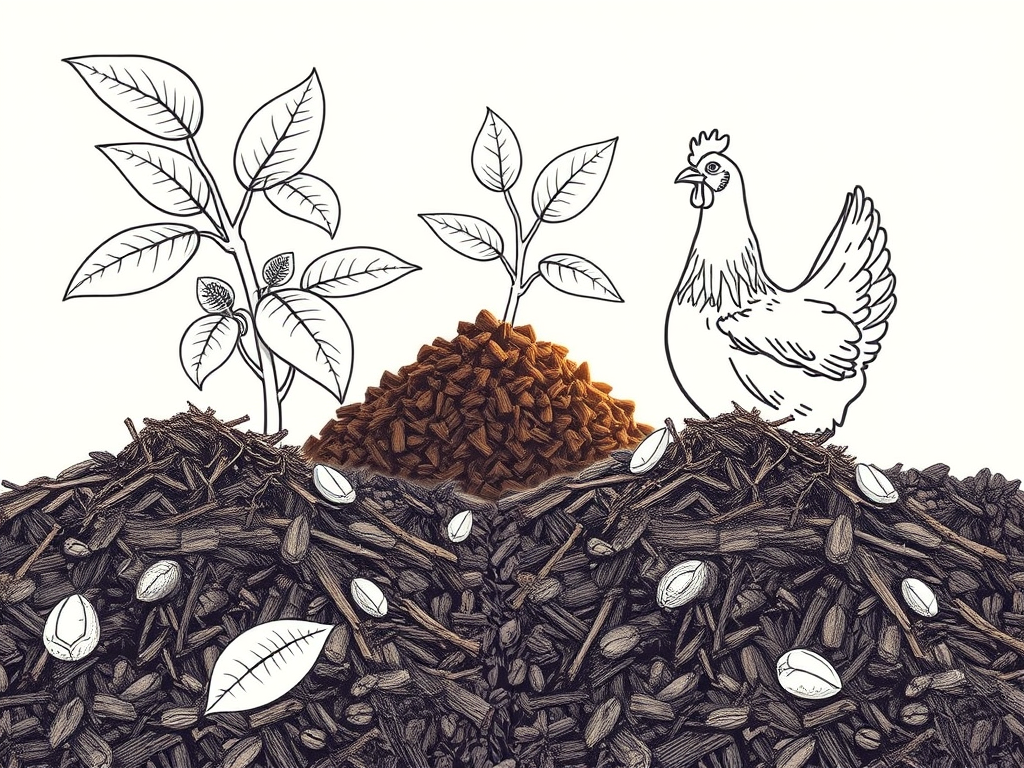
In a study published in Sustainability, Everton Geraldo de Morais, Carlos Alberto Silva, and colleagues investigated the ammonium retention properties of biochars derived from coffee husk (CH) and chicken manure (CM). The research explores how different pyrolysisPyrolysis is a thermochemical process that converts waste biomass into bio-char, bio-oil, and pyro-gas. It offers significant advantages in waste valorization, turning low-value materials into economically valuable resources. Its versatility allows for tailored products based on operational conditions, presenting itself as a cost-effective and efficient More temperatures affect the biochar’s ability to retain ammonium, a crucial component in fertilizers. BiocharBiochar is a carbon-rich material created from biomass decomposition in low-oxygen conditions. It has important applications in environmental remediation, soil improvement, agriculture, carbon sequestration, energy storage, and sustainable materials, promoting efficiency and reducing waste in various contexts while addressing climate change challenges. More, produced from organic waste, is gaining attention as a sustainable material for environmental applications.
The study revealed that coffee husk biochar produced at 300°C has a notably high cation exchange capacity (CEC) of 89.3 cmol/kg. This high CEC is crucial for its ability to retain ammonium ions through electrostatic interactions, making it a potential tool for nitrogen retention in agricultural applications.
The research also compared biochar derived from coffee husk and chicken manure, highlighting differences in their properties and ammonium retention mechanisms. The study’s findings contribute to a better understanding of how biochar can be used to manage nitrogen in agricultural systems, potentially reducing nitrogen leachingLeaching is the process where nutrients are dissolved and carried away from the soil by water. This can lead to nutrient depletion and environmental pollution. Biochar can help reduce leaching by improving nutrient retention in the soil. More and improving nutrient use efficiencyNutrient use efficiency refers to how effectively plants can take up and utilize nutrients from the soil. Biochar can improve nutrient use efficiency by enhancing nutrient availability and retention in the soil. More.
SOURCE: Morais, E.G.d.; Silva, C.A.; Gao, S.; Melo, L.C.A.; Benevenute, P.A.N.; Lago, B.C.; Teodoro, J.C.; Guilherme, L.R.G. Rapid Adsorption of Ammonium on Coffee Husk and Chicken Manure-Derived Biochars: Mechanisms Unveiled by Chemical Speciation, Physical, and Spectroscopic Approaches. Sustainability 2025, 17, 1616.





Leave a Reply