
Key Takeaways
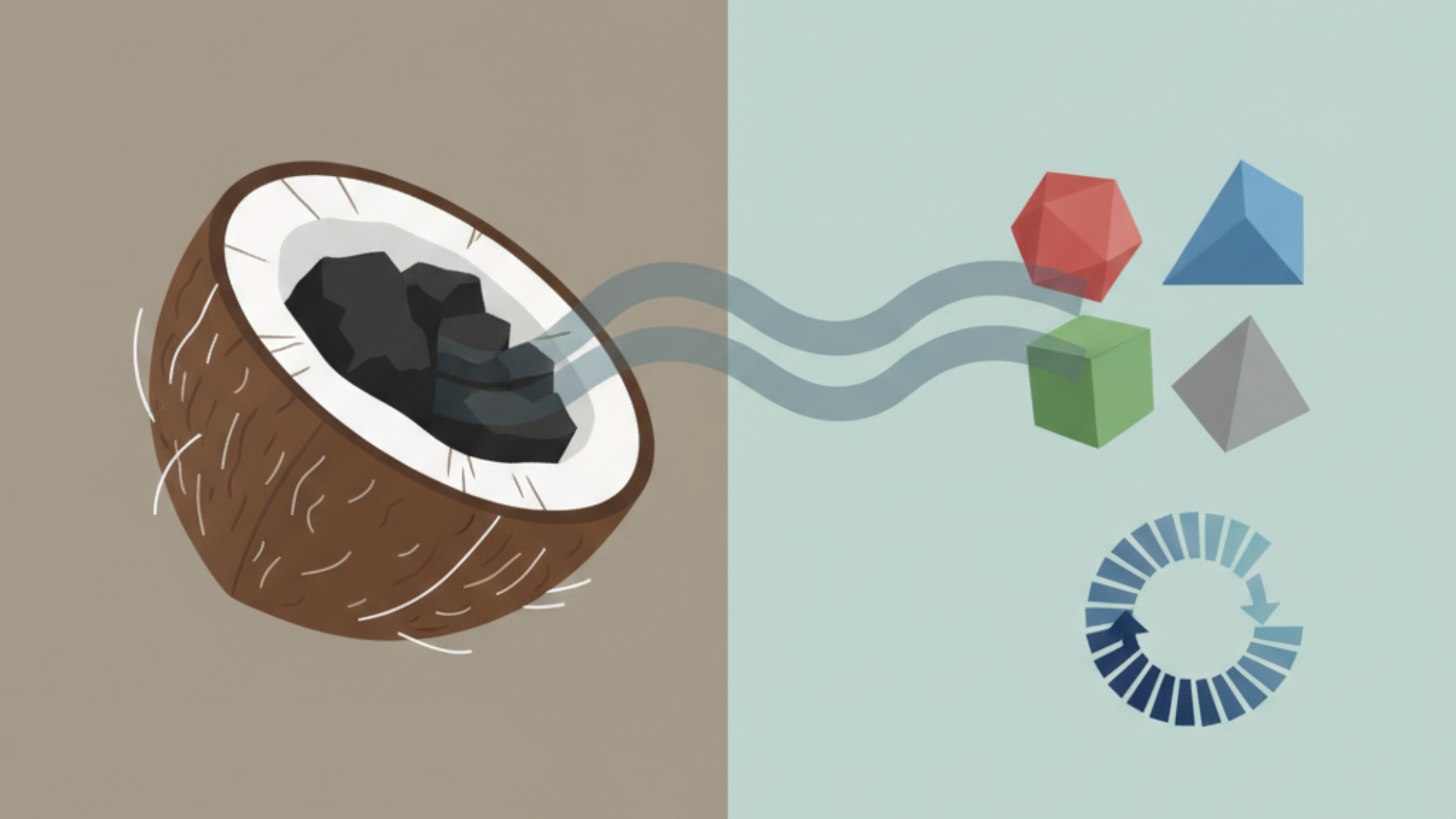
- Waste to Resource: A new, low-cost adsorbent was created from coco peat (coconut husk waste) and modified with phosphoric acid.
- Massive Adsorption: The material showed extremely high adsorption capacities in column studies, capturing copper and nickel.
- Real-World Success: When tested on actual battery industry effluent, the biocharBiochar is a carbon-rich material created from biomass decomposition in low-oxygen conditions. It has important applications in environmental remediation, soil improvement, agriculture, carbon sequestration, energy storage, and sustainable materials, promoting efficiency and reducing waste in various contexts while addressing climate change challenges. More removed over 99% of the toxic copper and nickel, meeting environmental discharge standards.
- Durable and Cheap: The adsorbent is highly stable and can be reused for at least 20 cycles. Its production cost is only 1.56 /kg.
- Circular Economy: The “spent” biochar, full of phosphorus, can be repurposed as an effective bio-fertilizer for growing non-food plants, preventing secondary pollution.
Industrial wastewater from battery manufacturing, metal plating, and mining operations is often a toxic soup of heavy metals like copper and nickel . These metals are non-biodegradable and pose serious risks to environmental and human health. Adsorption, a process that “sticks” pollutants to a material’s surface, is a promising cleanup strategy, but traditional materials like standard biochar often lack the necessary adsorption capacity for practical use. A new study in Scientific Reports by Sadamanti Sireesha and I. Sreedhar details a powerful and sustainable solution: a specially modified biochar derived from abundant coco peat (coconut husk) waste.
The researchers created what they call Phosphorous modified cocopeat biochar (PMCB). They did this by taking non-edible coco peat and “activating” it with phosphoric acid before pyrolyzing it (heating it in a low-oxygen environment). This chemical treatment is the key. The phosphoric acid acts as a dehydrating agent, dramatically increasing the biochar’s surface area and pore structure. More importantly, it studs the biochar’s surface with new phosphate functional groups . These groups act as powerful chemical “magnets” for the heavy metal ions. Characterization confirmed the process works through a combination of mechanisms, including precipitation, ion exchange, and surface complexation, all driven by these new phosphate sites.
The performance of this new material was exceptional. In controlled batch tests, the PMCB demonstrated a massive adsorption capacity, capturing 566.6 \mg of copper per gram of biochar and 551.7 \mg/g of nickel. In more realistic, continuous-flow column studies, the performance was even higher, reaching 794.5 mg/g for copper and 691.4 mg/g for nickel. These figures confirm the process is dominated by chemical adsorption, which forms strong, stable bonds with the pollutants.
The most impressive result came from a real-world test. The team took actual effluent from the battery industry, which contained extremely high and toxic concentrations of copper and nickel. When this real-world wastewater was treated with the PMCB, it achieved over 99% removal efficiency for both metals, reducing the contaminant levels to below industrial discharge standards. This demonstrates the biochar is not just a lab curiosity but a viable solution for complex industrial waste streams.
Two critical factors for any real-world solution are cost and reusability. The PMCB excelled here as well. The material is incredibly durable; the researchers were able to “wash” the captured metals off and reuse the same batch of biochar for 20 consecutive cycles. Even after 20 uses, it retained a 96.0% desorption rate, proving its stability. Because the raw material, coco peat, is an abundant agricultural waste product, the final adsorbent is extremely cheap. The study’s cost analysis calculated a production cost of just 1.56 \ USD/kg , making it far more economical than many commercial alternatives.
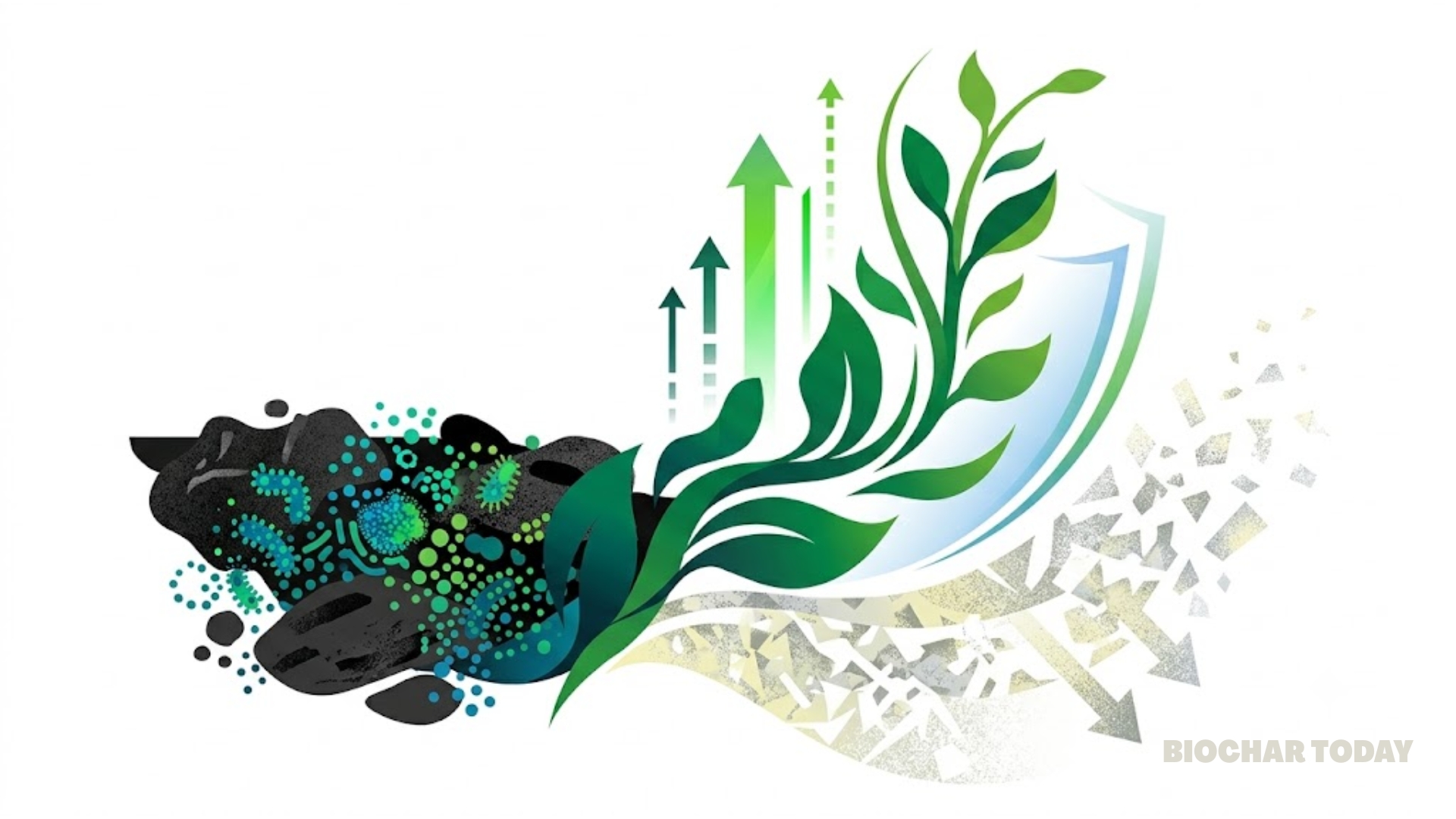
Finally, the study provides an elegant solution to “secondary pollution”—the problem of what to do with the used, metal-laden biochar. The researchers tested the spent PMCB as a bio-fertilizer. They found that soil mixed with the spent biochar showed quicker seed germination and improved plant growth compared to soil with standard NPK fertilizer or plain soil. The phosphorus used in the activation process becomes a valuable plant nutrient. While the authors caution against using these specific plants for food, they suggest this makes the spent biochar a perfect soil amendmentA soil amendment is any material added to the soil to enhance its physical or chemical properties, improving its suitability for plant growth. Biochar is considered a soil amendment as it can improve soil structure, water retention, nutrient availability, and microbial activity. More for growing decorative plants in malls and offices, creating a truly circular economy.
Source: Sireesha, S., & Sreedhar, I. (2025). Phosphorous modified cocopeat biochar as a low cost, efficient and stable adsorbent for the removal of Cu(II) and Ni(II) from aqueous and real systems. Scientific Reports, 15(37035).



Leave a Reply