
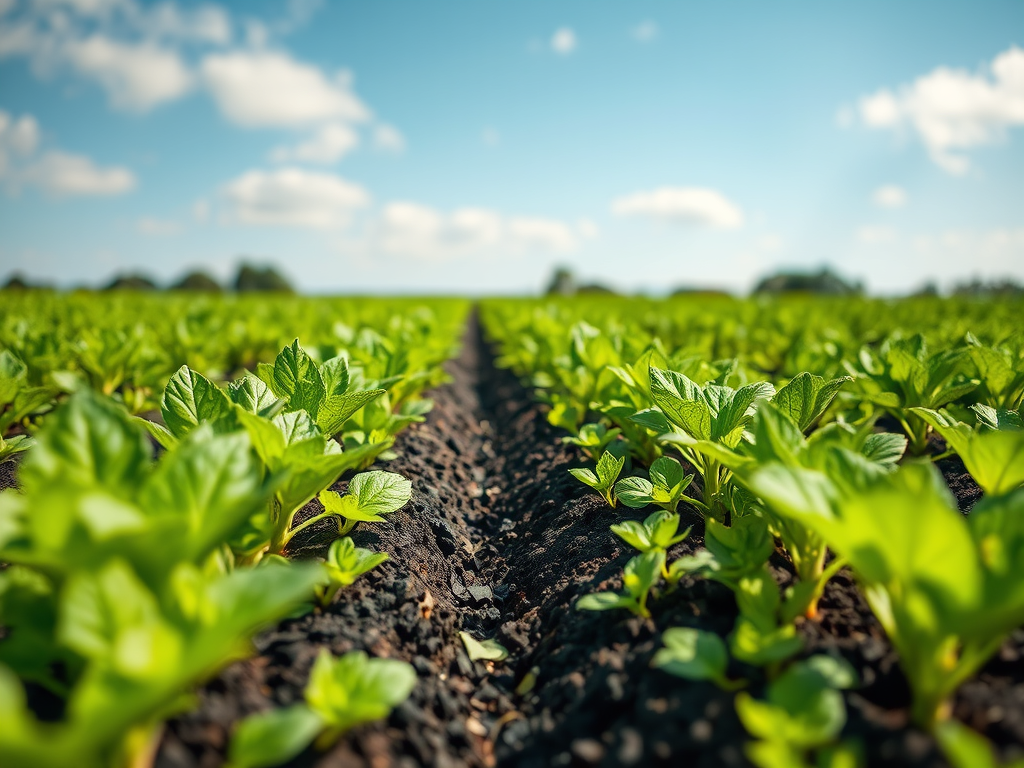
A recent review published in the Journal of Carbon Research by Md. Muzammal Hoque, Biplob Kumar Saha, Antonio Scopa, and Marios Drosos delves into the multifaceted benefits and future prospects of biocharBiochar is a carbon-rich material created from biomass decomposition in low-oxygen conditions. It has important applications in environmental remediation, soil improvement, agriculture, carbon sequestration, energy storage, and sustainable materials, promoting efficiency and reducing waste in various contexts while addressing climate change challenges. More in agriculture. This comprehensive analysis highlights biochar’s role in improving soil health, boosting crop productivity, and contributing significantly to environmental sustainability. The increasing global population demands innovative solutions for food production and environmental challenges, and biochar, with its affordability, low reactivity, large surface area, and reduced carbon footprint, presents a compelling option.
Biochar can effectively store carbon in soil for hundreds or even thousands of years, making it a powerful long-term carbon sequestration tool. Integrating biochar with other substances can lead to advanced materials with enhanced surface area, porosityPorosity of biochar is a key factor in its effectiveness as a soil amendment and its ability to retain water and nutrients. Biochar’s porosity is influenced by feedstock type and pyrolysis temperature, and it plays a crucial role in microbial activity and overall soil health. Biochar More, and reactivity, broadening their utility in agriculture and environmental applications. Scientists advocate for combining biochar with materials possessing synergistic properties to improve soil quality, facilitate carbon sequestration, and support sustainable agriculture and climate change adaptation. These composites can enhance heavy metal adsorption, provide slow-release nutrients, and improve the uptake of gases like CO2 and CH4, fostering crop growth without soil degradation. This approach aligns with green farming practices by providing essential soil nutrients and reducing the need for chemical fertilizers.
Biochar’s positive impacts on soil properties are notable. Studies indicate that biochar can increase soil porosity by 14-64% and decrease bulk density by 3-31%. Applying 20% biochar to sandy soil can almost double its water-retention capability and significantly reduce water erosion and soil loss. These changes lead to better nutrient availability, a boost in beneficial microbes, and improved soil management. Biochar has been shown to enhance microbial biomassBiomass is a complex biological organic or non-organic solid product derived from living or recently living organism and available naturally. Various types of wastes such as animal manure, waste paper, sludge and many industrial wastes are also treated as biomass because like natural biomass these More and promote the nitrogen cycle, resulting in a 40.8% increase in nitrification and a 12.7% reduction in N2O emissions. When mixed with low-grade, nutrient-rich organic wastes at low temperatures, biochar positively impacts microbial biomass.
Modified biochar (MB) further amplifies these benefits. For instance, iron-modified biochar can increase peanut yield by up to 33.2% under mulch films and improve root morphology, chemical properties, and water retention. MB often possesses a large surface area, alkaline pHpH is a measure of how acidic or alkaline a substance is. A pH of 7 is neutral, while lower pH values indicate acidity and higher values indicate alkalinity. Biochars are normally alkaline and can influence soil pH, often increasing it, which can be beneficial More, and oxygen-containing groups, contributing to increased cation exchange capacity (CEC), nutrient retention, and pH balance, particularly in acidic or poor soils. It also enhances microbial biomass, enzymatic activity, and overall soil health by influencing the soil C/N ratio.
Beyond soil enhancement, biochar plays a crucial role in environmental remediation. Its extensive surface area, porosity, negative charges, and oxygen-containing groups enable it to adsorb hazardous metals such as lead, arsenic, cadmium, and chromium. Studies confirm that biochar reduces the bioavailability of metals, thereby limiting plant uptake and pollution. MB, with its superior surface area, porosity, and chemical stability, is even more effective in contaminant removal. For example, biochar has been shown to reduce the accumulation of Cd, Pb, Cu, and Zn in plant tissues by 38%, 39%, 25%, and 17% respectively.
Economically, biochar application can be highly profitable. Applying high-carbon biochar can increase corn yields by 55-80% over three years, potentially generating a profit of EUR 8000 per hectare. An initial investment of EUR 200 per hectare can double within three years. The global biochar market is projected to reach USD 3 billion by 2025. Furthermore, creating biochar from farm byproducts can increase soil efficiency by 15-25% and reduce waste management costs by 30%. While incorporating metal-organic frameworks (MOFs) into biochar can increase initial costs, it significantly improves efficiency in adsorbing heavy metals and pollutants, offering a more affordable alternative to conventional wastewater treatment technologies. Operational cost savings in industrial pollution remediation can be as high as 40% with MOF-based biochar composites.
Despite its numerous benefits, challenges remain for wider biochar adoption, including complex pyrolysis conditionsThe conditions under which pyrolysis takes place, such as temperature, heating rate, and residence time, can significantly affect the properties of the biochar produced. More, inconsistent feedstockFeedstock refers to the raw organic material used to produce biochar. This can include a wide range of materials, such as wood chips, agricultural residues, and animal manure. More quality, and variable field performance. There’s also a risk of wind erosion causing soil disturbance upon application. Biochar produced from heavy metal-rich feedstocks can concentrate these metals, potentially leading to their release over time. Repeated applications might also negatively impact beneficial soil worms. Future research needs to focus on determining appropriate application rates based on soil type and nutrient levels, addressing the risks of high heavy metal content in feedstocks, and conducting long-term field studies on newer technologies like MOF-biochar composites. The development of automated systems for on-site operation, including automated sampling and better metering, is also a key area for advancement.
Overall, biochar and its derivatives represent a significant step towards sustainable agricultural practices, offering solutions for soil health, crop productivity, and environmental remediation. Continued research and real-world application will further unlock its potential to address global challenges in food security and climate change.
Source: Hoque, M. M., Saha, B. K., Scopa, A., & Drosos, M. (2025). Biochar in Agriculture: A Review on Sources, Production, and Composites Related to Soil Fertility, Crop Productivity, and Environmental Sustainability. Journal of Carbon Research, 11(3), 50.



Leave a Reply