
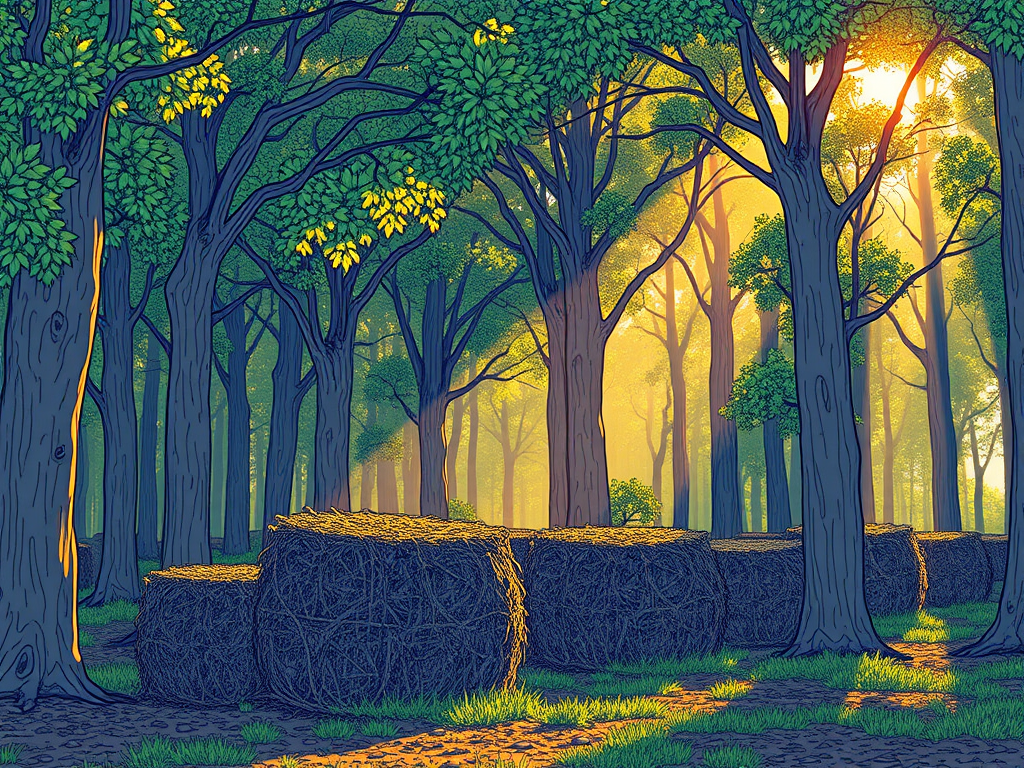
A recent study published in Industrial Crops & Products by S. Pérez, J. Fernandez-Ferreras, I. Fernandez, and L. Pérez from the Universidad de Cantabria, Spain, investigates the promising potential of converting logging residues from Eucalyptus globulus stands into biocharBiochar is a carbon-rich material created from biomass decomposition in low-oxygen conditions. It has important applications in environmental remediation, soil improvement, agriculture, carbon sequestration, energy storage, and sustainable materials, promoting efficiency and reducing waste in various contexts while addressing climate change challenges. More. Eucalyptus globulus is a widely cultivated tree species known for its high fiber quality and pulp yield, but its harvesting generates substantial amounts of residual biomassBiomass is a complex biological organic or non-organic solid product derived from living or recently living organism and available naturally. Various types of wastes such as animal manure, waste paper, sludge and many industrial wastes are also treated as biomass because like natural biomass these More, posing significant disposal challenges. This research explores slow pyrolysisPyrolysis is a thermochemical process that converts waste biomass into bio-char, bio-oil, and pyro-gas. It offers significant advantages in waste valorization, turning low-value materials into economically valuable resources. Its versatility allows for tailored products based on operational conditions, presenting itself as a cost-effective and efficient More as a method to transform these residues into value-added biochar, quantifying the potential yield per hectare and comparing its economic viability to electricity generation from the same biomass.
The study began by quantifying the residual biomass harvested from Eucalyptus globulus stands in Cantabria, northern Spain, an area with approximately 45,000 hectares of these plantations. They found that the amount of harvested residual biomass, collected in compacted bales, was roughly half the volume of debarked wood. The research revealed a positive correlation between harvested residual biomass and stand quality, with a notable difference of 61 tons per hectare ( t ha−1) between the highest and lowest quality stands. Under typical 15-year harvesting cycles and for the most common quality classes (4, 5, and 6), the estimated harvested residues were 188, 165, and 144bt ha−1, respectively. The efficiency of the collection process was determined to be approximately 69% when residues were piled at the roadside.
To determine biochar yield, pyrolysis tests were conducted on individual residue components: leaves, bark, and branches. The results showed that biochar yield generally decreased as the pyrolysis temperature increased. The highest biochar yields were obtained from leaves, followed by bark, and then branches. Specifically, the peak biochar yield for leaves was 61.27% at 300∘C and 0.1 L min−1 N2 flow. For the total residue, biochar yields ranged from 49.1% at 300∘C to 27.94% at 600∘C. Statistical analysis using Response Surface Methodology (RSM) indicated that temperature, the square of the N2 flow, and the square of temperature were significant factors influencing biochar yield. The empirical model developed had a high accuracy, with an R2 value of 98.67% for predicting biochar yield from the total residue.
Under optimal pyrolysis conditionsThe conditions under which pyrolysis takes place, such as temperature, heating rate, and residence time, can significantly affect the properties of the biochar produced. More, the estimated biochar yield per hectare ranged from 17.3 to 46.8 t ha−1, depending on the quality of the stands. Comparing revenue streams, the study found that sales of biochar alone could generate approximately 60% of the revenue obtained from selling electricity produced by combusting the same biomass. This comparison, while not accounting for operational and maintenance costs which are often substantial in combustion plants, highlights biochar production as a competitive valorization pathway for Eucalyptus globulus logging residues. The findings suggest that converting these residues into biochar not only addresses waste disposal but also offers a significant economic return and contributes to sustainable resource management.
Source: Pérez, S., Fernandez-Ferreras, J., Fernandez, I., & Pérez, L. (2025). Estimating biochar yield per hectare from logging residues in Eucalyptus globulus stands. Industrial Crops & Products, 230, 121098.



Leave a Reply