
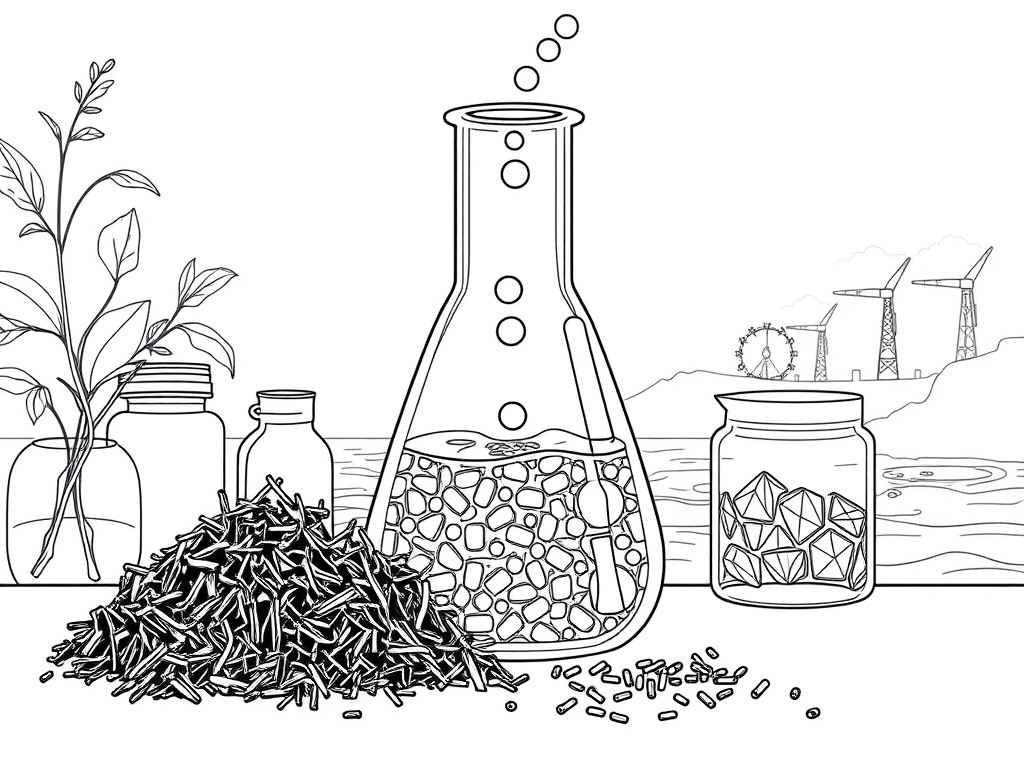
In a recent study published in the Journal of Water Process Engineering, Cheikh Gaye and colleagues explored the use of biocharBiochar is a carbon-rich material created from biomass decomposition in low-oxygen conditions. It has important applications in environmental remediation, soil improvement, agriculture, carbon sequestration, energy storage, and sustainable materials, promoting efficiency and reducing waste in various contexts while addressing climate change challenges. More from Guiera Senegalensis to remove amoxicillin from water. The research addresses the dual challenge of increasing environmental pollution from antibiotics and solid waste. The authors developed a biochar with high adsorption capacity and catalytic activity from this agricultural waste. This biochar, when combined with peroxymonosulfate, was used in an advanced oxidation process to degrade amoxicillin.
The study found that the combined process of 0.9 g/L of biochar and 0.01 mM of peroxymonosulfate achieved approximately 95.0% degradation of amoxicillin in distilled water and 90.0% in river water within 45 minutes. The mechanism behind this degradation involves both radical and non-radical pathways. The researchers also examined the influence of various inorganic salts on the process. Even with inhibitory effects from some salts, the removal efficiency remained around 80%.
Further tests in real-world water samples, including river water, fountain water, aquaculture facility water, and tap water, showed the system’s efficiency was comparable to that in pure water, especially in river water. Phytotoxicity assessments also indicated favorable performance in river water. This research introduces a novel biochar precursor, promotes the use of agricultural waste, and contributes to more sustainable wastewater treatment methods.
SOURCE: Gaye, C., Rodríguez-Chueca, J., Fuduo, A. O., Fall, M., & García-Muñoz, P. (2025). Upcycling Guiera Senegalensis waste into biochar for sustainable amoxicillin removal from water. Journal of Water Process Engineering, 73, 107726.




Leave a Reply