
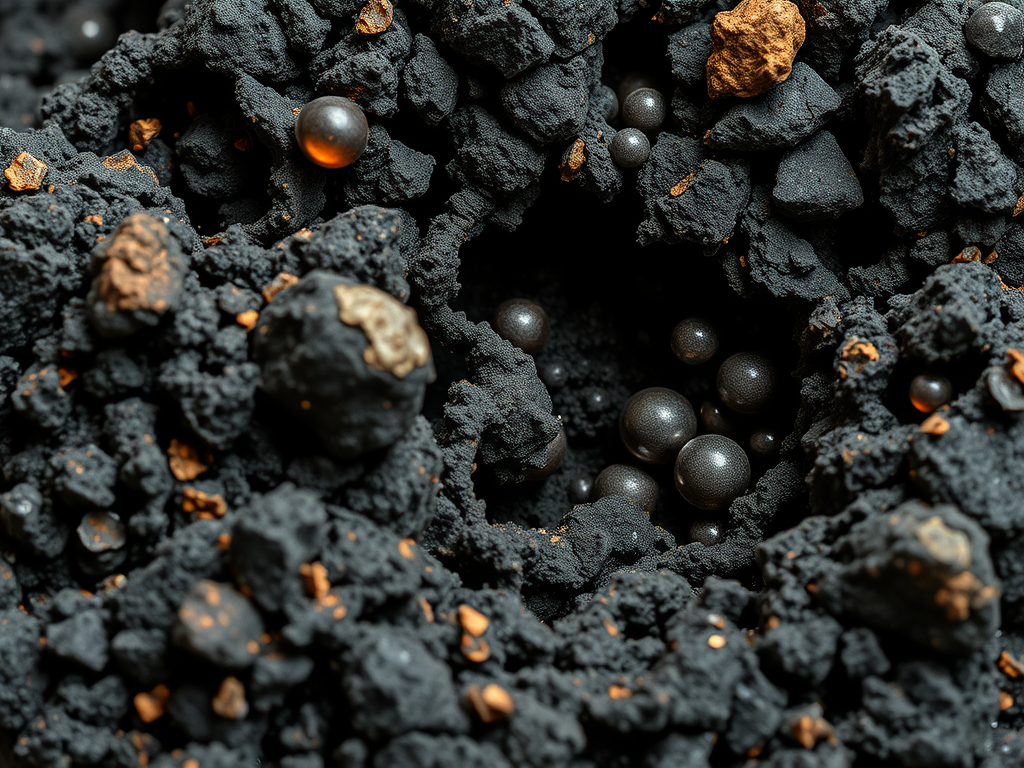
In a study published in ACS Omega, Xiaoyan Wang, Xiao Wang, Wanke Chen, Jing Yuan, and Qianfeng Zhang explored the use of a biocharBiochar is a carbon-rich material created from biomass decomposition in low-oxygen conditions. It has important applications in environmental remediation, soil improvement, agriculture, carbon sequestration, energy storage, and sustainable materials, promoting efficiency and reducing waste in various contexts while addressing climate change challenges. More composite for removing heavy metal ions from water. The researchers prepared a composite material (TBS) from straw biochar and sludge and tested its ability to adsorb copper (Cu(II)) and lead (Pb(II)).
The study revealed that the biochar composite has a significant pore structure and contains abundant active functional groups, such as hydroxyl, carboxyl, and carbonyl groups. These characteristics contribute to the material’s high adsorption capacity for heavy metal ions in aqueous solutions. The composite achieved maximum adsorption capacities of 60.86 mg/g for Cu(II) and 46.98 mg/g for Pb(II) at equilibrium, demonstrating its effectiveness in removing these pollutants.
The adsorption process was best described by the pseudo-second-order kinetic model and the Freundlich isotherm model. This suggests that chemical adsorption is the primary mechanism, and the process involves multilayer adsorption. Thermodynamic analyses indicated that the adsorption of Cu(II) and Pb(II) by the biochar composite is a spontaneous, entropy-increasing, and endothermic reaction.
The research confirms that the biochar composite (TBS) is a promising and cost-effective adsorbent for removing Cu(II) and Pb(II) from water. This finding has significant implications for addressing heavy metal pollution in water bodies, an increasingly serious environmental concern.
Source: Wang, X., Wang, X., Chen, W., Yuan, J., & Zhang, Q. (2025). Adsorption of Cu(II) and Pb(II) in Aqueous Solution by Biochar Composites. ACS Omega



Leave a Reply