
The Suffolk County Water Authority (SCWA) in the United States has partnered with Stony Brook University to evaluate the effectiveness of biocharBiochar is a carbon-rich material created from biomass decomposition in low-oxygen conditions. It has important applications in environmental remediation, soil improvement, agriculture, carbon sequestration, energy storage, and sustainable materials, promoting efficiency and reducing waste in various contexts while addressing climate change challenges. More in removing per- and polyfluoroalkyl substances (PFAS) from groundwater. This research collaboration focuses on identifying sustainable and cost-effective alternatives to traditional water treatment methods. By leveraging academic expertise and utility resources, the project aims to determine if locally sourced biochar can meet stringent regulatory standards for drinking water safety.
The primary challenge addressed by this study is the presence of persistent chemical contaminants, specifically PFAS, which are difficult to remove using standard filtration. Traditional treatment often relies on Granulated Activated CarbonActivated carbon is a form of carbon that has been processed to create a vast network of tiny pores, increasing its surface area significantly. This extensive surface area makes activated carbon exceptionally effective at trapping and holding impurities, like a molecular sponge. It is commonly More (GAC), which can be expensive to produce and transport. As water quality regulations become more rigorous, utilities like SCWA face increasing pressure to find efficient, long-term solutions that reduce their environmental impact and operational costs while ensuring the health of the public.
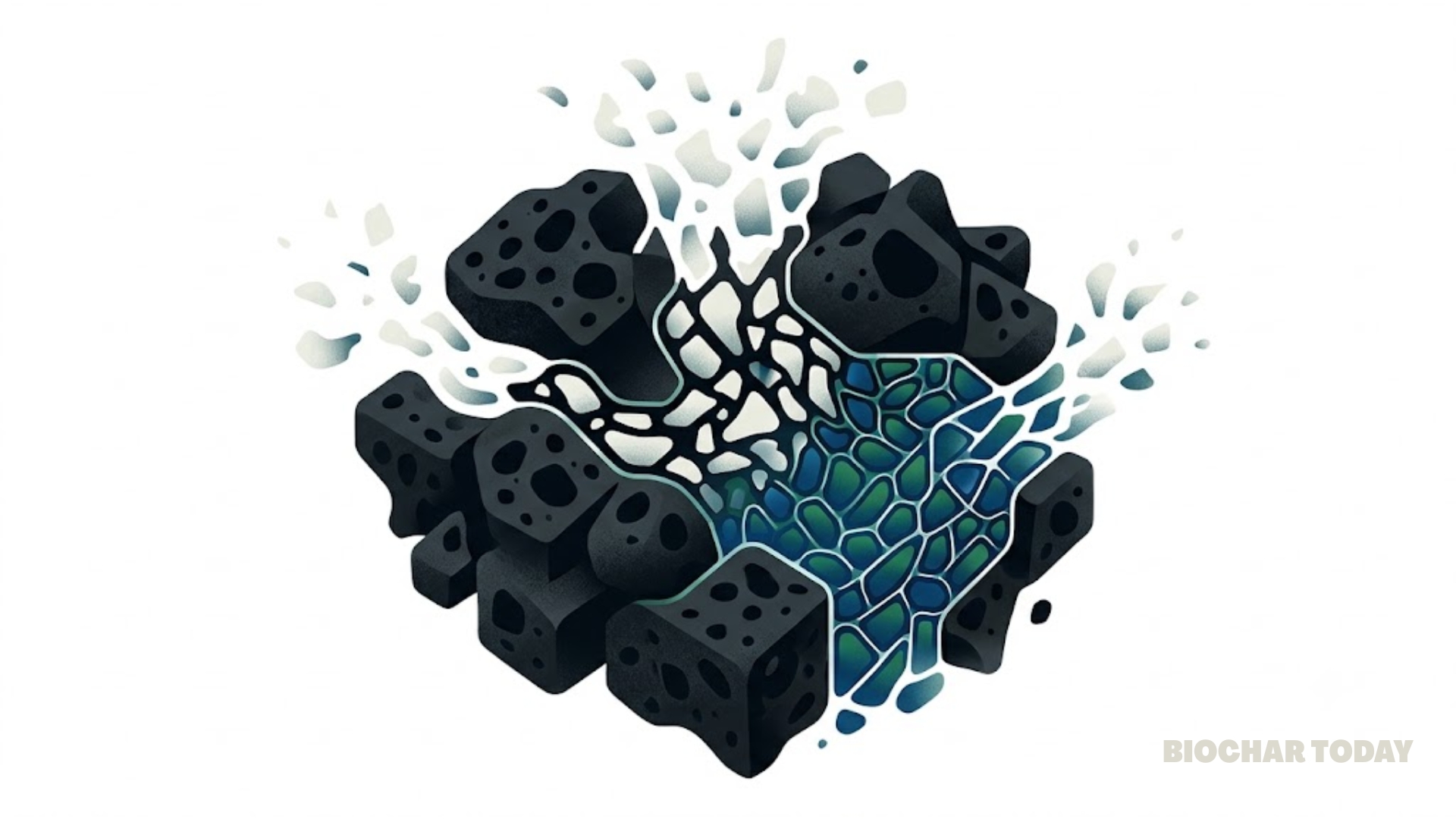
The proposed solution involves using biochar, a porous material created through the pyrolysisPyrolysis is a thermochemical process that converts waste biomass into bio-char, bio-oil, and pyro-gas. It offers significant advantages in waste valorization, turning low-value materials into economically valuable resources. Its versatility allows for tailored products based on operational conditions, presenting itself as a cost-effective and efficient More of biomassBiomass is a complex biological organic or non-organic solid product derived from living or recently living organism and available naturally. Various types of wastes such as animal manure, waste paper, sludge and many industrial wastes are also treated as biomass because like natural biomass these More, as an adsorbent in the water treatment process. Researchers at Stony Brook University are testing various feedstocks and pyrolysis conditionsThe conditions under which pyrolysis takes place, such as temperature, heating rate, and residence time, can significantly affect the properties of the biochar produced. More to optimize the material’s physical and chemical properties for contaminant capture. The study explores the “reservoir effect” and the high surface area of biochar to facilitate the diffusion and adsorption of harmful compounds from the water supply.
Preliminary outcomes suggest that biochar can serve as a promising sustainable additive for water purification. Initial findings indicate that the material’s enhanced pore structure can effectively trap contaminants, potentially offering a more cost-effective approach than traditional GAC. If successful, this study could lead to the large-scale implementation of biochar-based filtration systems, promoting waste recycling and significant carbon sequestration within the utility infrastructure.



Leave a Reply