
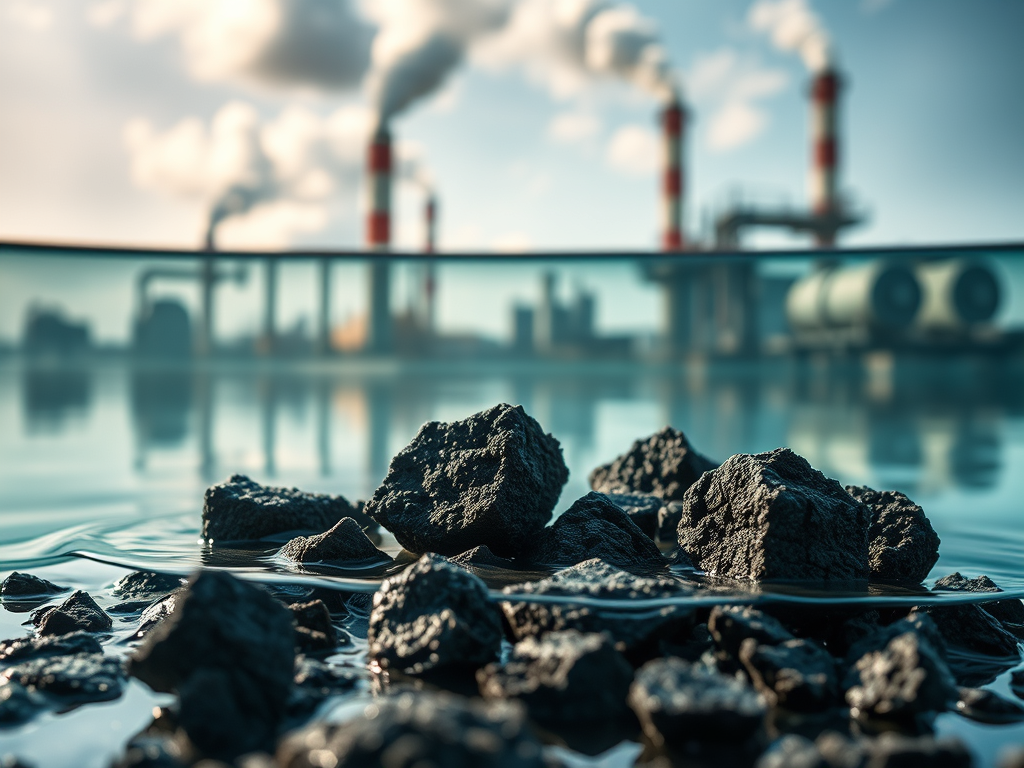
Pollution from industrial chemicals threatens water supplies worldwide. In a study published in BiocharBiochar is a carbon-rich material created from biomass decomposition in low-oxygen conditions. It has important applications in environmental remediation, soil improvement, agriculture, carbon sequestration, energy storage, and sustainable materials, promoting efficiency and reducing waste in various contexts while addressing climate change challenges. More, Zilong Zhao and colleagues explore how biochar—charcoal-like material made from plant waste—can be modified to create persistent free radicals (PFRs) that break down harmful pollutants like aniline. Their research sheds light on how we can engineer biochar to be a more efficient, sustainable catalyst for water purification.
By tweaking the way biochar is made, the researchers optimized its ability to generate PFRs, which react with peroxymonosulfate (PMS) to produce powerful oxidants. These oxidants, particularly superoxide radicals (O₂⋅⁻), can degrade aniline, a toxic compound used in dyes and plastics. The modified biochar removed 92% of aniline within 30 minutes. Key to this success was the addition of nitrogen and sodium carbonate, which altered the biochar’s surface chemistry, increasing its ability to hold and transfer electrons.
Notably, the study found that biochar’s effectiveness is closely tied to specific structural features, such as carbon-carbon double bonds and pyridinic nitrogen groups. These factors influence the concentration of PFRs and determine how well biochar catalyzes pollutant breakdown. Unlike traditional oxidants that degrade quickly, biochar-based PFRs remain stable, making them promising for long-term water treatment applications.
This research highlights biochar’s potential as a low-cost, environmentally friendly alternative for treating wastewater. Future work will refine its durability and efficiency, paving the way for large-scale applications in pollution control.
Zhao, Z., Zhu, S., Qi, S., Zhou, T., Yang, Y., Wang, F., Han, Q., Dong, W., Wang, H., & Sun, F. (2025). Collaborative modification strategy to improve the formation of biochar-derived persistent free radicals for aniline removal via peroxymonosulfate activation. Biochar, 7(24). https://doi.org/10.1007/s42773-024-00416-0


![Eucalyptus Wood Waste-Derived Biochar Achieves a Ninety-Eight Percent Removal Efficiency for Benzo[ghi]perylene in Vehicle-Wash Wastewater](https://biochartoday.com/wp-content/uploads/2026/10/SCIENCE-BLOGS-2026-2026-10-19T160523.703.jpg)

Leave a Reply