

In a recent review published in Advanced Science, Devika Laishram, Su-Bin Kim, Seul-Yi Lee, and Soo-Jin Park explore the advancements in using biocharBiochar is a carbon-rich material created from biomass decomposition in low-oxygen conditions. It has important applications in environmental remediation, soil improvement, agriculture, carbon sequestration, energy storage, and sustainable materials, promoting efficiency and reducing waste in various contexts while addressing climate change challenges. More for water pollution mitigation. This “black gold,” derived from biomassBiomass is a complex biological organic or non-organic solid product derived from living or recently living organism and available naturally. Various types of wastes such as animal manure, waste paper, sludge and many industrial wastes are also treated as biomass because like natural biomass these More waste, is making significant strides in combating water pollution. The authors highlight biochar’s exceptional ability to remove over 90% of heavy metals like lead and cadmium from contaminated water.
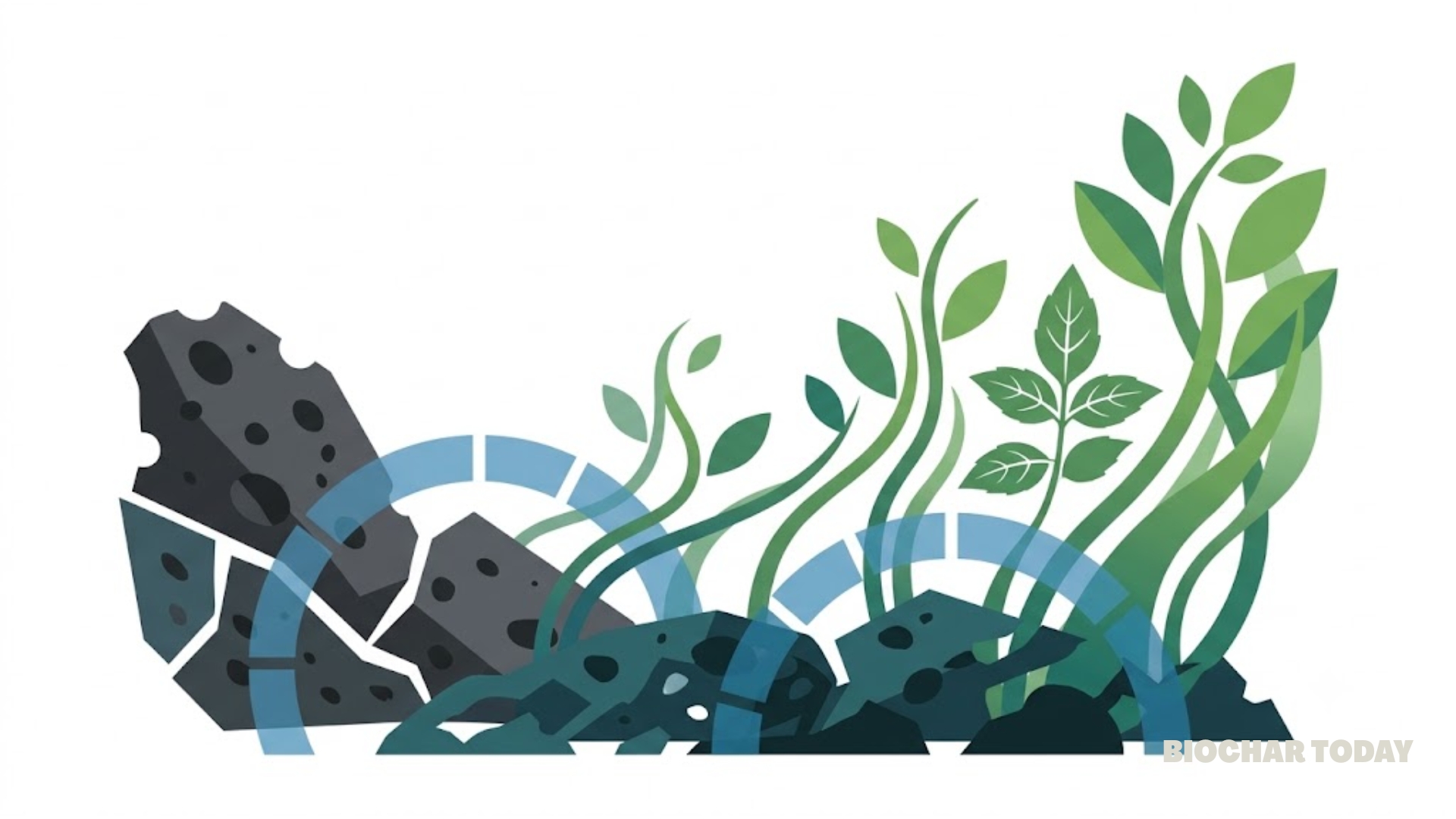
Biochar, produced from the thermal decomposition of biomass, is proving to be a powerful tool in removing pollutants from wastewater. Its effectiveness stems from its unique physicochemical properties, which can be tailored by adjusting the source material and preparation methods. This customization allows biochar to target a wide array of pollutants, enhancing its adsorption capacity.
The review emphasizes biochar’s efficacy not only against heavy metals but also in addressing organic pollutants. Biochar demonstrates over 85% adsorption capacity for pollutants such as dyes and phenols, showcasing its broad applicability in wastewater treatment. Furthermore, it achieves over 80% reduction in microplastics and nanoplastics, addressing a growing environmental concern.
Various preparation technologies, including pyrolysisPyrolysis is a thermochemical process that converts waste biomass into bio-char, bio-oil, and pyro-gas. It offers significant advantages in waste valorization, turning low-value materials into economically valuable resources. Its versatility allows for tailored products based on operational conditions, presenting itself as a cost-effective and efficient More, carbonization, gasificationGasification is a high-temperature, thermochemical process that converts carbon-based materials into a gaseous fuel called syngas and solid by-products. It takes place in an oxygen-deficient environment at temperatures typically above 750°C. Unlike combustion, which fully burns material to produce heat and carbon dioxide (CO2), gasification More, torrefaction, and rectification, play a crucial role in optimizing biochar’s performance. These methods, combined with physical, chemical, and biological modifications, enhance its ability to remove specific contaminants. The review delves into the mechanisms by which biochar effectively removes organic pollutants, inorganic salts, pharmaceutical contaminants, microplastics, nanoplastics, and volatile organic compounds.
Looking ahead, the authors also introduce machine learning as a key technique to predict and optimize biochar’s performance. This integration of advanced computational methods promises to further refine biochar’s application in environmental remediation, making it an even more sustainable and efficient solution for water pollution. In summary, biochar stands out as a promising, sustainable adsorbent, offering significant potential to mitigate water pollution challenges effectively.
SOURCE: Laishram, D., Kim, S.-B., Lee, S.-Y., & Park, S.-J. (2025). Advancements in Biochar as a Sustainable Adsorbent for Water Pollution Mitigation. Advanced Science, n/a(n/a), 2410383.


Leave a Reply