

Key Takeaways
- Computer models can now predict how well a filter will clean toxic metals from the environment with over ninety-nine percent accuracy.
- A material’s electrical “stickiness” and the amount of metal present are the most important factors for successful cleaning.
- Surprisingly, a filter’s chemical properties are more important for grabbing metals than the size of its physical pores.
- This smart technology allows scientists to design high-performance filters using artificial intelligence instead of expensive trial-and-error experiments.
- Converting farm waste into these filters helps clean drinking water while reducing pollution in a sustainable, eco-friendly way.
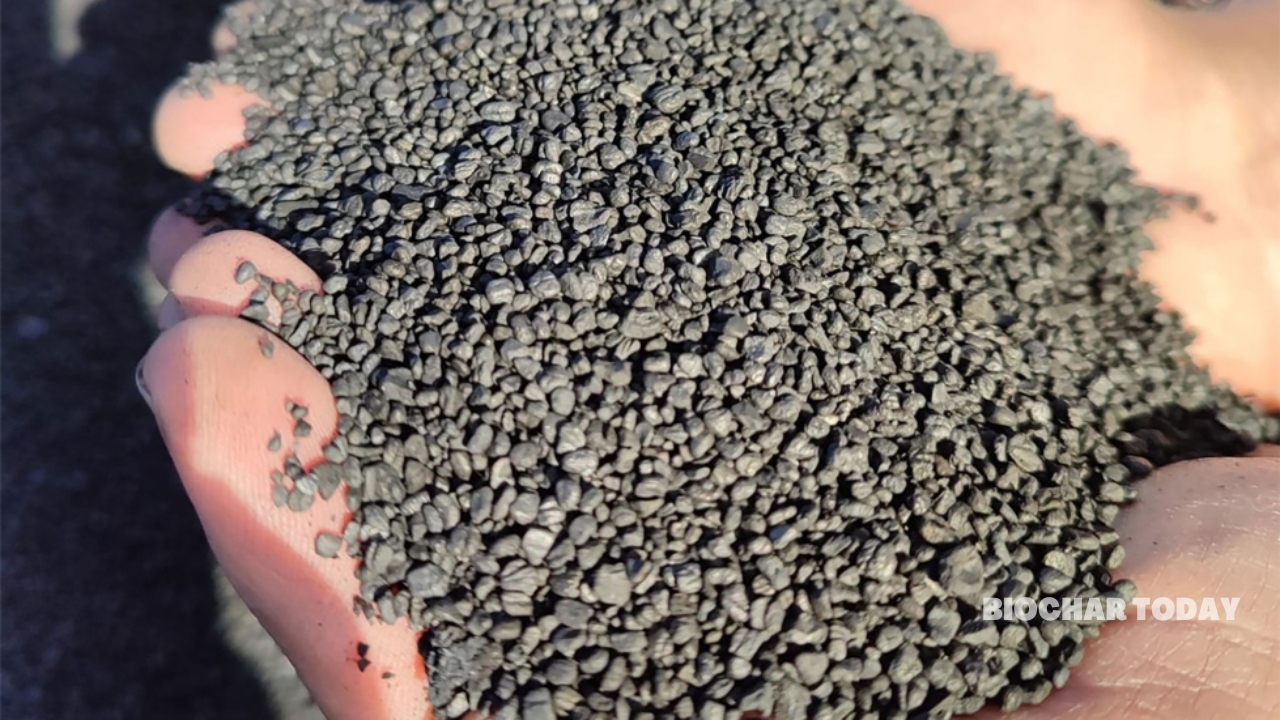
In a study published in Current Research in Biotechnology, authors Mahran Al-Zyoud, Samim Sherzod, and their international colleagues developed an advanced framework to solve the unpredictability of environmental cleaning materials. BiocharBiochar is a carbon-rich material created from biomass decomposition in low-oxygen conditions. It has important applications in environmental remediation, soil improvement, agriculture, carbon sequestration, energy storage, and sustainable materials, promoting efficiency and reducing waste in various contexts while addressing climate change challenges. More, a charcoal-like substance made from waste, has long been a promising candidate for soaking up heavy metals from industrial and agricultural runoff. However, its effectiveness has traditionally varied wildly based on the type of waste used and how it was processed, making it difficult for engineers to rely on it for large-scale water treatment. By turning to machine learning, the researchers created a way to look at the chemical traits of a material and predict its performance before it ever hits the water.
The team evaluated eight different types of artificial intelligence to determine which could best navigate the complex relationships between a material’s physical traits and its cleaning power. While many standard models struggled with the inconsistent nature of the data, a specific type of deep learning model known as a Convolutional Neural Network emerged as the clear winner. This model captured subtle patterns that other methods missed, proving that sophisticated digital tools can understand the physics of environmental chemistry. The model’s success was remarkable, achieving a near-perfect score in its ability to match real-world experimental results with simulated predictions.
One of the most striking findings of the study was the hierarchy of factors that determine whether a material will work. For decades, many scientists believed that the physical surface area and the size of a material’s tiny pores were the most critical features for a good filter. However, this new digital analysis revealed that chemical functionality is actually the dominant force. Specifically, a material’s ability to exchange electrical charges and the initial concentration of the metal in the water were the strongest predictors of success. In fact, the model showed that some materials with very high surface areas actually performed worse because they lacked the specific chemical groups needed to grab onto toxic ions.
The researchers also uncovered a direct relationship between a material’s acidity and its cleaning capacity. They found that materials with higher alkalinity often had a negative impact on metal uptake because their surface charge ended up repelling the very toxic metals they were supposed to attract. On the other hand, materials rich in oxygen and nitrogen groups acted as superior bases, providing abundant active sites for heavy metal coordination. This level of detail allows scientists to fine-tune the production process, adjusting the temperature and the starting waste material to maximize these beneficial chemical traits while minimizing the traits that hinder cleaning.
This research provides a major boost to the circular economy by showing how diverse waste streams—including agricultural leftovers, food waste, and even sewage sludge—can be reliably transformed into high-value environmental protectors. Instead of relying on costly and slow laboratory experiments, engineers can now use this predictive engine to rationally select the best recipes for cleaning specific pollutants. This transition from trial-and-error to digital design means that large-scale environmental remediation can become more affordable and effective. By proving that smart models can learn the physical laws of attraction and movement, the study paves the way for a new era of automated, sustainable water purification.
This breakthrough is complemented by findings in the journal Technologies by author Sasirot Khamkure and colleagues, who applied similar artificial intelligence to pecan shell waste. Their optimized magnetic biochar achieved over 90% arsenic removal, specifically outperforming less efficient versions by 50.61%. This practical application proved highly effective in real groundwater from the La Laguna region, where the material maintained its selectivity despite competing ions like sodium and sulfate. Furthermore, the magnetic properties of these materials allow for easy recovery and reuse for up to six cycles while retaining over 70% of their capacity. Together, these studies demonstrate that AI-driven design is the key to transforming agricultural waste into high-performance tools for global clean water goals.
Source: Al-Zyoud, M., Mostafa, S. A., Khersan, I., Jd, G., Sahu, P. K., Singla, S., Sabirov, S., Khudayberganov, I., & Sherzod, S. (2026). Effects of physical properties on the heavy metal adsorption of biochar via a robust approach. Current Research in Biotechnology, 11, 100367.




Leave a Reply