
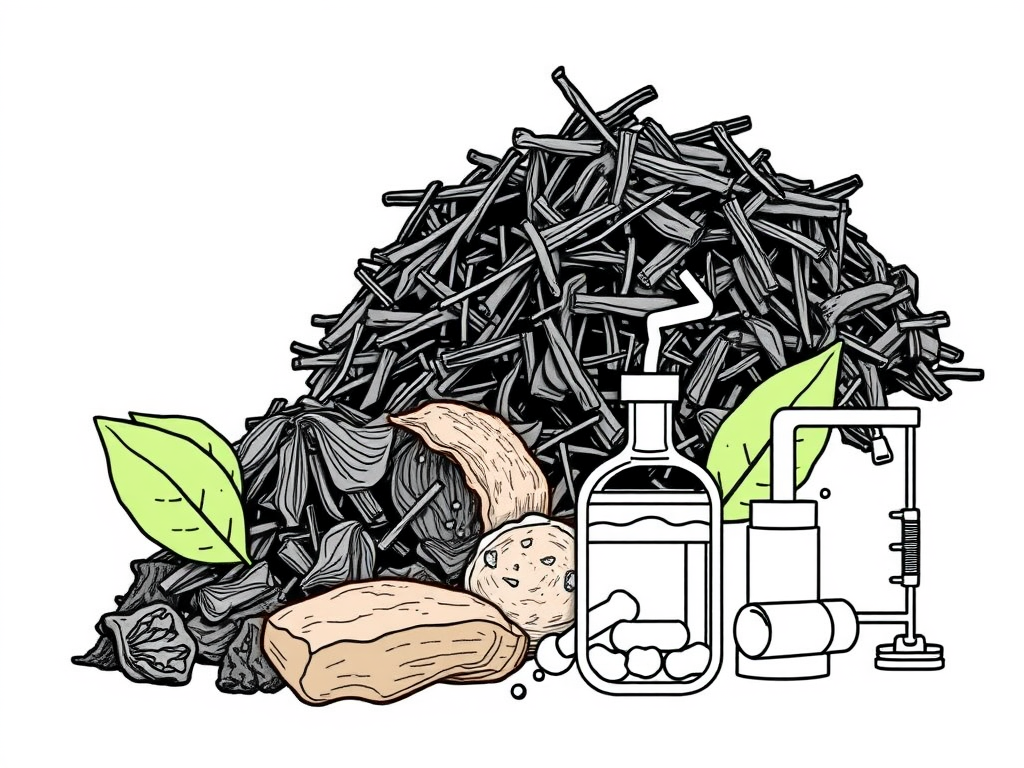
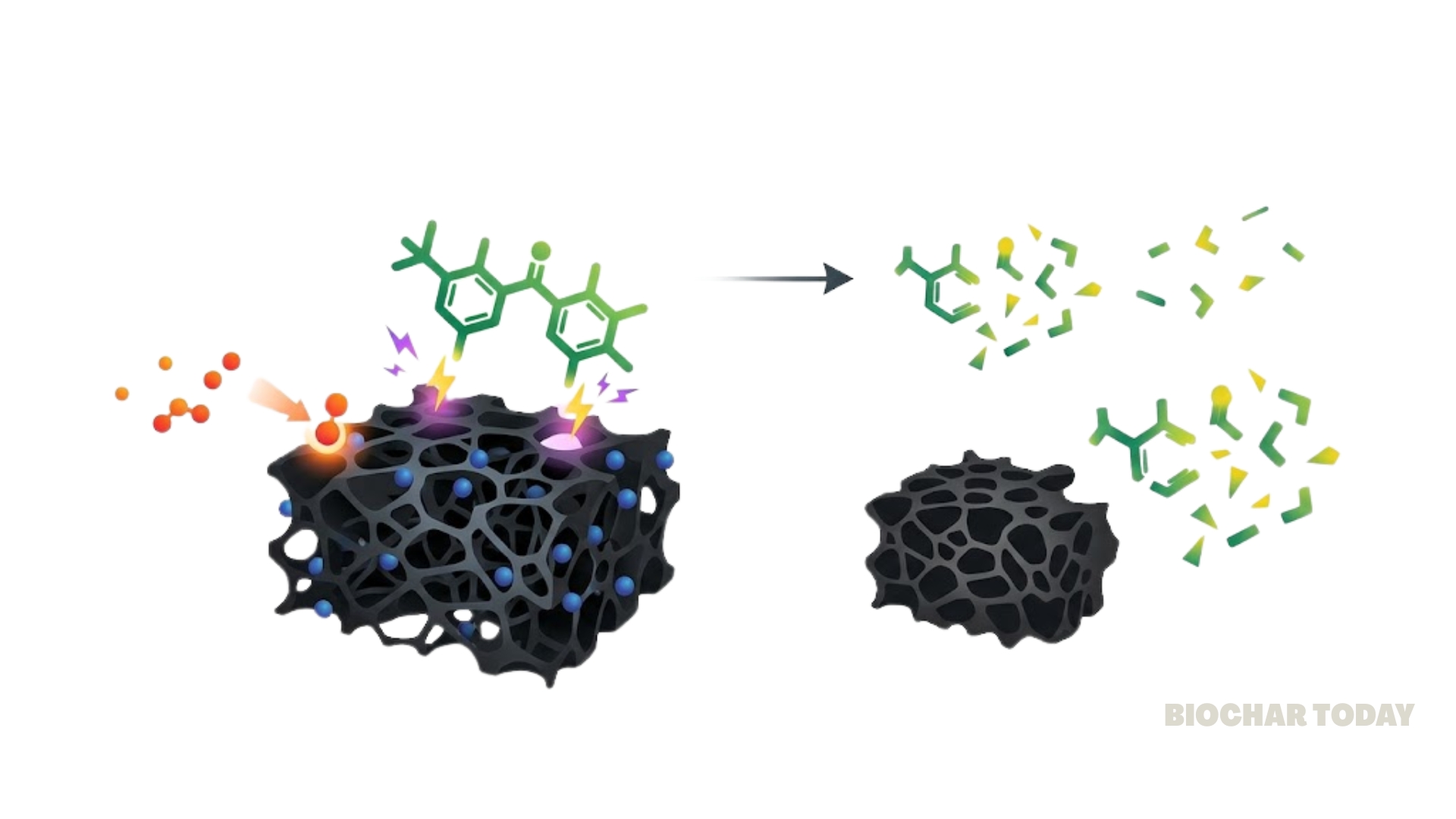
The increasing presence of tetracyclines (TCs) in water, largely due to intensive aquaculture, poses significant environmental and health risks by promoting antibiotic resistance and disrupting aquatic ecosystems. Current methods for removing TCs are often costly or inefficient. A promising alternative is biocharBiochar is a carbon-rich material created from biomass decomposition in low-oxygen conditions. It has important applications in environmental remediation, soil improvement, agriculture, carbon sequestration, energy storage, and sustainable materials, promoting efficiency and reducing waste in various contexts while addressing climate change challenges. More, a cost-effective material with excellent adsorption capabilities. A recent study published in Bioresource Technology by Na Li, Xiaochen Zhu, Yahui Miao, Zhenyao Wang, Carol Sze Ki Lin, and Chong Li, explores how to optimize biochar preparation for maximum tetracycline removal.
This research used a meta-analysis of 110 articles, incorporating 537 observations, to identify key factors influencing biochar’s ability to adsorb TCs. The study found that pyrolysisPyrolysis is a thermochemical process that converts waste biomass into bio-char, bio-oil, and pyro-gas. It offers significant advantages in waste valorization, turning low-value materials into economically valuable resources. Its versatility allows for tailored products based on operational conditions, presenting itself as a cost-effective and efficient More temperature and the method of modification are crucial, with higher pyrolysis temperatures (especially above 600∘C) and acid or salt pre-treatments significantly boosting adsorption capacity. The meta-analysis also predicted that specific pyrolysis temperatures combined with acid or salt modification would lead to superior biochar performance.
To validate these predictions, experiments were conducted using biochar derived from pine, poplar, wheat, rice, and corn, modified with various salts (like CaCl2, ZnCl2, MgSO4) and acids (like H3PO4, H2SO4, HNO3). The results confirmed the model’s accuracy: modified biochars indeed showed significantly increased adsorption capacities. Notably, biochar prepared from biomassBiomass is a complex biological organic or non-organic solid product derived from living or recently living organism and available naturally. Various types of wastes such as animal manure, waste paper, sludge and many industrial wastes are also treated as biomass because like natural biomass these More modified with 1 M H2SO4 for 24 hours and pyrolyzed at 700∘C achieved an adsorption capacity of 637.71 mg/g, a value higher than any previously reported. This highlights a new strategy for creating custom biochar with specific functions.
The study also investigated factors that were not as significant. Despite conventional understanding, biomass type (e.g., wood, straw, peel) was not a critical factor influencing biochar’s adsorption capacity for TCs in water bodies according to the meta-analysis. This suggests that a wider range of agricultural waste can be used, improving resource efficiency and economic viability. Additionally, pyrolysis retention time (how long the biochar is heated) did not significantly affect adsorption capacity , with even short durations (around 1 hour) being sufficient to form biochar with favorable adsorption properties. This finding is important for energy conservation during biochar production.
Elemental composition analysis revealed that higher adsorption biochars were found to have N and H contents of 0-2% and 0-3%, respectively, aligning with the meta-analysis predictions. In contrast, low-adsorption biochars often had H contents exceeding 3%. While C contents were mainly greater than 40%, no specific range corresponded to significantly higher adsorption capacities, indicating C content alone does not strongly correlate with adsorption capacity. These findings confirm that N and H are primary determinants of biochar adsorption performance. The influence of environmental pHpH is a measure of how acidic or alkaline a substance is. A pH of 7 is neutral, while lower pH values indicate acidity and higher values indicate alkalinity. Biochars are normally alkaline and can influence soil pH, often increasing it, which can be beneficial More was also studied, showing that environmental pH is a crucial factor affecting TCs adsorption onto biochar. Biochar’s adsorption capacity tends to increase slightly with solution rising pH from 1 to 7 but decreases as pH increases from 7 to 12, indicating a neutral solution pH range is generally optimal for biochar application in remediating water contaminated with organic pollutants.
The kinetic and isotherm experiments further supported the findings. A pseudo-first-order kinetics model was used to simulate the adsorption dynamics of TCH on the selected biochars, showing rapid initial adsorption.
While this study primarily focused on plant-based biomass and tetracyclines, the identified adsorption mechanisms can be applied to other antibiotics with similar characteristics, such as those with fused aromatic systems or metal-chelating groups. Future research could validate biochar designs for other antibiotic groups or develop machine learning models for broader predictions across antibiotic classes. This research provides a robust scientific framework for creating customized biochar, advancing sustainable aquaculture practices and environmental protection through innovative water remediation strategies.
Source: Li, N., Zhu, X., Miao, Y., Wang, Z., Lin, C. S. K., & Li, C. (2025). Meta-analysis and empirical research on the effectiveness of biochar in remediating tetracyclines pollution in water bodies. Bioresource Technology, 435, 132917.


Leave a Reply