
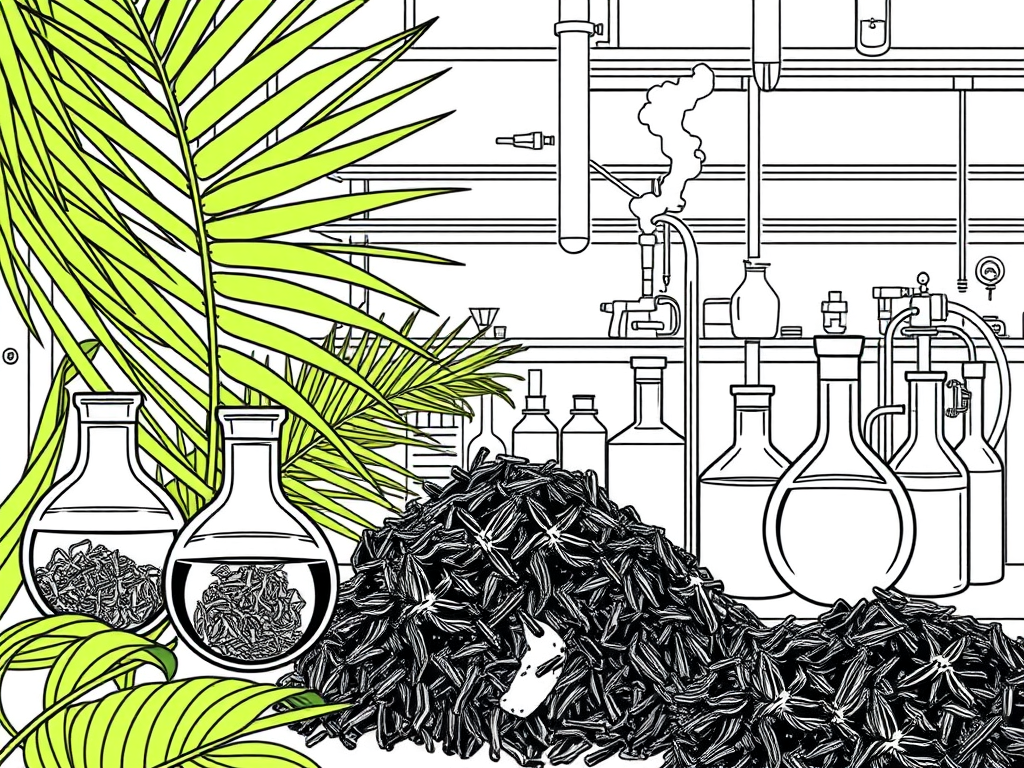
In a study published in Waste Disposal & Sustainable Energy, researchers Mutamima, A., Sunarno, S., et al. explored methods to enhance the production of biocharBiochar is a carbon-rich material created from biomass decomposition in low-oxygen conditions. It has important applications in environmental remediation, soil improvement, agriculture, carbon sequestration, energy storage, and sustainable materials, promoting efficiency and reducing waste in various contexts while addressing climate change challenges. More from oil palm fronds (OPF). OPF, an abundant waste product of the palm oil industry, has potential as a sustainable fuel, but its high potassium content can cause problems in boilers. This study investigated a combination of acidic pretreatment and co-torrefaction with waste cooking oil (WCO) to address these issues and improve biochar quality. The method addresses a key challenge in using oil palm fronds (OPF) – a waste product of the palm oil industry – as a fuel source. OPF contains high levels of potassium, which can cause fouling and slagging in boilers, reducing their efficiency.
The researchers tackled this problem with a two-pronged approach. First, they pretreated the OPF with an acidic liquid derived from the torrefaction process itself. This acidic pretreatment effectively leached out the potassium, reducing its content in the biomassBiomass is a complex biological organic or non-organic solid product derived from living or recently living organism and available naturally. Various types of wastes such as animal manure, waste paper, sludge and many industrial wastes are also treated as biomass because like natural biomass these More by approximately 41%. Second, they co-torrefied the pretreated OPF with waste cooking oil (WCO). Co-torrefaction involves heating two materials together, and in this case, the WCO enhanced the biochar’s energy content.
The co-torrefaction process, optimized in this study, resulted in a biochar product with improved fuel properties. The addition of WCO increased the biochar’s fixed carbon content and reduced its oxygen level, leading to a higher heating value (HHV). The resulting biochar demonstrated a good mass yield (60.95%) and a high energy yield (87.43%), making it a more attractive alternative fuel.
Source: Mutamima, A., Sunarno, S., Purnama, I., Nurfatihayati, N., Novendri, A., Anesta, R., & Irianty, R.S. (2025). High-efficiency biochar production from oil palm fronds using acidic pretreatment and co-torrefaction with waste cooking oil. Waste Disposal & Sustainable Energy.



Leave a Reply