
As the demand for sustainable practices grows and legislation around emissions tightens, businesses across sectors are looking for innovative ways to reduce their carbon footprint. For those in the biocharBiochar is a carbon-rich material created from biomass decomposition in low-oxygen conditions. It has important applications in environmental remediation, soil improvement, agriculture, carbon sequestration, energy storage, and sustainable materials, promoting efficiency and reducing waste in various contexts while addressing climate change challenges. More production industry, integrating carbon capture into operations isn’t just a climate-conscious move – it’s a strategic investment that can unlock new value, diversify income streams and enhance long-term organizational resilience.
The biochar advantage: locking in carbon
Biochar, produced through pyrolysisPyrolysis is a thermochemical process that converts waste biomass into bio-char, bio-oil, and pyro-gas. It offers significant advantages in waste valorization, turning low-value materials into economically valuable resources. Its versatility allows for tailored products based on operational conditions, presenting itself as a cost-effective and efficient More of organic material such as wood waste, is already recognized for its carbon sequestration potential. It locks carbon into a stable form that can remain in the soil for hundreds to thousands of years, improving soil health, increasing water retention, and supporting biodiversity. In fact, biochar is frequently promoted as a “negative emissions” technology because it removes CO₂ from the atmosphere and stores it long term.
However, during the pyrolysis process, gases containing carbon dioxide, carbon monoxide, methane and other hydrocarbons are released. Traditionally, these gases might be used to generate heat and electricity but a carbon capture system offers a new way to monetise and manage these emissions.
Why add carbon capture
By integrating carbon capture into the biochar production process, operators can collect and purify CO₂ from the flue gas stream. This opens the door to several benefits:
- Generate high-purity CO₂ for sale. Captured CO₂ – especially when processed to food-grade or industrial standards – can be sold to a wide range of sectors, including food and drink production and controlled environment agriculture. In a market where food-grade CO₂ prices have seen extreme volatility and shortages (including a fivefold price spike in 2021), a local, consistent source is extremely attractive to buyers.
- Diversify income streams. In addition to revenue from biochar sales, producers can sell captured CO₂ and in some cases access carbon credits through recognised voluntary markets. This diversification can make a facility more financially stable and provide a faster return on investment (ROI).
- Improve overall carbon balance. While biochar itself locks in carbon, emissions from the pyrolysis process can dilute the overall carbon benefit. Capturing and storing or utilising this CO₂ improves the total carbon life cycle assessment, boosting the credibility of the biochar product and making it more appealing to ESG-focused buyers and markets.
- Stay ahead of regulations. Governments around the world are introducing stricter climate disclosure and emissions reporting rules, such as the UK’s Streamlined Energy and Carbon Reporting (SECR) regulations or the EU’s Corporate Sustainability Reporting Directive (CSRD). Businesses that demonstrate carbon capture and negative emissions will be better positioned for compliance, access to funding and partnership opportunities.
- Access carbon credits and incentives. Biochar projects with carbon capture are eligible for various carbon offset mechanisms, which could become a significant secondary revenue stream for biochar producers as carbon credit prices steadily rise.
A circular model that adds resilience
Combining biochar production and carbon capture fits neatly within a circular economy model, where resources are retained within the value chain for as long as possible, reducing waste, lowering environmental impact and contributing to social and economic value. By enabling producers to turn waste biomassBiomass is a complex biological organic or non-organic solid product derived from living or recently living organism and available naturally. Various types of wastes such as animal manure, waste paper, sludge and many industrial wastes are also treated as biomass because like natural biomass these More into high-value biochar, clean energy, and captured CO₂ – all while significantly reducing net emissions – businesses can:
- Reduce reliance on volatile external energy or CO₂ supplies
- Create local value from waste and residues
- Improve security of supply for clients and customers
- Contribute to national and global net zero targets
In uncertain energy and CO₂ markets, a circular economy approach adds much-needed stability and resilience.
Technical considerations and investment
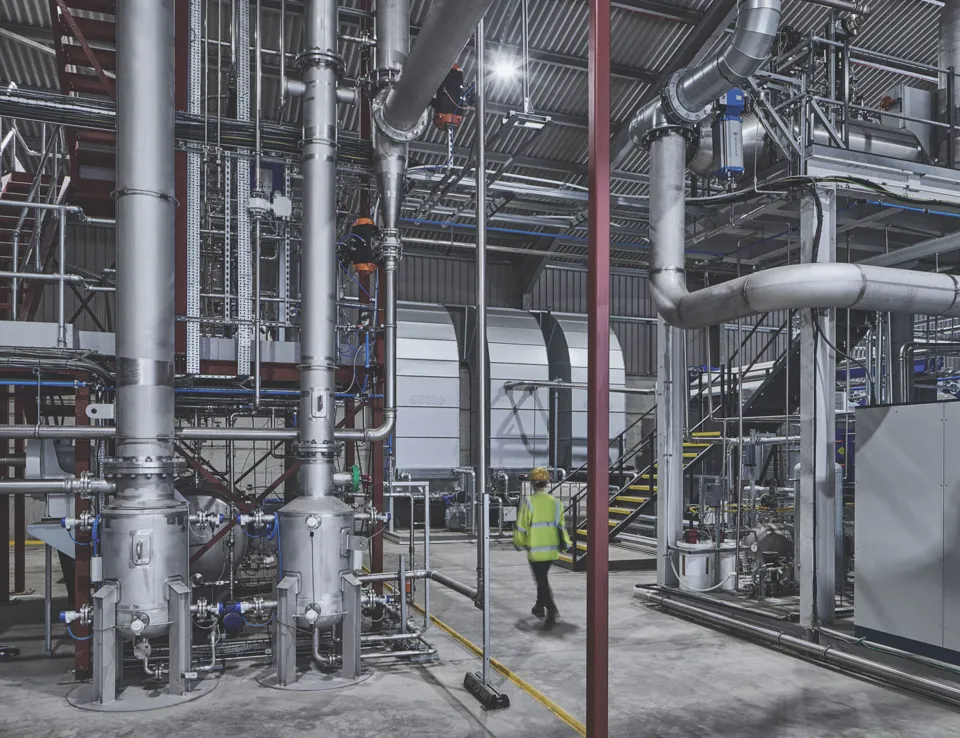
Installing a carbon capture unit on a biochar plant does require capital investment, typically depending on the scale of operations and desired output purity. However, the cost of capture has come down significantly with modular, containerised units making it more accessible than ever, even for mid-sized operations.
Safety and compliance are important, particularly when aiming to produce food-grade CO₂ which must meet specific quality and storage standards. These include gas purification, compression and in some cases liquefaction or refrigeration for transport or sale. It’s crucial to work with qualified technology partners to ensure safety and certification.
Market opportunities on the rise
The global carbon dioxide market is forecast to grow steadily, driven by demand in food, agriculture, pharmaceuticals and carbonated drinks. The UK has already experienced CO₂ supply challenges, making locally produced CO₂ from carbon capture increasingly attractive. Similarly, the biochar market is expected to grow at over 12% annually as industries like farming, construction and environmental remediation increase their use of the material.
By offering both biochar and captured CO₂, biochar producers can build a future-proofed business model, less vulnerable to supply chain shocks and better aligned with sustainability and ESG requirements.
A smart, sustainable move
Carbon capture is more than an environmental add-on; it’s a business enabler. For the biochar industry, it represents a chance to maximise the climate benefit, open new revenue channels and stay ahead of regulatory and market changes. Whether your business is focused on sustainability, profitability or both, carbon capture is an investment worth considering.



Leave a Reply