
Robert W. Cheatham is a PhpH is a measure of how acidic or alkaline a substance is. A pH of 7 is neutral, while lower pH values indicate acidity and higher values indicate alkalinity. Biochars are normally alkaline and can influence soil pH, often increasing it, which can be beneficial More.D. student in Chemical Engineering at theFlorida Institute of Technology, where his research focuses on biochar-based solutions for environmental remediation and sustainable resource management,under the effective guidance of Professor Toufiq Reza. Trained as a chemical engineer with a minor in nanotechnology, Robert brings a strong process-level and materials-focused perspective to biocharBiochar is a carbon-rich material created from biomass decomposition in low-oxygen conditions. It has important applications in environmental remediation, soil improvement, agriculture, carbon sequestration, energy storage, and sustainable materials, promoting efficiency and reducing waste in various contexts while addressing climate change challenges. More research. His work explores the modification and functionalization of biochar for harmful algal bloom mitigation, water quality improvement, and enhanced water retention—applications that directly address pressing environmental challenges. A notable aspect of his research is the integration of experimental methods with data-driven approaches, including machine learning models to predict and optimize solid treatment strategies.
Robert has contributed to multiple externally funded research projects supported by agencies such as the U.S. HAB CTI, EPA, Florida Sea Grant, and the Florida Department of Environmental Protection. He has authored peer-reviewed publications and presented his work at national scientific conferences, where he has received recognition for both technical quality and clarity of communication. In addition to his academic research, Robert has gained applied experience through an internship at Lawrence Berkeley National Laboratory’s Joint BioEnergy Institute, working on advanced biofuel synthesis and catalytic process development. His broader expertise spans biomassBiomass is a complex biological organic or non-organic solid product derived from living or recently living organism and available naturally. Various types of wastes such as animal manure, waste paper, sludge and many industrial wastes are also treated as biomass because like natural biomass these More processing, material characterization, and environmental applications of carbon-based materials. Through his work, Robert represents a new generation of biochar researchers—combining fundamental chemical engineering, applied environmental science, and innovation-driven problem solving.
I am pleased to feature his research and perspectives as part of our ongoing effort to highlight rigorous, solution-oriented science in the biochar community.
Shanthi Prabha: Robert, your research spans modified biochar, harmful algal bloom remediation, extraterrestrial applications, and machine learning. What first drew you to biochar as a material, and what keeps you excited about working with it today?
Robert W. Cheatham: What first drew me to biochar is the ability of biochar to do anything, anywhere. My research has shown me that biochar can be used to do anything from cleaning up the world around me, to sustaining life in the stars above. This challenge of showing the world that biochar really can be used for anything and anywhere fuels me as I pursue my exciting research.
SP: You’ve worked extensively on modified biochar for harmful algal bloom mitigation. Can you explain—at a practical level—what makes biochar such an effective platform for removing toxins and nutrients from aquatic systems?
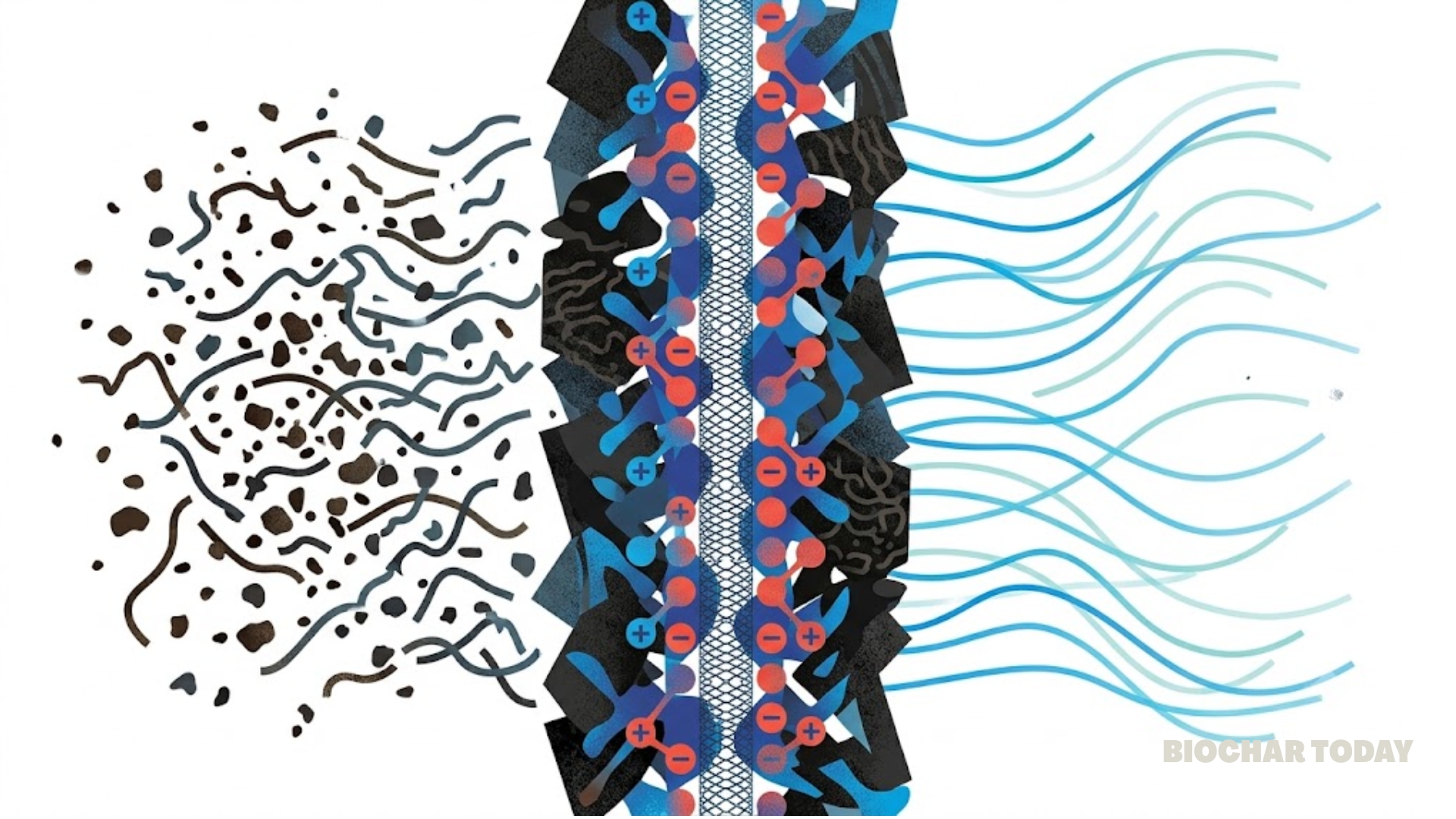
RC: At its most basic level, biochar is like a sponge as it adsorbs toxins and nutrients from aquatic systems just like a sponge adsorbs water from our countertops at home. By creating a modified biochar, not only can the toxin and nutrients be removed, but also the gross algae on the surface of the given system, leaving a picture-esc, clean aquatic system.
SP: Your first-author paper explored co-activation of Martian regolith and hydrochar for water retention. How did that project reshape the way you think about biochar’s potential beyond Earth-based agriculture?
RC: When I first started the project, I thought I had been given the impossible task of taking something I had seen in a movie and making it a reality. I had been asked to do what every boy dreams of, figuring out how to sustain life in space. As I continued, I realized that, like in most things in life, sometimes the answer to the hardest question, is the simplest solution. Biochar has been known to be cheap and simple to produce and during the final stages of my project, I realized that biochar has limitless potential for not just agricultural applications, but also for space mining and building applications as well.
SP: Many people still view biochar mainly as a soil amendmentA soil amendment is any material added to the soil to enhance its physical or chemical properties, improving its suitability for plant growth. Biochar is considered a soil amendment as it can improve soil structure, water retention, nutrient availability, and microbial activity. More. From your perspective as a chemical engineer, what are the most underappreciated functional properties of biochar?
RC: More often than not, people assume biochar is just a simple soil amendment but biochar is so much more valuable than that. Biochar can be engineered to be used for just about anything including transport control and catalysts due to its very tunable and controllable properties. For example, some transport control technologies can bring companies to the brink of bankruptcy or drive product prices out of consumers’ reach. Biochar can be engineered to not just do the same job, but do a better job for a fraction of the cost.
SP: You’ve combined biochar research with machine learning to predict solid treatment methods with high accuracy. How do data-driven tools change the way we design and optimize biochar materials?
RC: Machine learning and other data-driven tools allow for us to move past the trial and error experimentation, to predictive designed experiments where the relationships between feedstocks, processing conditions, and performance can be identified and optimized rapidly. This allows predicted technologies to speed up the research and scale up of application-specific biochars, making it an invaluable tool.
SP: Your work has been funded by agencies like the EPA, Florida Sea Grant, and HAB CTI. What do you think funding bodies are increasingly looking for in next-generation biochar research?
RC: In previous years, funding agencies, especially agricultural funding agencies, where driven by the desire to find a way to minimize the amount of waste sent to landfills but with an abundant amount of research done for minimizing waste, funding agencies are looking for biochar that not only minimizes waste, but also can preform as good, or better than current technologies for a given application (example: adsorption or nutrient recovery).
SP: As someone experienced in advanced characterization techniques (SEM, XRD, FTIR, TGA, CHNS, etc.), what key parameters should researchers always report to ensure biochar studies are scientifically robust and comparable?
RC: When making biochar, often a whole spread of characterizations are preformed in order to show that the resulting biochar are scientifically different than the research done previously. From my experience, characterizations should be done based on the given application. For example, characterization techniques like CHNS and SEM are wonderful fundamental characterization as they are important when comparing the given biochar, to those in literature, while characterizations like XRD might only be needed if heavy crystalline mineral deposits are a concern.
SP: You often speak about “turning waste into profit.” Which waste streams do you believe hold the greatest untapped potential for high-value biochar applications?
RC: What is considered an untapped waste-stream depends greatly from location to location. In the state of Florida, USA, a waste seaweed, known as sargassum, is the next greatest untapped waste stream as it costs the state millions of dollars to remove sargassum from the beaches and the sargassum negatively affects local industries such as the fishing and tourism industries. In other parts, sargassum is not the greatest untapped waste stream due to the fact that they have no sargassum, but that only means that there are other untapped waste streams to be exploited such as corn stover.
SP: From lab-scale innovation to real-world deployment, what are the biggest bottlenecks preventing biochar technologies from scaling faster?
RC: . The biggest bottleneck to the scale up of anything is convincing people that the new way is better. Millions of dollars every year are poured into marketing campaigns across the world just to convince the public that the new product is better than the old one. Getting industries and the everyday person to see that biochar is ultimately both mechanically and economically more viable then past technologies will be the biggest bottleneck for biochar scaling.
SP: You’ve presented award-winning research at multiple conferences. How important is science communication in advancing biochar adoption beyond academia?
RC: As stated previously, the best way to take biochar technologies from a cool lab experiment, to one of the foundational blocks of our world, is to communicate the potential of biochar. That makes presentations and conferences that much more important and vital as its not the presenter who holds the key to success, they’ve already been convinced, but its the listener who holds the key to success. It’s the random corporate employee who realized that biochar can save their company millions of dollars and the graduate student from another university who realizes that biochar could solve some fundamentally important problem they had in their own project. Those are the people hold the key to success and the opportunity to present to them for even 10 minutes is not something to fear, but the upmost honor.
SP: What advice would you give to early-career researchers or students who want to enter the biochar field but come from disciplines outside agriculture or environmental science?
RC: The best advice I can give those people is to not forget their original passion. Biochar applications typically come from agricultural and environmental disciplines but that leaves thousands of disciplines untouched by biochar. Just because they might not know anything about agriculture, don’t mean they don’t have good ideas regarding biochar, rather its often they have the most novel ideas that many mainstream biochar researchers struggle to come up with.
SP: Looking ahead 5–10 years, where do you see biochar making its most transformative impact—environmental remediation, climate mitigation, advanced materials, or something entirely new
RC: In 5-10 years I see biochar making the biggest impact in water quality and advanced materials. Leading research often follows the supply and demand curve of the world around it which indicate that the 2 greatest places that biochar can not just contribute to, but completely transform is in the water quality and advanced materials sectors.
The research works of Robert can be tracked at:
LinkedIn: https://www.linkedin.com/in/robert-cheatham
Google Scholar: https://scholar.google.com/citations?




Leave a Reply