
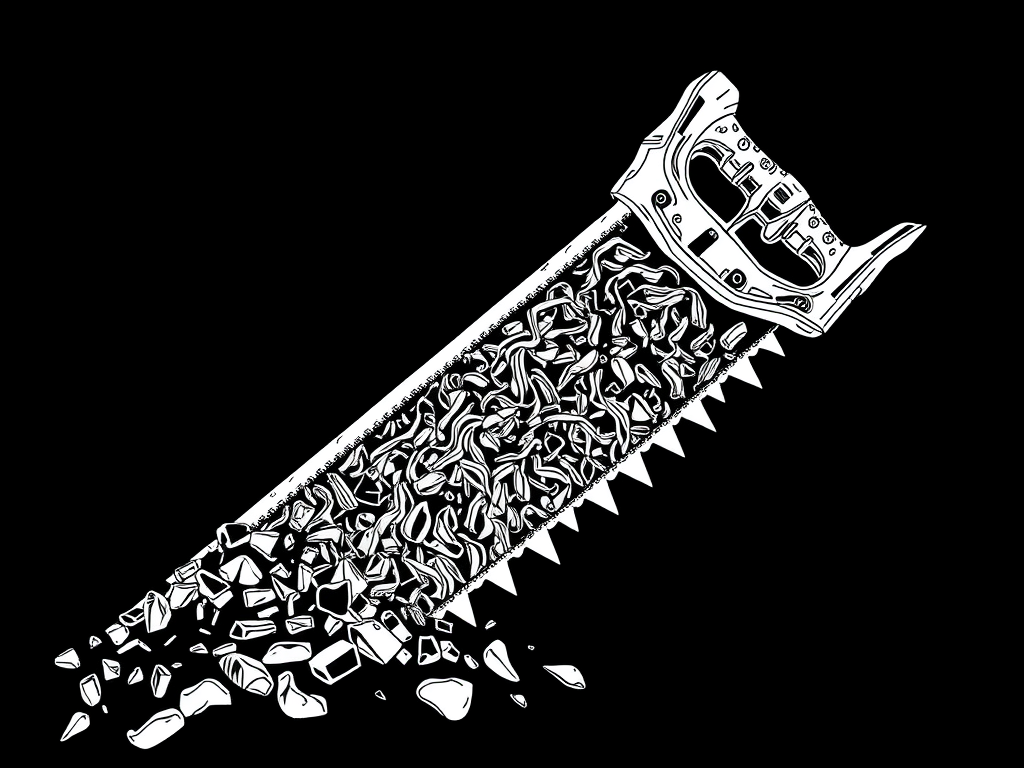
While often praised for soil benefits and environmental remediation, biocharBiochar is a carbon-rich material created from biomass decomposition in low-oxygen conditions. It has important applications in environmental remediation, soil improvement, agriculture, carbon sequestration, energy storage, and sustainable materials, promoting efficiency and reducing waste in various contexts while addressing climate change challenges. More presents a complex reality. Its effects vary with production and soil type, potentially reducing water availability, increasing erosion or salinity, disrupting nutrient cycles, and even introducing toxins. A cautious, holistic approach is crucial to maximize benefits and minimize these potential adverse impacts. Let’s explore the biochar’s potential downsides or complexities further!
Biochar has been the subject of much discussion in agriculture and environmental science, frequently hailed for its ability to enhance soil health and aid in environmental remediation(Kabir et al., 2023). It is produced through the thermal degradation of biomassBiomass is a complex biological organic or non-organic solid product derived from living or recently living organism and available naturally. Various types of wastes such as animal manure, waste paper, sludge and many industrial wastes are also treated as biomass because like natural biomass these More and organic waste, a process that yields a substance chemically similar to charcoal(Khan et al., 2024). Biochar is often promoted as a tool to improve soil quality, and it has been shown to improve soil water-holding capacity, increase pHpH is a measure of how acidic or alkaline a substance is. A pH of 7 is neutral, while lower pH values indicate acidity and higher values indicate alkalinity. Biochars are normally alkaline and can influence soil pH, often increasing it, which can be beneficial More, and enhance crop productivity. It can also influence soil structure and function, and it has the potential to mitigate climate change by reducing methane and nitrous oxide emissions from agricultural soils (Pandian et al., 2024).
However, despite these benefits, there’s a growing recognition that biochar’s effects on soil and soil biota are complex and not always positiveA review of 259 studies highlights that while biochar can offer numerous advantages, it also carries potential adverse effects that need careful consideration (Brtnicky et al., 2021).
The Complexities of Biochar’s Impact
Biochar’s impact on soil is complex and unpredictable due to variations in its feedstockFeedstock refers to the raw organic material used to produce biochar. This can include a wide range of materials, such as wood chips, agricultural residues, and animal manure. More, production process (pyrolysisPyrolysis is a thermochemical process that converts waste biomass into bio-char, bio-oil, and pyro-gas. It offers significant advantages in waste valorization, turning low-value materials into economically valuable resources. Its versatility allows for tailored products based on operational conditions, presenting itself as a cost-effective and efficient More), and the type of soil it’s applied to, leading to positive, negative, or neutral effects. For instance, certain biochars can become water-repellent, reducing soil’s ability to retain moisture. Overuse can also block soil pores and tie up crucial nutrients like phosphorus, manganese, and calcium, hindering water and nutrient movement necessary for plant growth. While some specially prepared biochars can improve the soil’s ability to hold nutrients without increasing pH, using too many other types can decrease this capacity by binding essential cations. Therefore, thoroughly understanding these potential downsides is critical for biochar’s successful and sustainable integration (Lin et al., 2024).
Potential Adverse Effects of Biochar on Soil
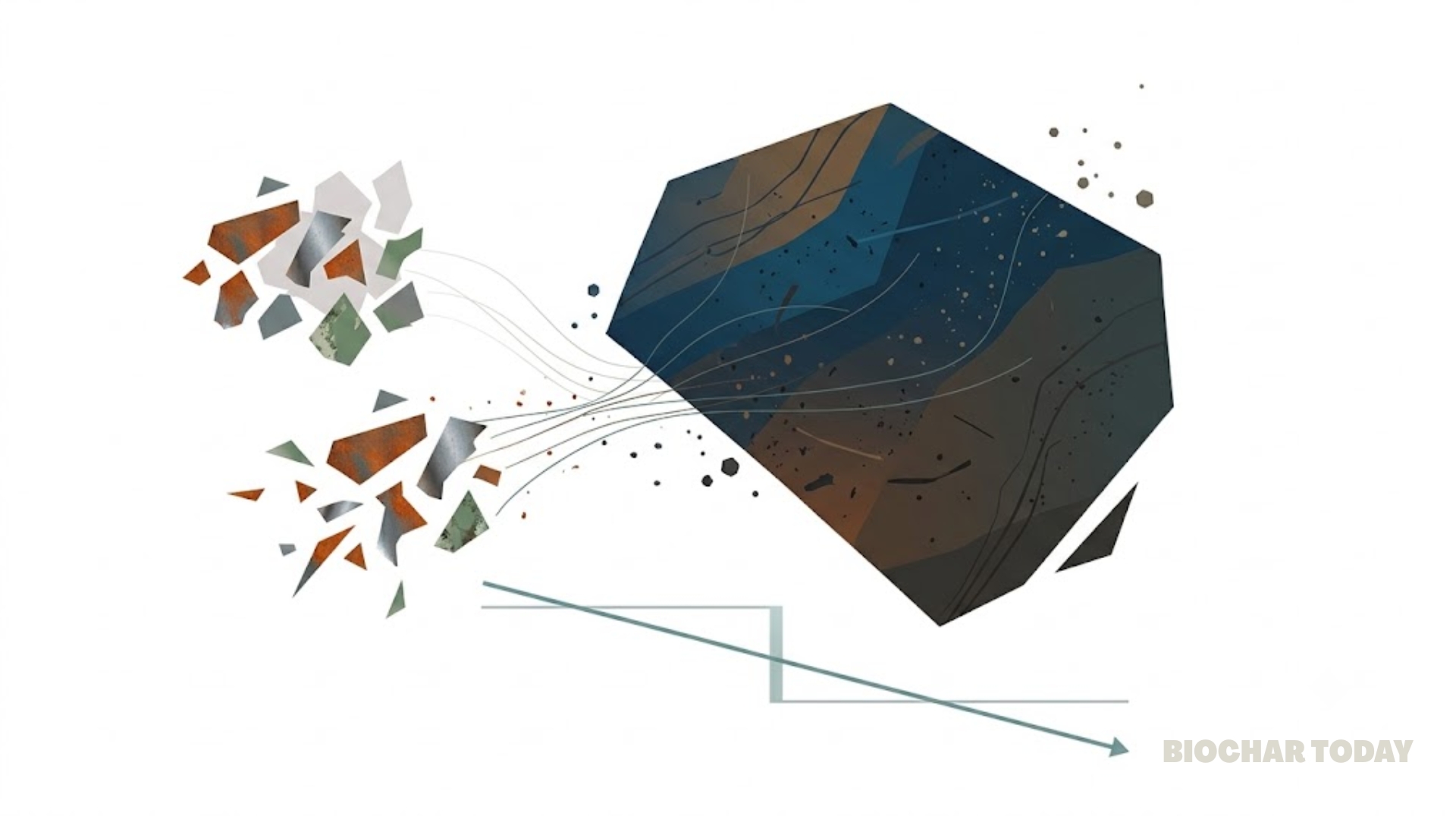
While biochar offers benefits, its application can trigger adverse soil effects depending on its characteristics and soil type. These potential downsides include reduced water availability in certain soils, increased erosion risk depending on particle size, elevated soil salinity based on feedstock, pH-related issues affecting nutrient mobility, inconsistent impacts on nutrient availability, and the introduction of toxins from the pyrolysis process. Careful consideration of these factors is crucial for responsible biochar application. The major adverse effects of biochar applications are as follows:
- Reduced Available Soil Water Content: Biochar’s effect on soil water content is not straightforward. While it can improve water retention in coarse-textured soils, high doses of biochar may lead to reduced water availability for plants in clay soils. This is because biochar can be hydrophobic and may alter the soil’s particle size distribution. BC may induce soil water repellency, contingent upon variables such as feedstock composition, pyrolysis temperature, and specific soil attributes(Acharya et al., 2024).
- Increased Soil Erosion: The impact of biochar on soil erosion varies. While some studies have reported a decrease in soil erosion due to biochar application, others have found the opposite. The application rate and biochar particle size play a role, with smaller particles being more susceptible to wind erosion and both small and large particles being susceptible to water erosion.
- Increased Soil Salinity: Biochar application can increase soil salinity, which is a significant environmental concern. The salt content in biochar depends on the feedstock and can contribute to increased salinity in the soil(Fernandes et al., 2019).
- pH-Change-Related Impacts: Biochar typically has a neutral or slightly alkaline pH, and while it can be used to increase the pH of acidic soils, it can have adverse effects on alkaline soils or soils with low buffering capacity(Liu & Zhang, 2012). In metal-contaminated soils, biochar can decrease the mobility of some toxic elements but may increase the mobilization of others, such as arsenic.
- Reduced (Bio)availability of Nutrients: Biochar’s effects on nutrient availability in soil are inconsistent and depend on the feedstock. While biochar can increase cation exchange capacity and retain nutrients, some biochars may reduce nutrient availability for plants. Several studies indicated that nutrient contents in biochar and their release to soil solution depend on the feedstock materials and C:N ratio(Alkharabsheh et al., 2021)
- Productions of toxins : Pyrolysis can produce toxic organic pollutants (PAHs, dioxins, furans) and introduce heavy metals, potentially contaminating soil and harming human health. While biochar can sometimes reduce heavy metal bioavailability, it can also increase their mobility in certain soil conditions, and its effectiveness in binding toxins may decrease over time. Furthermore, biochar’s benefits are soil-dependent, being more effective in degraded soils. It can have varied effects on plant growth, sometimes delaying flowering or affecting specific plant parts differently. Biochar can also influence soil greenhouse gas emissions, negatively impact soil microbial communities, and promote weed growth. These limitations highlight the need for cautious and informed biochar application in agriculture (Bo et al., 2023).
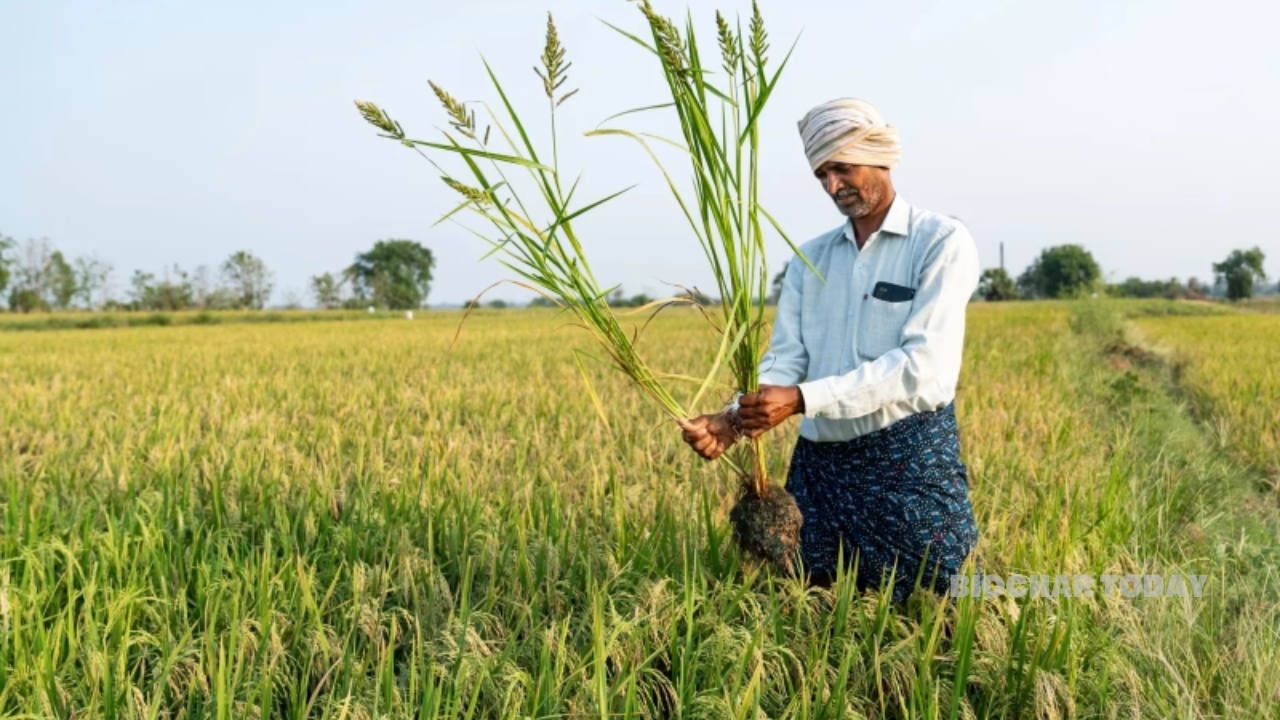
Beyond these direct effects on soil properties, biochar can also influence the efficacy of agrochemicals and introduce toxic substances into the soil. It can also adversely affect non-target biota, such as earthworms, and alter the soil microbiome. It is crucial to consider its potential negative impacts on soil biota, especially at high application rates or in certain soil types. Careful consideration of biochar type, soil properties, and application methods is essential to maximize its benefits and minimize any potential risks
While biochar holds promise for improving soil health and addressing environmental challenges, it is crucial to acknowledge its potential adverse effects. A holistic approach is needed to evaluate biochar’s impact, considering both its positive and negative consequences. Further research is essential to fully understand the complex interactions between biochar, soil, and soil biota. Considering biochar’s varied impacts on soil, future application guidelines must be comprehensive, systematically evaluating both its benefits and drawbacks.
References
Acharya, B. S., Dodla, S., Wang, J. J., Pavuluri, K., Darapuneni, M., Dattamudi, S., Maharjan, B., & Kharel, G. (2024). Biochar impacts on soil water dynamics: knowns, unknowns, and research directions. Biochar, 6(1). https://doi.org/10.1007/s42773-024-00323-4
Alkharabsheh, H. M., Seleiman, M. F., Battaglia, M. L., Shami, A., Jalal, R. S., Alhammad, B. A., Almutairi, K. F., & Al-Saif, A. M. (2021). Biochar and its broad impacts in soil quality and fertility, nutrient leachingLeaching is the process where nutrients are dissolved and carried away from the soil by water. This can lead to nutrient depletion and environmental pollution. Biochar can help reduce leaching by improving nutrient retention in the soil. More and crop productivity: A review. Agronomy, 11(5). https://doi.org/10.3390/agronomy11050993
Bo, X., Zhang, Z., Wang, J., Guo, S., Li, Z., Lin, H., Huang, Y., Han, Z., Kuzyakov, Y., & Zou, J. (2023). Benefits and limitations of biochar for climate-smart agriculture: a review and case study from China. Biochar, 5(1). https://doi.org/10.1007/s42773-023-00279-x
Brtnicky, M., Datta, R., Holatko, J., Bielska, L., Gusiatin, Z. M., Kucerik, J., Hammerschmiedt, T., Danish, S., Radziemska, M., Mravcova, L., Fahad, S., Kintl, A., Sudoma, M., Ahmed, N., & Pecina, V. (2021). A critical review of the possible adverse effects of biochar in the soil environment. In Science of the Total Environment (Vol. 796). https://doi.org/10.1016/j.scitotenv.2021.148756
Fernandes, J. D., Chaves, L. H. G., Mendes, J. S., Chaves, I. B., & Tito, G. A. (2019). Alterations in soil salinity with the use of different biochar doses. Revista de Ciências Agrárias, 42(1), 89–98. https://doi.org/10.19084/RCA18248
Kabir, E., Kim, K. H., & Kwon, E. E. (2023). Biochar as a tool for the improvement of soil and environment. Frontiers in Environmental Science, 11(December), 1–17. https://doi.org/10.3389/fenvs.2023.1324533
Khan, S., Irshad, S., Mehmood, K., Hasnain, Z., Nawaz, M., Rais, A., Gul, S., Wahid, M. A., Hashem, A., Fathi, E., & Ibrar, D. (2024). Biochar Production and Characteristics, Its Impacts on Soil Health, Crop Production, and Yield Enhancement: A Review. Plants, 13(166), 1–18.
Lin, Y., Cai, Q., Chen, B., & Garg, A. (2024). A Review of the Negative Effects of Biochar on Soil in Green Infrastructure with Consideration of Soil Properties. Indian Geotechnical Journal, February. https://doi.org/10.1007/s40098-024-00875-z
Liu, X. H., & Zhang, X. C. (2012). Effect of biochar on ph of alkaline soils in the Loess Plateau: Results from incubation experiments. In International Journal of Agriculture and Biology (Vol. 14, Issue 5, pp. 745–750).
Pandian, K., Vijayakumar, S., Mustaffa, M. R. A. F., Subramanian, P., & Chitraputhirapillai, S. (2024). Biochar – a sustainable soil conditioner for improving soil health, crop production and environment under changing climate: a review. Frontiers in Soil Science, 4(May), 1–17. https://doi.org/10.3389/fsoil.2024.1376159


Leave a Reply