
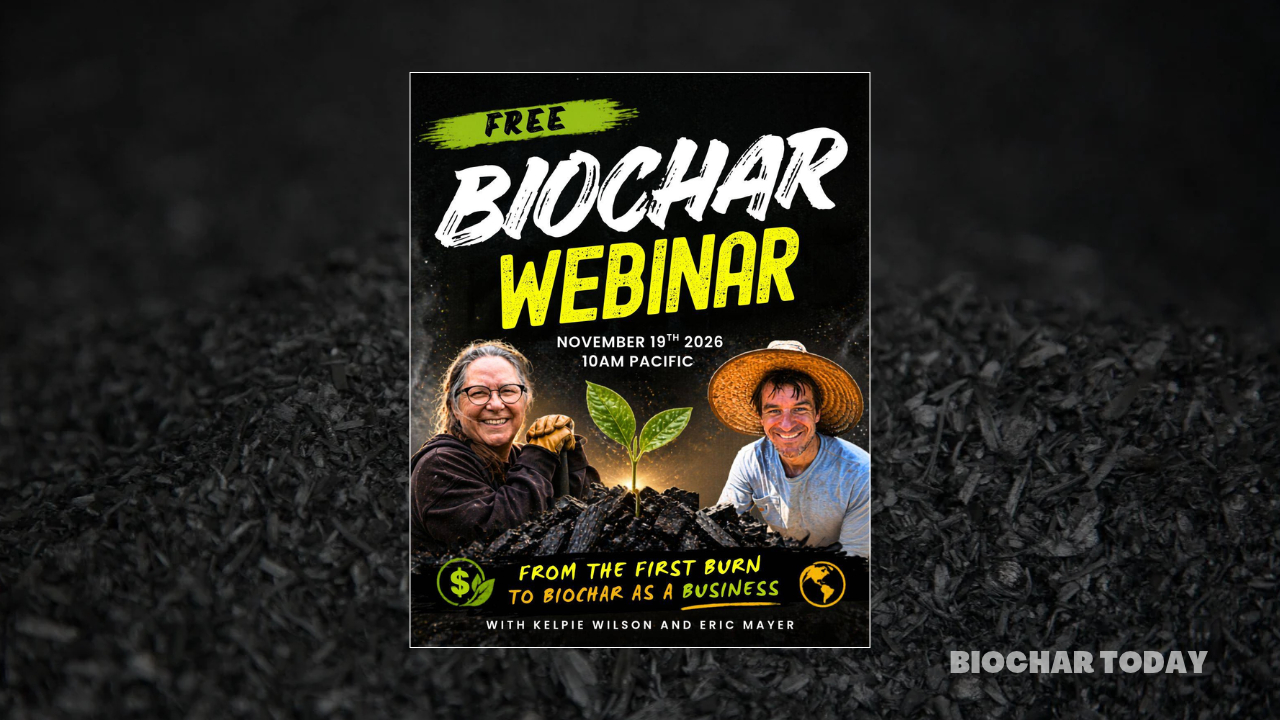
Wilson BiocharBiochar is a carbon-rich material created from biomass decomposition in low-oxygen conditions. It has important applications in environmental remediation, soil improvement, agriculture, carbon sequestration, energy storage, and sustainable materials, promoting efficiency and reducing waste in various contexts while addressing climate change challenges. More, Napachar, and Regenerative Living Online are hosting a free 90-minute educational webinar on November 19, 2026, in the United States, titled “Practical Biochar: From Your Soil to a Business.” Led by Wilson Biochar founder Kelpie Wilson, Napachar representative Eric Mayer, and host Javan Kerby Bernakevitch, the session equips farmers, land stewards, and prospective entrepreneurs with actionable protocols for decentralized production and commercial service delivery. By combining agronomic best practices with an operational vineyard case study, the collaboration demonstrates how low-cost kiln technologies can transition from on-farm soil management tools into scalable local enterprises.
Small-scale producers and agricultural practitioners frequently encounter technical and economic barriers when adopting decentralized biochar systems. Novice operators often improperly pyrolyze feedstocks—either overcooking or undercooking woody biomass—and apply raw biochar directly to soil without prior nutrient charging. Consequently, fresh biochar temporarily immobilizes soil nutrients, causing delayed crop responses across one or two growing seasons. Furthermore, agricultural regions such as vineyards generate substantial volumes of woody prunings and pulled vines that are typically disposed of through open burn piles, creating smoke emissions while missing opportunities for localized soil restoration and service-based revenue.
To address these operational gaps, the webinar pairs foundational agronomic training with a commercial service blueprint. Kelpie Wilson outlines low-cost kiln manufacturing techniques using readily available wood and brush, clarifies distinctions between biochar, charcoalCharcoal is a black, brittle, and porous material produced by heating wood or other organic substances in a low-oxygen environment. It is primarily used as a fuel source for cooking and heating. More, and wood ashAsh is the non-combustible inorganic residue that remains after organic matter, like wood or biomass, is completely burned. It consists mainly of minerals and is different from biochar, which is produced through incomplete combustion. Ash Ash is the residue that remains after the complete More, and details nutrient-charging methods for compost, gardens, and animal bedding. Complementing this technical instruction, Eric Mayer presents Napachar’s mobile service model operating across California’s Napa and Sonoma regions. Rather than transporting bulky biomassBiomass is a complex biological organic or non-organic solid product derived from living or recently living organism and available naturally. Various types of wastes such as animal manure, waste paper, sludge and many industrial wastes are also treated as biomass because like natural biomass these More to centralized facilities, Napachar deploys portable kilns directly to vineyard burn piles, converting prunings and pulled vines on-site with minimal smoke and returning the finished material directly to vineyard soils.
The initiative yields clear educational and commercial outcomes for the decentralized biochar sector. Participants gain standardized protocols to prevent nutrient tie-up, optimize kiln yields, and access further structured instruction through Wilson’s Practical Biochar course. Simultaneously, Napachar’s field operations validate a replicable, low-emission business model that monetizes agricultural waste management while keeping carbon and soil amendments within local agricultural landscapes.


Leave a Reply