
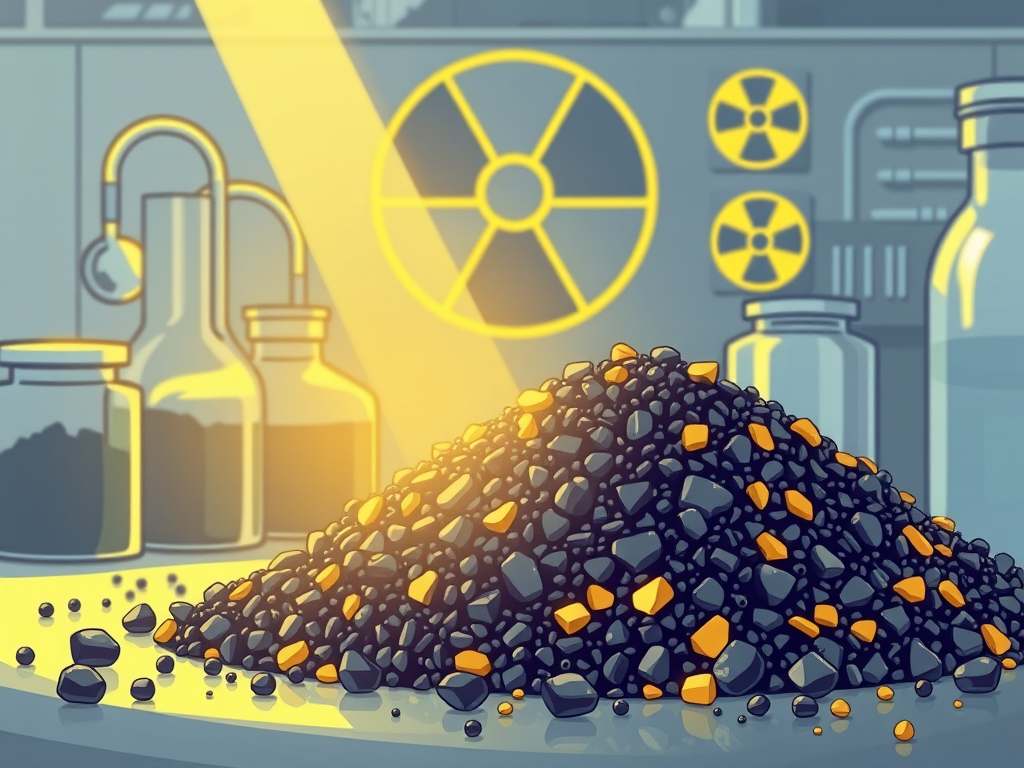
Nuclear science and technology, while vital for energy, medicine, and scientific advancement, present significant challenges, particularly concerning radioactive waste management and radiation exposure. Traditional methods for handling nuclear materials are often complex and expensive. However, a comprehensive review by Mojtaba Kordrostami and Ali Akbar Ghasemi-Soloklui, published in BiocharBiochar is a carbon-rich material created from biomass decomposition in low-oxygen conditions. It has important applications in environmental remediation, soil improvement, agriculture, carbon sequestration, energy storage, and sustainable materials, promoting efficiency and reducing waste in various contexts while addressing climate change challenges. More, sheds light on a promising, sustainable solution: biochar. This carbon-rich material, derived from biomassBiomass is a complex biological organic or non-organic solid product derived from living or recently living organism and available naturally. Various types of wastes such as animal manure, waste paper, sludge and many industrial wastes are also treated as biomass because like natural biomass these More pyrolysisPyrolysis is a thermochemical process that converts waste biomass into bio-char, bio-oil, and pyro-gas. It offers significant advantages in waste valorization, turning low-value materials into economically valuable resources. Its versatility allows for tailored products based on operational conditions, presenting itself as a cost-effective and efficient More, is gaining increasing attention for its unique properties that can address critical issues in the nuclear sector, potentially transforming how we approach nuclear waste and safety.
Biochar’s effectiveness in nuclear waste management stems from its exceptional adsorption capacity. Its high surface area, porosityPorosity of biochar is a key factor in its effectiveness as a soil amendment and its ability to retain water and nutrients. Biochar’s porosity is influenced by feedstock type and pyrolysis temperature, and it plays a crucial role in microbial activity and overall soil health. Biochar More, and abundance of functional groups (like phenolic, carboxyl, and hydroxyl groups) allow it to effectively bind and immobilize radionuclides. This makes it a viable alternative to traditional approaches for handling both high-level radioactive materials and low-level radioactive effluents. For instance, studies have shown that biochar derived from eucalyptus wood can remove uranium from aqueous solutions with efficiencies up to 90%. Biochar produced at 700∘C from various feedstocks demonstrated the highest uranium adsorption due to enhanced surface area and porosity. Rice straw-based biochar beads have also proven effective in removing radioactive strontium. This versatility means biochar can be tailored through controlled pyrolysis and modifications to selectively target and eliminate specific radioactive contaminants.
Beyond waste management, biochar offers a novel approach to radiation shielding. Its carbonaceous composition provides strong, lightweight protective barriers against ionizing radiation, including gamma rays. This characteristic makes it particularly useful for portable radiation shields or protective gear in nuclear facilities, where mobility and ease of handling are crucial. Compared to conventional shielding materials like lead, biochar is non-toxic, lightweight, and environmentally sustainable, offering a greener alternative. While pure biochar may not match lead’s shielding effectiveness per unit thickness, its properties can be significantly enhanced by incorporating high atomic number (Z) materials like metal oxides or nanoparticles of lead, bismuth, or tungsten, leading to improved gamma radiation shielding. For neutron shielding, biochar’s light elements (hydrogen, carbon) can slow down fast neutrons, and incorporating boron or lithium compounds can further boost neutron absorption.
The economic and environmental benefits of integrating biochar into the nuclear sector are substantial. Its production, often from waste biomass, is cost-effective and contributes to waste management solutions. By replacing more expensive and energy-intensive traditional waste treatment methods, biochar can reduce long-term waste management costs. Furthermore, biochar contributes to carbon sequestration, as a significant portion of its carbon content is stabilized, preventing its release into the atmosphere as carbon dioxide. This aligns with carbon neutrality efforts and reduces the overall carbon footprint of nuclear operations.
Despite its immense potential, challenges remain. These include ensuring consistent biochar properties due to varying feedstocks and pyrolysis conditionsThe conditions under which pyrolysis takes place, such as temperature, heating rate, and residence time, can significantly affect the properties of the biochar produced. More. Scaling up production from laboratory to industrial levels while maintaining quality is another hurdle. Moreover, long-term stability and durability under harsh nuclear conditions require further research. Public perception and acceptance are also crucial, necessitating transparent communication about biochar’s safety and environmental benefits.
Looking ahead, the integration of advanced technologies like artificial intelligence (AI) and machine learning (ML) is poised to accelerate research and material optimization, leading to more efficient and targeted applications in nuclear technology. Engineered biochars, potentially enhanced at the nanoscale, are expected to offer improved adsorption capacity, thermal stability, and radiation resistance. The continuous evolution of biochar technology, coupled with collaborative efforts among researchers, industry experts, policymakers, and the public, will be vital in realizing biochar’s full potential. This innovative material is set to play a pivotal role in shaping a safer, more efficient, and sustainable future for nuclear science and technology.
Source: Kordrostami, M., & Ghasemi-Soloklui, A. A. (2025). Innovative applications of biochar in nuclear remediation and catalysis. Biochar, 7(1), 74.



Leave a Reply