
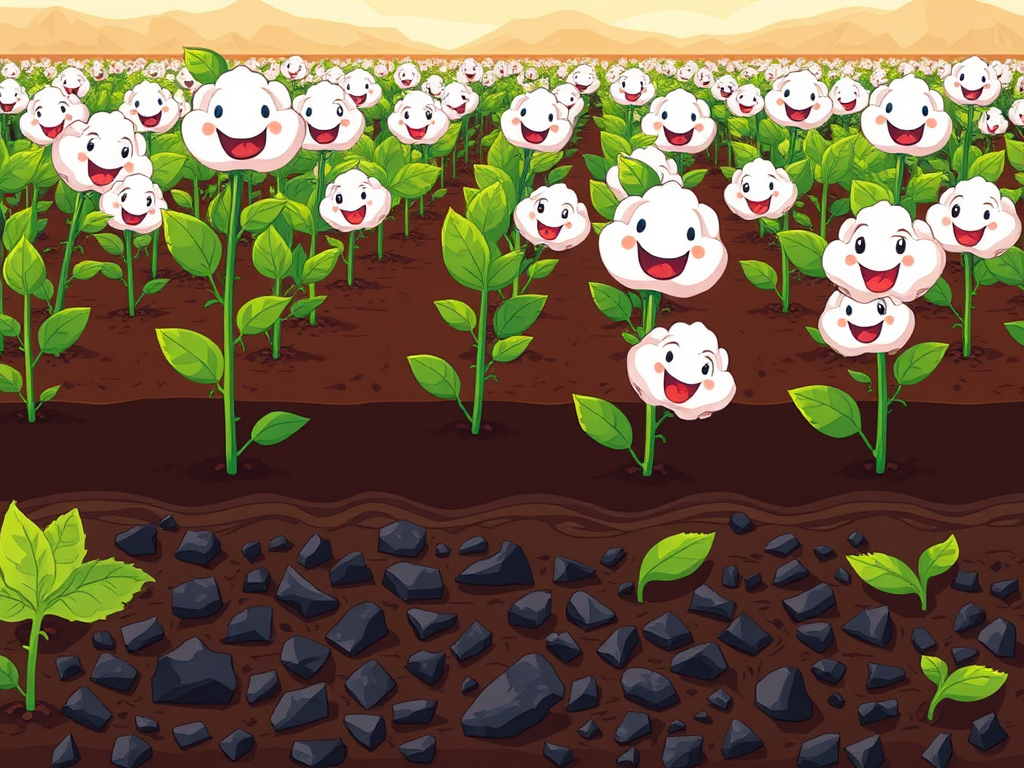
A new study led by University of Missouri researchers provides a unique perspective on the use of biocharBiochar is a carbon-rich material created from biomass decomposition in low-oxygen conditions. It has important applications in environmental remediation, soil improvement, agriculture, carbon sequestration, energy storage, and sustainable materials, promoting efficiency and reducing waste in various contexts while addressing climate change challenges. More for cotton production, differentiating it from broader biochar research. While the benefits of biochar are well-documented, this study focuses on a specific regional application and material, highlighting innovative solutions to localized agricultural challenges.
The key innovation lies in the use of biochar derived from sugarcane bagasse, a fibrous waste product from sugarcane processing. This approach repurposes an abundant local agricultural waste into a valuable soil amendmentA soil amendment is any material added to the soil to enhance its physical or chemical properties, improving its suitability for plant growth. Biochar is considered a soil amendment as it can improve soil structure, water retention, nutrient availability, and microbial activity. More. The study, headed by Gurbir Singh, an assistant professor of plant sciences, specifically targeted the sandy and sandy loam soils of the Mississippi Delta, a critical cotton-growing region. These soils are known for their poor organic matter content and limited water and nutrient retention.
The research demonstrated that the sugarcane bagasse biochar effectively improved the physical properties of these challenging soils, enhancing their ability to hold moisture and nutrients. Fibrous feedstocks have been proven to produce Biochar with profound water holding capabilities, but the study also found that the bagasse biochar effectively adsorbed and immobilized nitrate from fertilizers. This retention not only makes nutrients more available to the cotton plants over time but also provides a significant environmental benefit by preventing nitrates from leachingLeaching is the process where nutrients are dissolved and carried away from the soil by water. This can lead to nutrient depletion and environmental pollution. Biochar can help reduce leaching by improving nutrient retention in the soil. More into groundwater and contaminating water supplies.
This specific focus—using a local waste product to create a biochar tailored to the unique soil and environmental conditions of the Mississippi Delta—marks a new and practical application of a well-known technology. Looking ahead, Singh and his team plan to expand their research beyond small test plots to large-scale, working farms. This next phase will involve collaborating with farmers who have access to biochar to assess the real-world results of the method. The researchers also hope to apply their findings to other row crops like corn and soybeans, adapting the type and amount of biochar as needed. The original findings from this research can be found in the Journal of Environmental Management.


![Eucalyptus Wood Waste-Derived Biochar Achieves a Ninety-Eight Percent Removal Efficiency for Benzo[ghi]perylene in Vehicle-Wash Wastewater](https://biochartoday.com/wp-content/uploads/2026/10/SCIENCE-BLOGS-2026-2026-10-19T160523.703.jpg)


Leave a Reply