
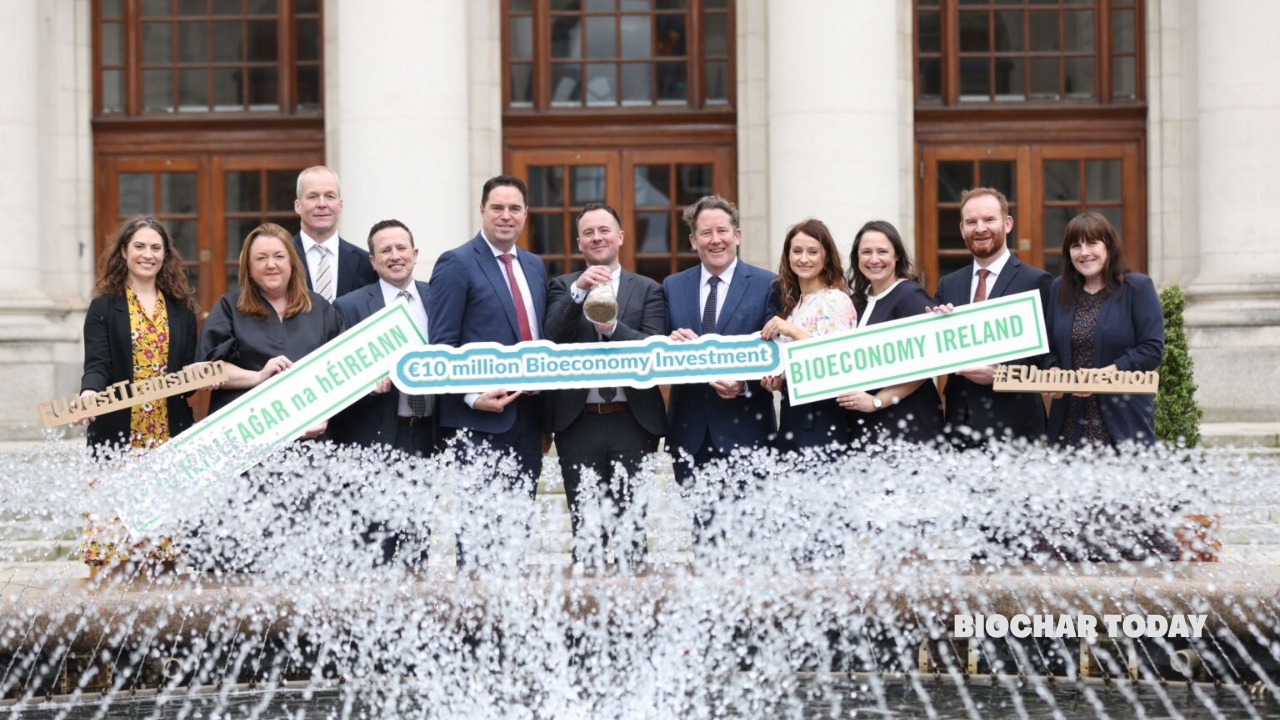
In Ireland, Minister for Agriculture, Food and the Marine Martin Heydon TD and Minister for Climate, Energy and the Environment Darragh O’Brien TD have announced €10 million in funding for two major bioeconomy demonstration initiatives. Co-funded by the Government of Ireland and the European Union through the EU Just Transition Fund, the investment awards €5 million to the ‘BIOCHAR’ project led by the University of Limerick and €5 million to the ‘TRANSFORM’ project led by University College Dublin. These initiatives are strategically located in the Midlands region to support communities and businesses as they transition away from a peat-based economy toward low-carbon, biobased value chains.
The primary challenge addressed by these projects is the need to move bio-innovation from the laboratory to a commercial demonstration scale. For years, the Midlands region has relied on peat extraction, necessitating a “Just Transition” that provides new, sustainable economic opportunities for local workers and farmers. Furthermore, the agri-food sector produces significant volumes of waste and by-products that are currently underutilized, representing a lost opportunity for revenue diversification and environmental mitigation within the existing agricultural framework.
In response, the University of Limerick’s BIOCHARBiochar is a carbon-rich material created from biomass decomposition in low-oxygen conditions. It has important applications in environmental remediation, soil improvement, agriculture, carbon sequestration, energy storage, and sustainable materials, promoting efficiency and reducing waste in various contexts while addressing climate change challenges. More project will utilize indigenous biomassBiomass is a complex biological organic or non-organic solid product derived from living or recently living organism and available naturally. Various types of wastes such as animal manure, waste paper, sludge and many industrial wastes are also treated as biomass because like natural biomass these More to develop sustainable products for use in agriculture, water treatment, and transport infrastructure. The project includes a high-level blueprint for a mid-sized production facility, intended to serve as a model for future investment and replication throughout the region. Simultaneously, the TRANSFORM project will employ fermentation and drying technologies to upcycle food waste into functional ingredients for food and feed applications, with commercial-scale activities hosted at the Circular Food Company’s facility in Tullamore.
The expected outcomes of this funding include the generation of local investment, the creation of high-value sustainable jobs, and the development of robust supply-chain opportunities in the Irish Midlands. By demonstrating the practical applications of biochar and bio-based ingredients at scale, these projects aim to build a resilient, circular economy that reduces carbon emissions and biodiversity loss. This initiative establishes a solid base for regional expertise, ensuring that the Midlands becomes a leader in Ireland’s emerging bioeconomy.


![Eucalyptus Wood Waste-Derived Biochar Achieves a Ninety-Eight Percent Removal Efficiency for Benzo[ghi]perylene in Vehicle-Wash Wastewater](https://biochartoday.com/wp-content/uploads/2026/10/SCIENCE-BLOGS-2026-2026-10-19T160523.703.jpg)

Leave a Reply