
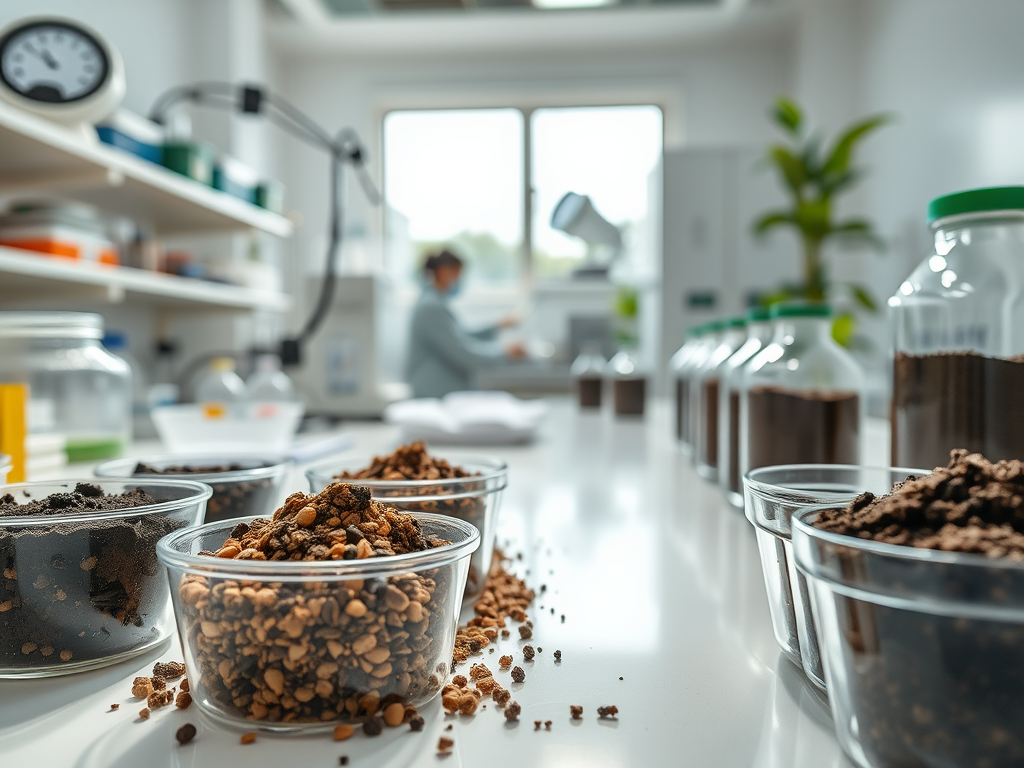
In a recent article published in Scientific Reports, researchers Asif Kamal, Moona Nazish, and their colleagues detail their findings on using a fungus-loaded biocharBiochar is a carbon-rich material created from biomass decomposition in low-oxygen conditions. It has important applications in environmental remediation, soil improvement, agriculture, carbon sequestration, energy storage, and sustainable materials, promoting efficiency and reducing waste in various contexts while addressing climate change challenges. More to clean up soil contaminated with heavy metals. Soil contamination, particularly with heavy metals (HMs) like cadmium (Cd) and copper (Cu), is a significant global environmental problem due to the toxicity, long-lasting effects, and irreversible nature of these pollutants. The presence of these metals in the food chain can also pose serious health risks, including an increased risk of cancer. The study explores a popular soil remediation technique using biochar, a charcoal-like substance made from biomassBiomass is a complex biological organic or non-organic solid product derived from living or recently living organism and available naturally. Various types of wastes such as animal manure, waste paper, sludge and many industrial wastes are also treated as biomass because like natural biomass these More, and enhances it by introducing a beneficial microorganism to create a potent heavy metal immobilizer. This new approach offers a sustainable and environmentally friendly way to tackle a pressing ecological issue.
The researchers created a maize straw biochar (MB) and a Trichoderma harzianum-loaded biochar (MBT) to test their effectiveness in remediating soil polluted with both cadmium and copper. The experiment, which lasted for 90 days, involved applying different concentrations (1% and 5%) of MB and MBT to the contaminated soil. The results were promising, with the fungus-loaded biochar proving to be highly effective. The application of 5% MBT significantly increased the soil’s pHpH is a measure of how acidic or alkaline a substance is. A pH of 7 is neutral, while lower pH values indicate acidity and higher values indicate alkalinity. Biochars are normally alkaline and can influence soil pH, often increasing it, which can be beneficial More in the early stages, which is crucial for reducing the mobility and bioavailability of heavy metals. This initial increase in pH is attributed to the biochar’s alkaline and ashAsh is the non-combustible inorganic residue that remains after organic matter, like wood or biomass, is completely burned. It consists mainly of minerals and is different from biochar, which is produced through incomplete combustion. Ash Ash is the residue that remains after the complete More content. The pH later stabilized to a neutral-alkaline level as the Trichoderma harzianum microbes produced organic acids that neutralized the alkalinity.
One of the most significant findings was the change in metal speciation. The study showed that the MBT treatments promoted the transformation of cadmium and copper into more stable, residual-bound fractions while decreasing the more mobile, exchangeable, and carbonate-bound fractions. For example, the exchangeable fraction of cadmium decreased by a remarkable 15.33% with the 5% MBT application, while the residual bound fraction increased by 6.31%. Similarly, the carbonate-bound copper fraction was notably reduced by the 5% MBT amendment, with a corresponding increase in the more stable residual fraction. This is a critical result because it means the heavy metals are being locked into the soil in a form that is less likely to be absorbed by plants or animals.
The study also measured the bio-accessibility of the heavy metals, which is the amount that can be absorbed by the human body if ingested. The 5% MBT treatment reduced the bio-accessibility of cadmium in gastric fluid by 68.1%. The bio-accessibility of copper in gastric solution also saw an obvious reduction of 61.4% with the 5% MBT treatment. This is a vital indicator of the treatment’s ability to minimize health risks. Furthermore, the DTPA-extractable concentrations of both cadmium and copper, which represent the portion available for plant uptake, decreased over the 90-day period with the application of MBT. The combination of biochar and the fungus proved more effective than biochar alone, highlighting a synergistic effect.
Beyond metal immobilization, the MBT treatment also restored soil health by enhancing enzymatic activities. Soil enzymes like urease and catalase are sensitive indicators of soil quality and are often negatively impacted by heavy metal pollution. After an initial dip, the activities of both urease and catalase increased in the MBT-amended soils, particularly in the later phase of the experiment. This suggests that the treatment not only stabilizes the metals but also helps restore the soil’s biological functions, making it a truly sustainable and ecofriendly remediation approach.
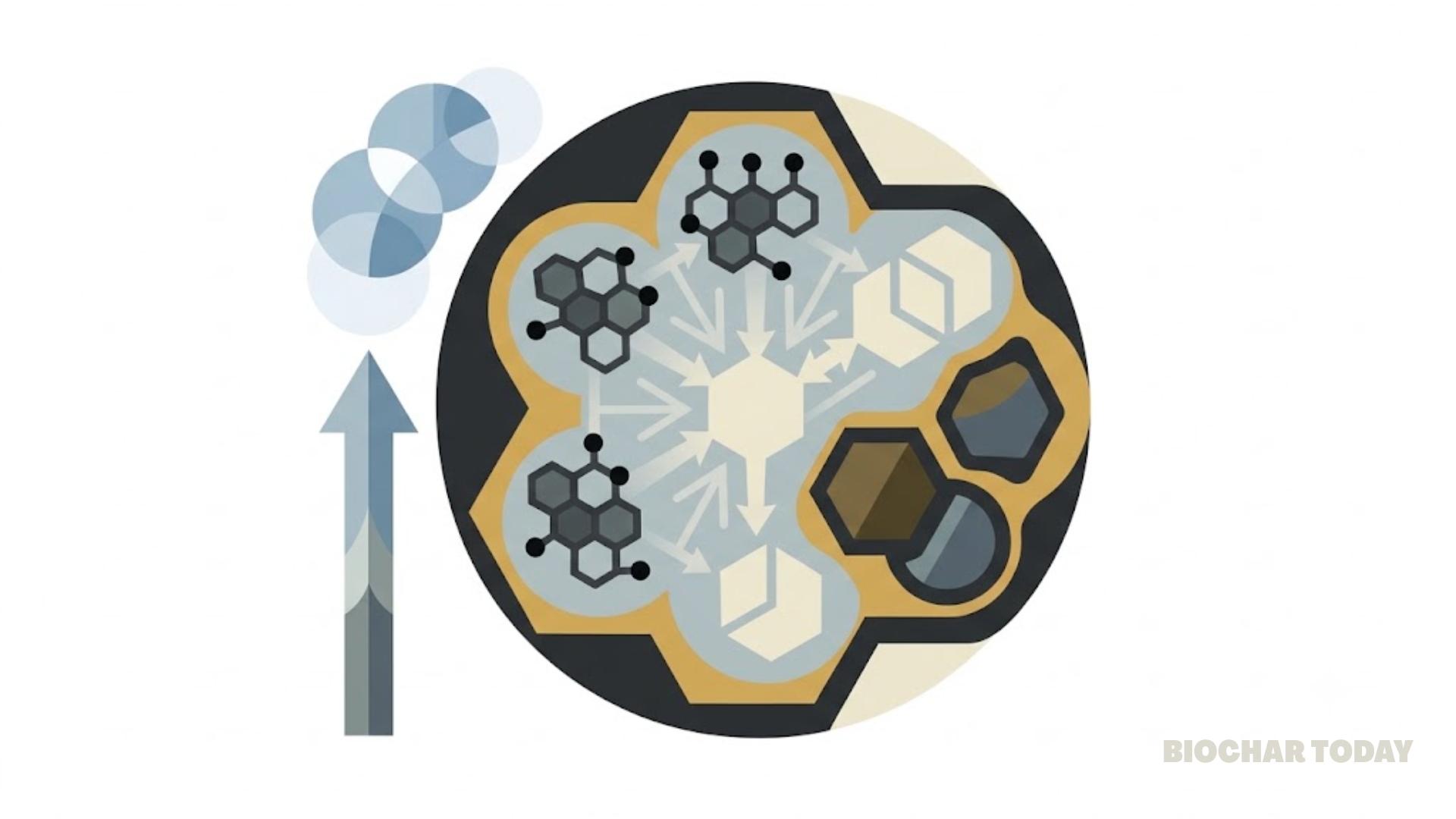
The mechanisms behind these positive effects are complex and multifaceted. The porous and cracked surface of the maize biochar provides a perfect habitat for the Trichoderma harzianum fungus to grow and thrive. The fungus, in turn, releases various substances that bind with the heavy metals, while the biochar’s functional groups and large surface area also adsorb and immobilize the metals through processes like complexation, ion exchange, and precipitation. This combined action of the biochar acting as a carrier and the fungus as an active agent creates a powerful and long-lasting solution for heavy metal contamination.
The study concludes that applying a 5% concentration of Trichoderma harzianum-loaded maize biochar is an effective and sustainable strategy for the long-term stabilization of heavy metals in contaminated soil. It not only reduces the environmental risks associated with heavy metals but also helps restore soil health, offering a significant financial benefit over using biochar alone.
Source: Kamal, A., Nazish, M., Kamal, K., Akbar, M., Ansir, F., Aslam, N., Riaz, M. S., Albasher, G., & Munis, M. F. H. (2025). Trichoderma harzianum-loaded maize biochar enhances Cd-Cu immobilization and reduces bio-accessibility in contaminated soil. Scientific Reports, 15(28099).


Leave a Reply