
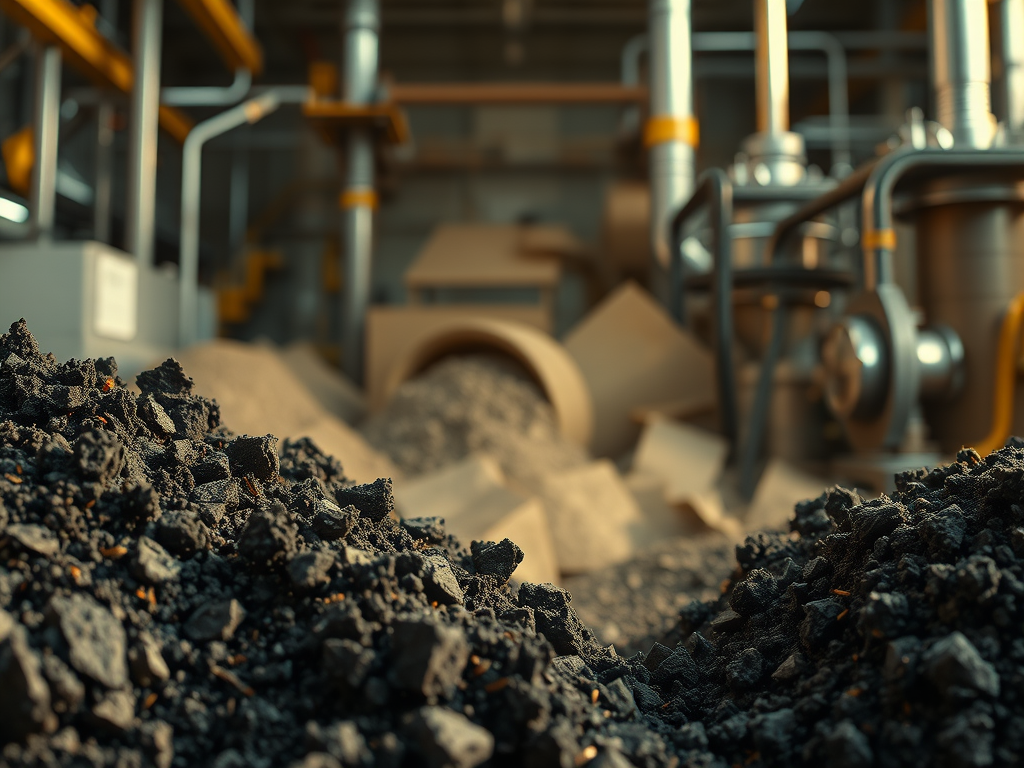
The pulp and paperboard industry is a major consumer of freshwater, generating large volumes of wastewater and sludge, which pose significant environmental challenges. In a recent study published in Environmental Monitoring and Assessment, Rajammal et al., investigated the potential of converting paperboard sludge (PBS) into biocharBiochar is a carbon-rich material created from biomass decomposition in low-oxygen conditions. It has important applications in environmental remediation, soil improvement, agriculture, carbon sequestration, energy storage, and sustainable materials, promoting efficiency and reducing waste in various contexts while addressing climate change challenges. More through slow pyrolysisPyrolysis is a thermochemical process that converts waste biomass into bio-char, bio-oil, and pyro-gas. It offers significant advantages in waste valorization, turning low-value materials into economically valuable resources. Its versatility allows for tailored products based on operational conditions, presenting itself as a cost-effective and efficient More at temperatures up to 500 °C. This approach offers a sustainable solution for waste management and resource recovery in the paperboard industry.
The researchers analyzed the physicochemical properties of the paperboard sludge biochar (PBSB) and found that it exhibited a neutral pHpH is a measure of how acidic or alkaline a substance is. A pH of 7 is neutral, while lower pH values indicate acidity and higher values indicate alkalinity. Biochars are normally alkaline and can influence soil pH, often increasing it, which can be beneficial More, low electrical conductivity, high organic carbon content, and significant amounts of calcium carbonate. Proximate analysis revealed an increase in fixed carbon and total organic carbon, along with reduced volatile matterVolatile matter refers to the organic compounds that are released as gases during the pyrolysis process. These compounds can include methane, hydrogen, and carbon monoxide, which can be captured and used as fuel or further processed into other valuable products. More and moisture levels. These characteristics make PBSB suitable for various applications, including soil amendmentA soil amendment is any material added to the soil to enhance its physical or chemical properties, improving its suitability for plant growth. Biochar is considered a soil amendment as it can improve soil structure, water retention, nutrient availability, and microbial activity. More, water filtration, and carbon sequestration.
Further analysis using Fourier transform infrared spectroscopy (FT-IR) identified various carbon-containing functional groups in PBSB, indicating substantial chemical transformations during pyrolysis. Scanning electron microscopy with energy dispersive X-ray spectroscopy (SEM–EDX) revealed a fine particle size and a porous structure, ideal for water adsorption. Elemental analysis (XRD) showed high carbon and oxygen content, along with significant amounts of aluminosilicates, carbonates, and nutrients like phosphorus and potassium, suggesting PBSB’s potential as a slow-release fertilizer.
This research highlights the potential of biochar derived from paperboard waste as a sustainable solution for waste management and resource recovery. By converting paperboard sludge into valuable biochar, the paperboard industry can reduce its environmental footprint and contribute to a circular economy.
SOURCE: Rajammal, T. S. J., Pandurangan, V., Murugaiyan, B., Chockalingam, V., & Ramjani, S. A. (2025). Metabolomic profiling of paperboard sludge biochar for agricultural use. Environmental Monitoring and Assessment, 197(2), 244. https://doi.org/10.1007/s10661-025-13674-7


Leave a Reply