
Key Takeaways
- BiomassBiomass is a complex biological organic or non-organic solid product derived from living or recently living organism and available naturally. Various types of wastes such as animal manure, waste paper, sludge and many industrial wastes are also treated as biomass because like natural biomass these More derivedd biocharBiochar is a carbon-rich material created from biomass decomposition in low-oxygen conditions. It has important applications in environmental remediation, soil improvement, agriculture, carbon sequestration, energy storage, and sustainable materials, promoting efficiency and reducing waste in various contexts while addressing climate change challenges. More varieties exhibit immense structural differences that prevent a universal approach to engineering.
- Adding biochar to structural concrete degrades its flowability by up to forty percent while severely undercutting mechanical strength at higher ratios.
- Standard biochar materials exhibit low gas retention properties, capturing under one percent of hydrogen by weight at normal temperatures.
- Polymeric composites experience a notable drop in tensile strength when biochar substitutes conventional reinforcing carbon materials.
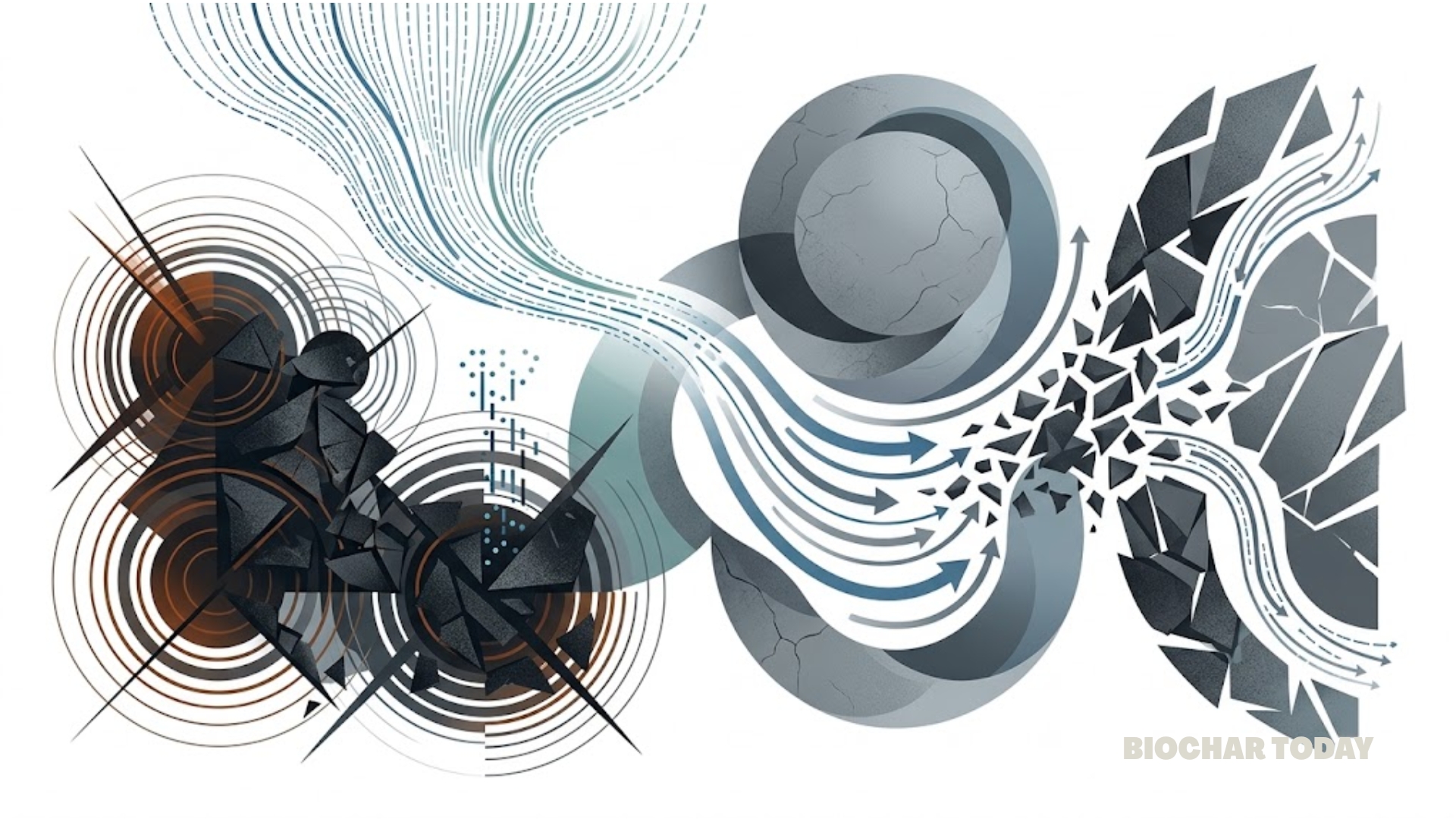
In an extensive scientific analysis published in the journal Advanced Energy and Sustainability Research, lead author Singaravelu Vivekanandhan and an international team of engineering specialists conducted a rigorous evaluation of the unintended drawbacks of biocarbon in structural, chemical, and environmental remediation technologies. The investigators compiled massive performance data demonstrating that no two carbonized materials are structurally identical. This lack of material uniformity represents a critical bottleneck for commercial deployment. While biomass valorization is globally championed as a low-cost, renewable replacement for fossil carbons, a failure to tailormade the individual physical and chemical properties of a specific batch of carbonized material to its target matrix can yield highly disruptive engineering anomalies that directly undermine sustainable development goals.
The structural evaluation of engineered charcoalCharcoal is a black, brittle, and porous material produced by heating wood or other organic substances in a low-oxygen environment. It is primarily used as a fuel source for cooking and heating. More across diverse matrices revealed highly consistent performance penalties when applied in structural building engineering. When weight-based cement replacement with charcoal is executed, the highly porous particulate structure acts as an internal sponge that absorbs free water. This moisture abstraction drastically penalizes the workability of fresh concrete mixes, reducing standard slump values by approximately 40% at a 10% binder substitution rate. To counteract this loss of flowability and prevent patchy particle grouping, engineers are forced to expand superplasticizer chemical dosages by up to 62% for a modest 5% replacement blend. Furthermore, while minor charcoal additions slightly improve early-stage concrete compaction, higher integration ratios systematically degrade hardened compressive strength by over 20%. This structural collapse occurs because the highly porous, unreactive carbon particles act as physical weak zones within the cement matrix, triggering widespread microcrack propagation under heavy mechanical loading.
The research team also identified severe thermodynamic and structural limitations when applying engineered charcoal as a sustainable additive in polymer composites and fire-retardant systems. Because high-temperature pyrolyzed materials are almost entirely devoid of surface oxygen functional groups, they are chemically incapable of adhering to polymer resins. This lack of chemical reactivity prevents efficient stress transfer across the composite grid, undercutting the tensile strength of polylactic acid and rubber systems. When deployed as a flame-retardant filler, the carbonized particles act merely as an inert thermal shield rather than an active chemical suppressant. In fact, due to the high density of surface functional groups in low-temperature variants, these additives accelerate the onset of thermo-oxidative decomposition, cutting down the overall time to ignition by up to 45% in polypropylene blends and increasing the structural brittleness of epoxy resins.
Compounding these industrial challenges, the review underscored severe efficiency barriers in advanced green energy applications, specifically relating to electrochemical conversion and solid-state gas containment. Pristine forms of biomass charcoal possess very low specific surface areas, generating meager electrical capacitance values of only 5 to 50 Farads per gram in supercapacitor electrodes. Compulsory chemical activation processes successfully expand internal porosities but trigger a massive loss of material yield and strip away vital heteroatom surface networks. In solid-state green hydrogen storage applications, the microporous pathways fail to maintain substantial volumetric efficiency, causing the total hydrogen adsorption capacity to drop below a negligible 1% by weight at room temperature. Although doping the carbon matrix with precious metals like palladium can increase storage efficiency by 300% via the catalytic spillover mechanism, this treatment drives manufacturing costs beyond sustainable limits and tethers the clean energy sector to fragile, expensive international noble metal supply chains.
Finally, the comprehensive life cycle assessments analyzed by the authors revealed that the environmental footprints of these systems are entirely dependent on regional technological access. In tropical and developing areas, the lack of advanced emission controls forces reliance on low-technology kilns that release substantial volumes of methane, carbon monoxide, and particulate aerosols, limiting the net carbon sequestration benefits of the technology. When applied directly to agricultural fields, aging charcoal particles act as localized sources of environmental contamination, dissolving mineral-bound organic matter and leachingLeaching is the process where nutrients are dissolved and carried away from the soil by water. This can lead to nutrient depletion and environmental pollution. Biochar can help reduce leaching by improving nutrient retention in the soil. More volatile aromatic hydrocarbons, perfluorinated substances, and dangerous dust particles into local aquifers and atmospheric zones. The authors concluded that rigorous standardization of processing guidelines and the development of predictive performance models are mandatory steps to circumvent these industrial disadvantages and unlock the genuine circular economy potential of biomass derived biochar.
Source: Vivekanandhan, S., Kaynak, E., Wang, D., Shanmugam, V., Bifulco, A., Diarte Almada, J., Saran Piri, I., Wang, Z., Padhye, L. P., Kim, N. K., Försth, M., Gonzalez-Libreros, J., Wachter, I., Karim, S., & Das, O. (2026). A review of the unintended consequences of biochar in various applications. Advanced Energy and Sustainability Research, 7(5), 2202500505.




Leave a Reply