

Key Takeaways
- BiocharBiochar is a carbon-rich material created from biomass decomposition in low-oxygen conditions. It has important applications in environmental remediation, soil improvement, agriculture, carbon sequestration, energy storage, and sustainable materials, promoting efficiency and reducing waste in various contexts while addressing climate change challenges. More combined with a specialized bacterial biofilm accelerates the removal of harmful antibiotics from low-fertility agricultural soils.
- This innovative composite material significantly reduces the abundance of dangerous antimicrobial resistance genes and bacterial virulence factors.
- High-fertility soils possess a strong natural resilience that naturally limits the duration and strength of antibiotic selection pressure.
- Tracking active antibiotic-degrading microbes reveals hidden genetic risks that standard whole-soil tests completely fail to detect.
The rapid escalation of global antibiotic use in human medicine and livestock production has introduced large quantities of unmetabolized veterinary drugs into agricultural environments through manure application. Once present in the ground, persistent compounds like sulfonamides exert severe and prolonged selective pressures on native microbial communities, driving the emergence and horizontal transmission of antimicrobial resistance genes and associated public health risks. To address this environmental hazard, an international research team published a groundbreaking study in the journal Communications Earth & Environment. Authors Zhi Mei, Fang Wang, Jose Luis Balcazar, and their colleagues investigated how specialized remediation strategies alter the active antibiotic-degrading microbiomes and associated resistance dynamics within contrasting soil environments.
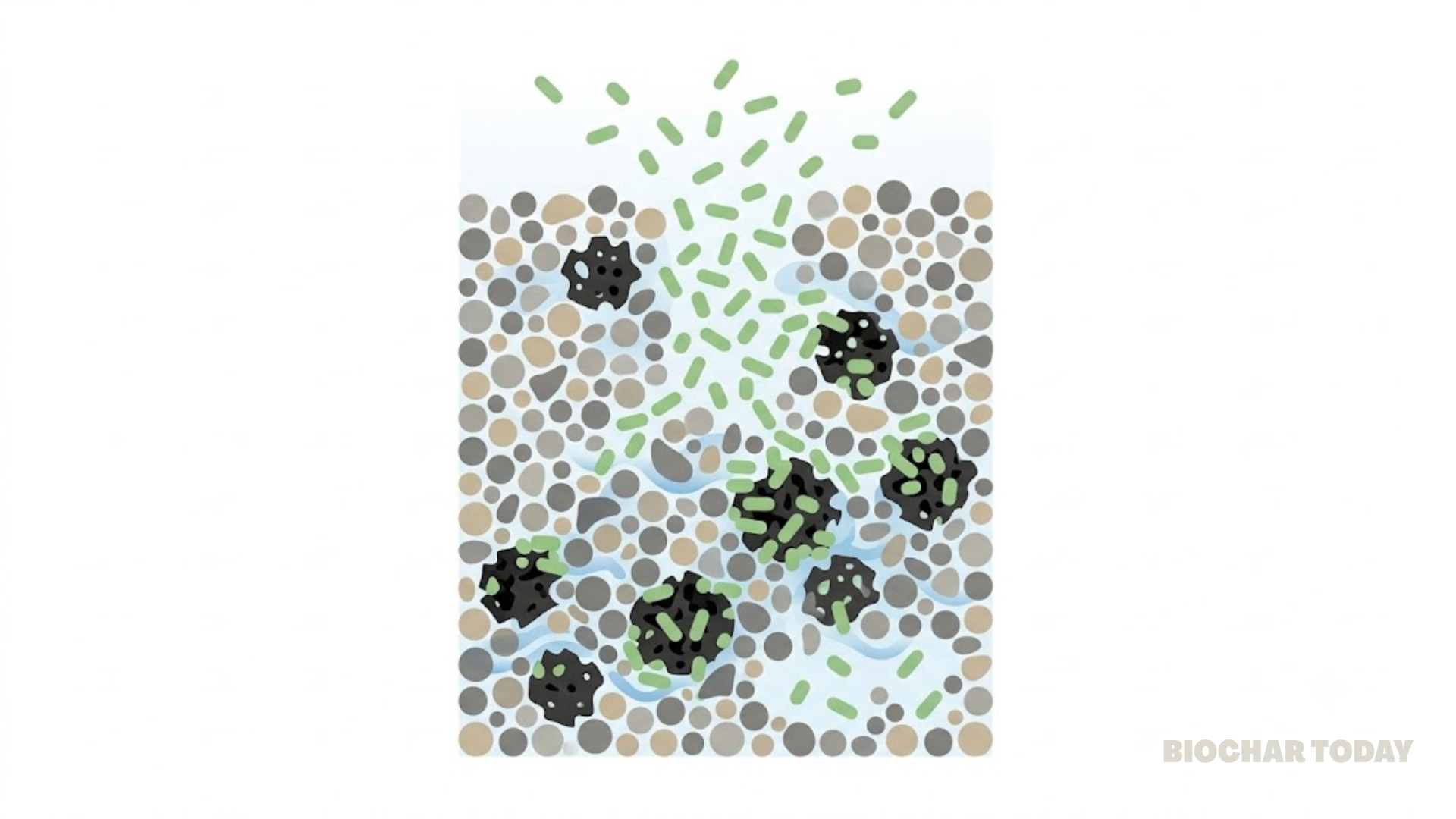
The researchers developed an engineered remediation solution by inoculating bamboo-derived biochar with Arthrobacter strain D2, a robust biofilm-forming bacterium capable of degrading complex pollutants. They analyzed the performance of this biochar-biofilm composite by introducing carbon-labeled sulfadiazine into two distinct agricultural profiles: a less fertile Ultisol from Yingtan, China, and a highly fertile Mollisol from Changchun, China. By utilizing advanced DNA stable-isotope probing coupled with high-throughput metagenomic sequencing, the team successfully separated and identified the active antibiotic-degrading bacterial populations from the rest of the soil community, allowing them to track the precise genetic and structural responses of the microbiome under antibiotic stress.
The experimental results revealed that the biochar-biofilm composite achieved highly soil-dependent outcomes, delivering the most pronounced benefits in the low-fertility Ultisol. In the untreated Ultisol control, sulfadiazine dissipated slowly, leaving approximately 55% of the extractable parent compound in the bulk soil after seven days and extending the dangerous exposure window for local microbes. The addition of the biochar-biofilm composite to the Ultisol accelerated the removal of extractable sulfadiazine from the bulk soil by 31%, dropping the remaining parent drug down to just 24% by the first week. This rapid depletion was primarily driven by a sorptive sink effect, where the high-surface-area biochar preferentially sequestered the antibiotic into its porous matrix, achieving an extraordinary concentration enrichment up to 132-fold higher inside the recovered biofilm fraction than the surrounding bulk soil.
Crucially, this dual-action sequestration and localized biodegradation dramatically reduced the selective pressure on the active microbial community in the less fertile Ultisol. Within the isolated antibiotic-degrading bacterial fraction of the Ultisol, the biochar composite significantly lowered both the overall variety and the absolute abundance of multiple resistance classes, including aminoglycoside, chloramphenicol, multidrug, and tetracycline resistance genes. It also suppressed three major mobile genetic elements responsible for horizontal gene transfer and successfully reduced dangerous virulence factors linked to bacterial stress responses and iron uptake systems. Conversely, the naturally fertile Mollisol demonstrated strong intrinsic ecosystem resilience due to its higher organic matter content and rich indigenous microbial activity, which facilitated rapid baseline antibiotic dissipation and rendered the additional biochar treatment largely redundant.
Ultimately, distinguishing the active antibiotic degraders from the non-degrading community uncovered vital resistome dynamics that standard bulk-soil analyses completely failed to capture. While Proteobacteria bacteria were identified as major potential hosts mediating plasmid-borne resistance transfer, the application of the biochar composite effectively suppressed the proliferation of pathogenic genera like Bartonella in the amended Ultisols. These findings prove that targeted biochar-biofilm interventions can successfully mitigate environmental resistance risks and enhance food safety, offering a highly effective, practical solution for restoring low-fertility or disturbed agricultural zones.
Source: Mei, Z., Wang, F., Balcazar, J. L., He, C., Liao, M., Leung, K. S. Y., Fu, Y., Hashsham, S. A., Jiang, X., Jia, Z., Zhang, T., Tiedje, J. M., & Amelung, W. (2026). Biochar-based composite drives sulfadiazine sequestration and mitigates active resistome risks. Communications Earth & Environment, 7(1), 1-24.
Keywords:




Leave a Reply