
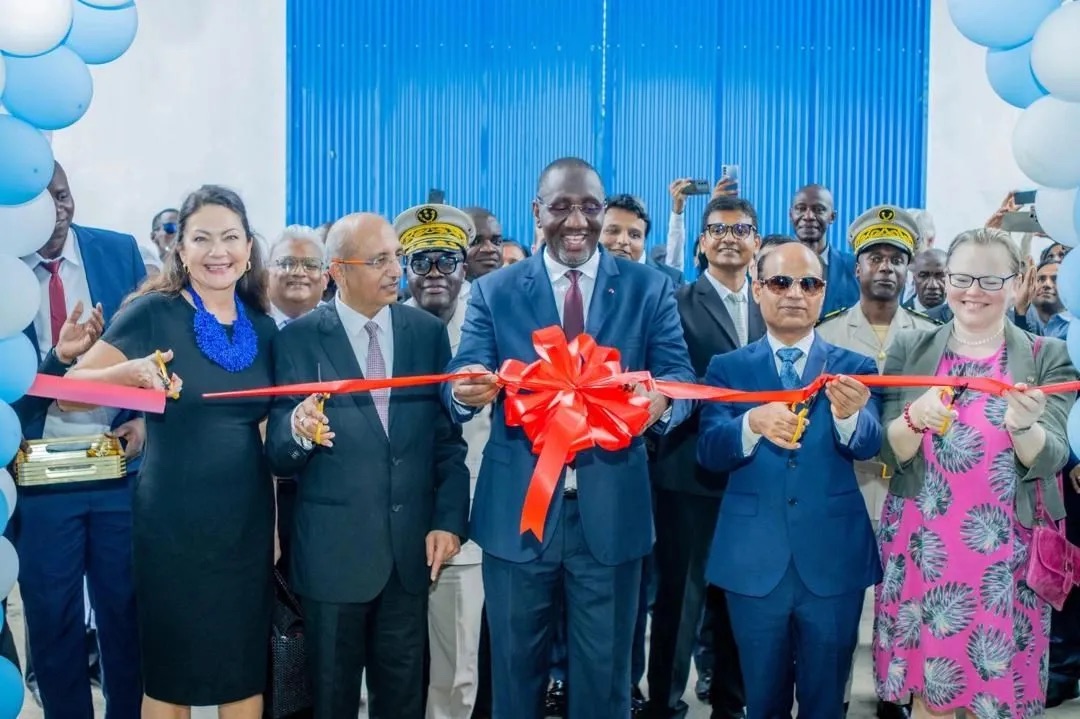
Valency International and Revāta Carbon have announced a joint initiative to launch West Africa’s first large-scale biocharBiochar is a carbon-rich material created from biomass decomposition in low-oxygen conditions. It has important applications in environmental remediation, soil improvement, agriculture, carbon sequestration, energy storage, and sustainable materials, promoting efficiency and reducing waste in various contexts while addressing climate change challenges. More commercialisation project. Focused on cashew shell waste valorisation, the initiative aims to reduce carbon emissions, improve soil health, and enhance local economic resilience by converting agricultural residues into biochar and related co-products.
Addressing agriwaste in the cashew industry
Despite West Africa being the world’s largest cashew-producing region, its processing operations generate tens of thousands of tonnes of cashew shell waste annually. Much of this biomassBiomass is a complex biological organic or non-organic solid product derived from living or recently living organism and available naturally. Various types of wastes such as animal manure, waste paper, sludge and many industrial wastes are also treated as biomass because like natural biomass these More is either discarded or burned, resulting in greenhouse gas emissions and wasted resource potential. Recognising this gap, Valency International—a leader in agri-commodity supply chains—has partnered with Revāta Carbon, a company specialising in sustainability solutions and carbon removal technologies.
Together, they will process 35,000 tonnes of cashew shell waste annually in Nigeria and Côte d’Ivoire. This will support the production of biochar for soil amendmentA soil amendment is any material added to the soil to enhance its physical or chemical properties, improving its suitability for plant growth. Biochar is considered a soil amendment as it can improve soil structure, water retention, nutrient availability, and microbial activity. More and long-term carbon sequestration, as well as additional byproducts suitable for energy and industrial applications.
Integrating circular practices and supporting livelihoods
The partnership leverages Revāta Carbon’s agriwaste-to-value technologies within Valency’s existing cashew processing operations. By reintegrating byproducts into agricultural systems, the initiative aims to reduce dependency on synthetic inputs, enhance soil fertility, and promote circular resource use.
The project also has a strong socio-economic dimension. It is expected to create jobs across the cashew value chain, from biomass collection to biochar production and distribution. This supports inclusive growth and contributes to food system resilience by improving crop performance and securing farmer incomes.
Commercial model and long-term vision
Both organisations position the partnership as a model for scalable, decarbonisation-led development in agriculture. Valency’s CEO Sumit Jain emphasised the alignment with broader goals of food security and economic stability, while Revāta Carbon’s CEO Vaibav Jain highlighted that sustainability can be a driver of profitability, not just an environmental imperative.
By embedding carbon removal into agri-supply chains, the initiative sets a precedent for future biochar and waste valorisation projects in the region and beyond.





Leave a Reply