
Key Takeaways
- New catalytic technologies can turn farm waste like manure and straw into high-value fertilizers.
- These methods reduce life-cycle greenhouse gas emissions by up to 30% compared to traditional fertilizer production.
- Fertilizers made this way slowly release essential nutrients, improving soil health and reducing water pollution.
- Using waste biomassBiomass is a complex biological organic or non-organic solid product derived from living or recently living organism and available naturally. Various types of wastes such as animal manure, waste paper, sludge and many industrial wastes are also treated as biomass because like natural biomass these More for fertilizer helps conserve non-renewable resources like fossil fuels and phosphate rock.
- Scaling up this innovation requires overcoming hurdles like high initial costs and inconsistent waste composition
In an era of rising food demand and environmental pressures, the agricultural sector is urgently seeking sustainable solutions. Traditional fertilizers, which rely on non-renewable phosphate rock and natural gas, contribute to significant environmental issues, including water pollution, soil degradation, and greenhouse gas (GHG) emissions. For instance, ammonia synthesis via the conventional Haber-Bosch process accounts for roughly 1.8% of global CO2 emissions and about 2% of global energy consumption due to its high-temperature (400−500°C) and high-pressure (200–300 bar) requirements. A recent review published in Applied Catalysis O: Open by Dawid Skrzypczak, Katarzyna Pstrowska, Anna Niciejewska, Anna Mazur-Nowacka, Łukasz Wilk, and Katarzyna Chojnacka highlights how innovative catalytic technologies are transforming agricultural residues into high-value fertilizers, simultaneously enhancing nutrient recovery and mitigating the industry’s environmental footprint.
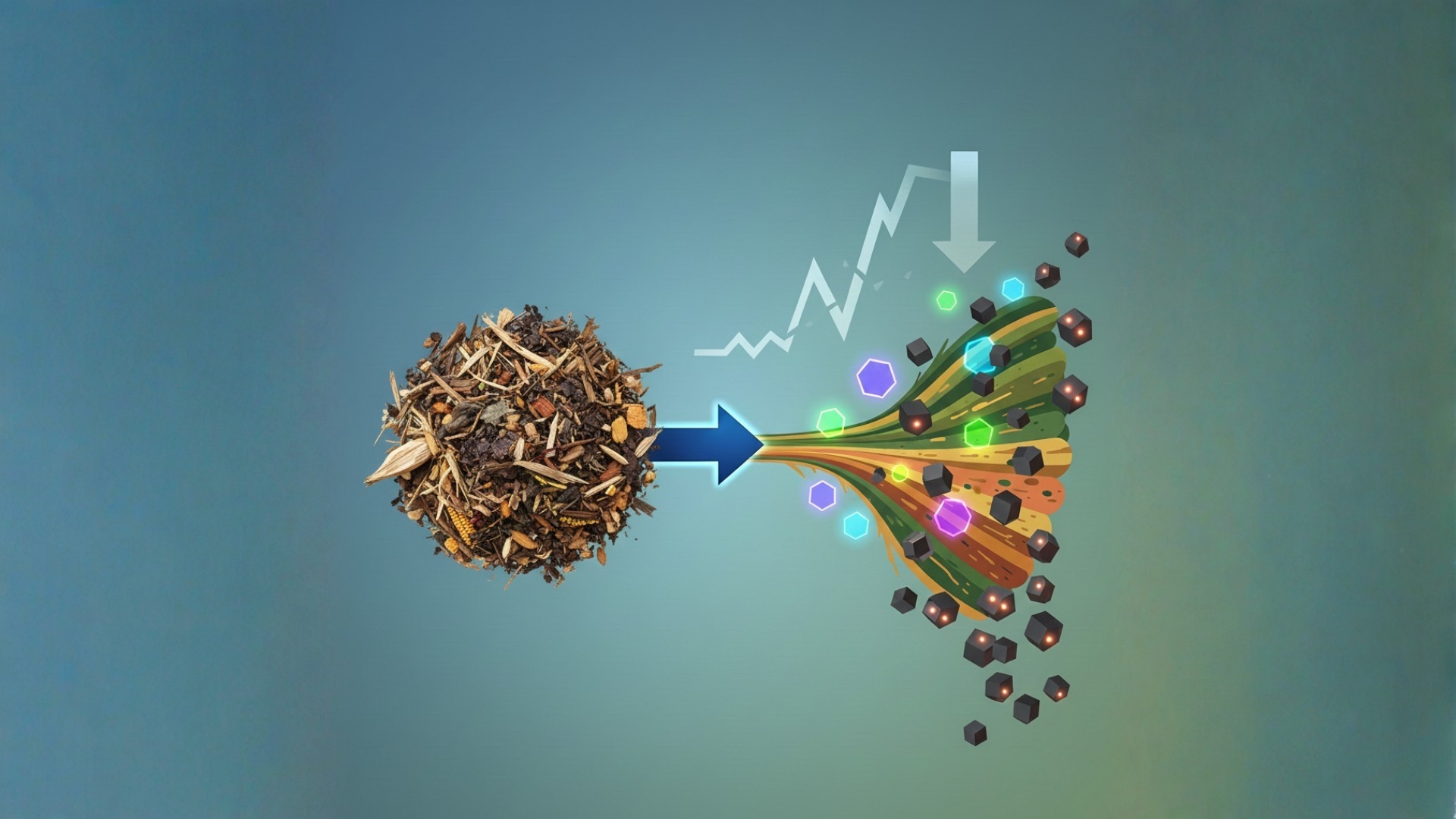
The core of this innovation lies in converting agricultural waste—such as crop residues (straw, corn stalks), animal-derived waste (manure), and processing by-products—into forms that are rich in plant-available nitrogen (N), phosphorus (P), and potassium (K). Processes like Selective Catalytic Reduction (SCR), hydrothermal carbonization (HTC), catalytic pyrolysisPyrolysis is a thermochemical process that converts waste biomass into bio-char, bio-oil, and pyro-gas. It offers significant advantages in waste valorization, turning low-value materials into economically valuable resources. Its versatility allows for tailored products based on operational conditions, presenting itself as a cost-effective and efficient More, and electrochemical recovery are key to this conversion. Crucially, these new processes can reduce life-cycle GHG emissions by up to 30% compared to conventional production methods. This is a vital step toward decarbonization, especially considering that the highly potent greenhouse gas nitrous oxide has a Global Warming Potential (GWP) nearly 300 times that of CO2.
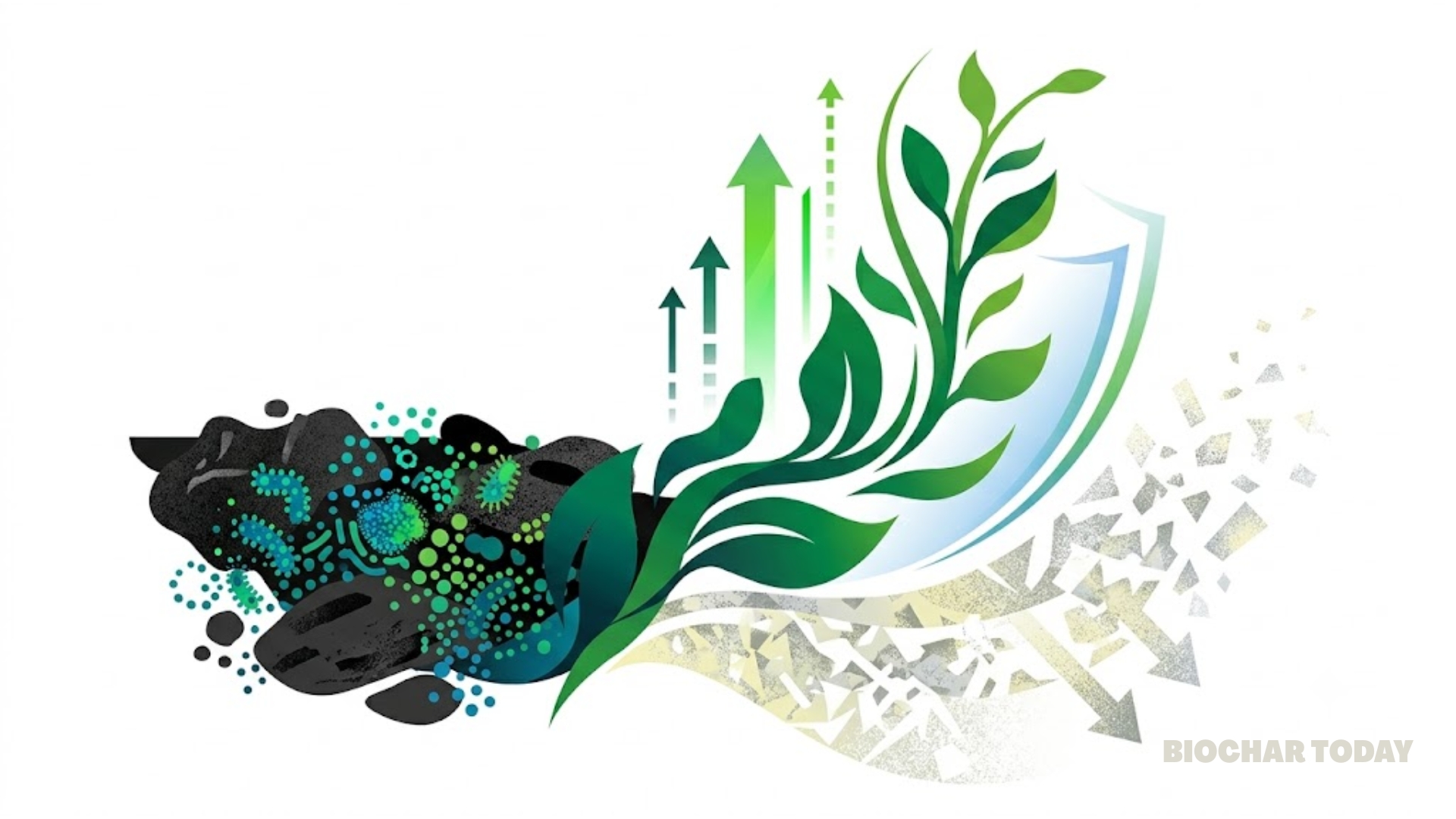
One significant outcome of these technologies is biocharBiochar is a carbon-rich material created from biomass decomposition in low-oxygen conditions. It has important applications in environmental remediation, soil improvement, agriculture, carbon sequestration, energy storage, and sustainable materials, promoting efficiency and reducing waste in various contexts while addressing climate change challenges. More, a carbon-rich solid produced through catalytic pyrolysis. Biochar acts as a soil amendmentA soil amendment is any material added to the soil to enhance its physical or chemical properties, improving its suitability for plant growth. Biochar is considered a soil amendment as it can improve soil structure, water retention, nutrient availability, and microbial activity. More that improves water retention and microbial activity. When enriched with nutrients, it functions as a slow-release fertilizer. The stability of biochar is a major advantage ; it can retain up to 50% of its carbon content in the soil for centuries, directly contributing to carbon sequestration and slowing climate change.
Catalytic pyrolysis uses catalysts like zeolites, metal oxides, and inorganic salts to decompose waste biomass, shifting the reaction balance towards desired liquid products and improving bio-oil quality. For instance, the use of ZSM-5 zeolite can increase the carbon content in bio-oil by about 25% and reduce its acidity. In the context of nutrient recovery, low-temperature pyrolysis (≤500°C) promotes the retention of nitrogen in the resulting biochar , which in the case of chicken manure can be as high as 8.2–10.0%. For phosphorus recovery, thermal conversion yields ashAsh is the non-combustible inorganic residue that remains after organic matter, like wood or biomass, is completely burned. It consists mainly of minerals and is different from biochar, which is produced through incomplete combustion. Ash Ash is the residue that remains after the complete More where about 80% of phosphorus is often in a plant-inaccessible form called apatite ; chemical extraction has been found to be a promising and cost-effective method for its recovery. Potassium, another essential nutrient, is present in biomass ash, particularly agricultural residues, in the range of 0.4-27.5%. It can be effectively recovered from biomass ash using simple, cost-effective water washing at room temperature.
The integration of these processes aligns perfectly with the principles of the circular economy (CE) by transforming agricultural waste from a disposal burden into a valuable resource, thus closing nutrient and carbon cycles. However, widespread adoption faces challenges, including the high cost of capital investment for new infrastructure , the instability of catalysts under harsh industrial conditions (fouling, poisoning, structural degradation) , and the inherent variability in the chemical composition of agricultural waste. Furthermore, synthetic fertilizers currently dominate the market due to their cost advantage and well-established supply chains. Overcoming these barriers will require further research into durable, cost-effective catalysts , possibly incorporating abundant materials like biochar , alongside supportive policies, financial incentives, and regulatory harmonization to ensure a smooth transition to this more sustainable form of fertilizer production.
Source: Skrzypczak, D., Pstrowska, K., Niciejewska, A., Mazur-Nowacka, A., Wilk, Ł., & Chojnacka, K. (2025). Catalytic innovations in fertilizer production from agricultural waste: Enhancing soil health and sustainability. Applied Catalysis O: Open, 206, 207064.



Leave a Reply