
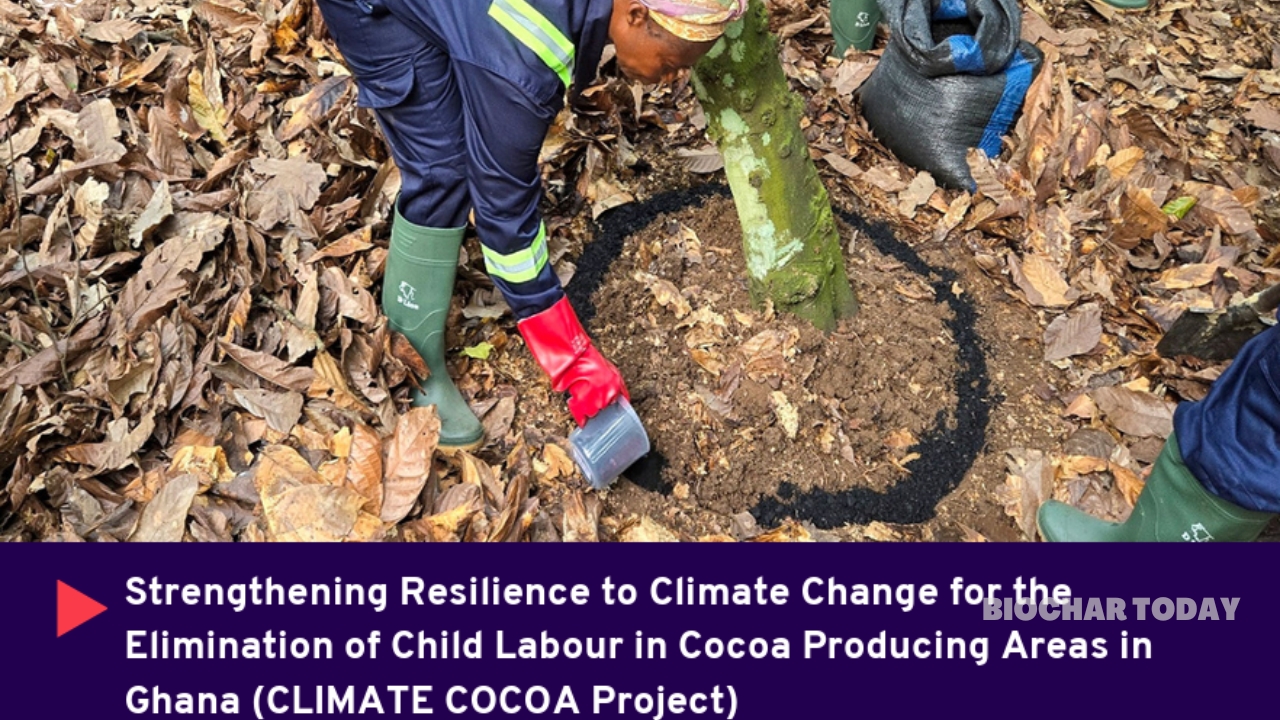
The International Labour Organization (ILO), with funding from the Government of Japan, recently concluded the “CLIMATE COCOA Project” in the Western North Region of Ghana. Running from March 2025 to February 2026 with a budget of USD 1.5 million, this initiative integrated socio-economic protection with climate-smart agricultural technology. The project aimed to eliminate child labor in cocoa-producing communities while simultaneously building environmental resilience through the localized production and application of biocharBiochar is a carbon-rich material created from biomass decomposition in low-oxygen conditions. It has important applications in environmental remediation, soil improvement, agriculture, carbon sequestration, energy storage, and sustainable materials, promoting efficiency and reducing waste in various contexts while addressing climate change challenges. More. By addressing the intersection of systemic poverty and decreasing agricultural productivity, the program sought to create a sustainable model for rural development.
A primary challenge addressed by the project was the cycle of poverty and low productivity that often forces cocoa-growing families to rely on child labor. Traditional farming methods in the Bibiani Ahwiaso Bekwai Municipal area have faced increasing pressure from climate change, leading to weakened livelihoods and fragile community protection systems. These economic vulnerabilities make children more susceptible to exploitation, as families struggle with high production costs and depleted soil fertility. Without viable technical interventions to boost yields and lower costs, the root causes of child labor remained difficult to eradicate through monitoring alone.
The solution implemented by the ILO involved the promotion of biochar as a “climate-smart green technology” to improve soil health and household income. The project established five demonstration sites for vegetables, cereals, and cocoa seedlings to illustrate the benefits of biochar application. To ensure local technical capacity, the program trained 48 farmers in production techniques and sensitized 300 additional cocoa farmers on proper application methods. Furthermore, the project generated practical knowledge products, including a manual on carbon credit production and guidelines for vinegar production during the pyrolysisPyrolysis is a thermochemical process that converts waste biomass into bio-char, bio-oil, and pyro-gas. It offers significant advantages in waste valorization, turning low-value materials into economically valuable resources. Its versatility allows for tailored products based on operational conditions, presenting itself as a cost-effective and efficient More process, to support long-term scalability.
Outcomes from the initiative demonstrate a successful integration of environmental and social goals. Approximately 45 tons of biochar were produced from cocoa pods, and 262 farmers received bags for application on their own farms. This intervention contributed to improved soil fertility, increased yields, and reduced farming costs, which stabilized household incomes and reduced the economic necessity of child labor. Additionally, the project established Child Labour-Free Zones and supported 218 children with counseling and remediation. These results provide a documented framework for how climate action and labor standards can advance together in agricultural communities.


Leave a Reply