

The coffee sector’s transition toward comprehensive sustainability is highlighted by the practices of Thailand’s Lahu community, as documented by recent volunteer Alessandro Carosi, a freelance barista and trainer. Carosi spent two months at the Suan Lahu coffee farm near Chiang Mai, which operates on an eco-sustainable, permaculture basis.
The Lahu, an indigenous ethnic group in the mountainous Golden Triangle, successfully transitioned from subsistence and opium cultivation to coffee farming. This shift was supported by sustainable farming initiatives and projects introduced by the Thai royal family around 1970, under King Bhumibol, who aimed to replace the rampant opium trade. This policy framework continues to support local growers; Thailand maintains a 90% tax on imported coffee, the second highest after India, ensuring that domestic demand exceeds production and creating an advantageous market for Thai farmers. Unlike many global coffee-producing regions where the average age of a farmer is typically between 40 to 60, the opposite trend is observed in Thailand.
A key component of the Suan Lahu farm’s sustainable agriculture strategy is the on-site production and application of biocharBiochar is a carbon-rich material created from biomass decomposition in low-oxygen conditions. It has important applications in environmental remediation, soil improvement, agriculture, carbon sequestration, energy storage, and sustainable materials, promoting efficiency and reducing waste in various contexts while addressing climate change challenges. More. Biochar, created through pyrolysisPyrolysis is a thermochemical process that converts waste biomass into bio-char, bio-oil, and pyro-gas. It offers significant advantages in waste valorization, turning low-value materials into economically valuable resources. Its versatility allows for tailored products based on operational conditions, presenting itself as a cost-effective and efficient More and gasificationGasification is a high-temperature, thermochemical process that converts carbon-based materials into a gaseous fuel called syngas and solid by-products. It takes place in an oxygen-deficient environment at temperatures typically above 750°C. Unlike combustion, which fully burns material to produce heat and carbon dioxide (CO2), gasification More of agricultural and forestry residues (such as brushwood, olive pomace, and fruit shells), is used as an organic soil improver. Carosi’s volunteering work included cutting waste wood and transporting it to the dedicated biochar creation warehouse. The material is recognized for its potential in intelligent biomassBiomass is a complex biological organic or non-organic solid product derived from living or recently living organism and available naturally. Various types of wastes such as animal manure, waste paper, sludge and many industrial wastes are also treated as biomass because like natural biomass these More management, benefiting the environment, agriculture, and the community.
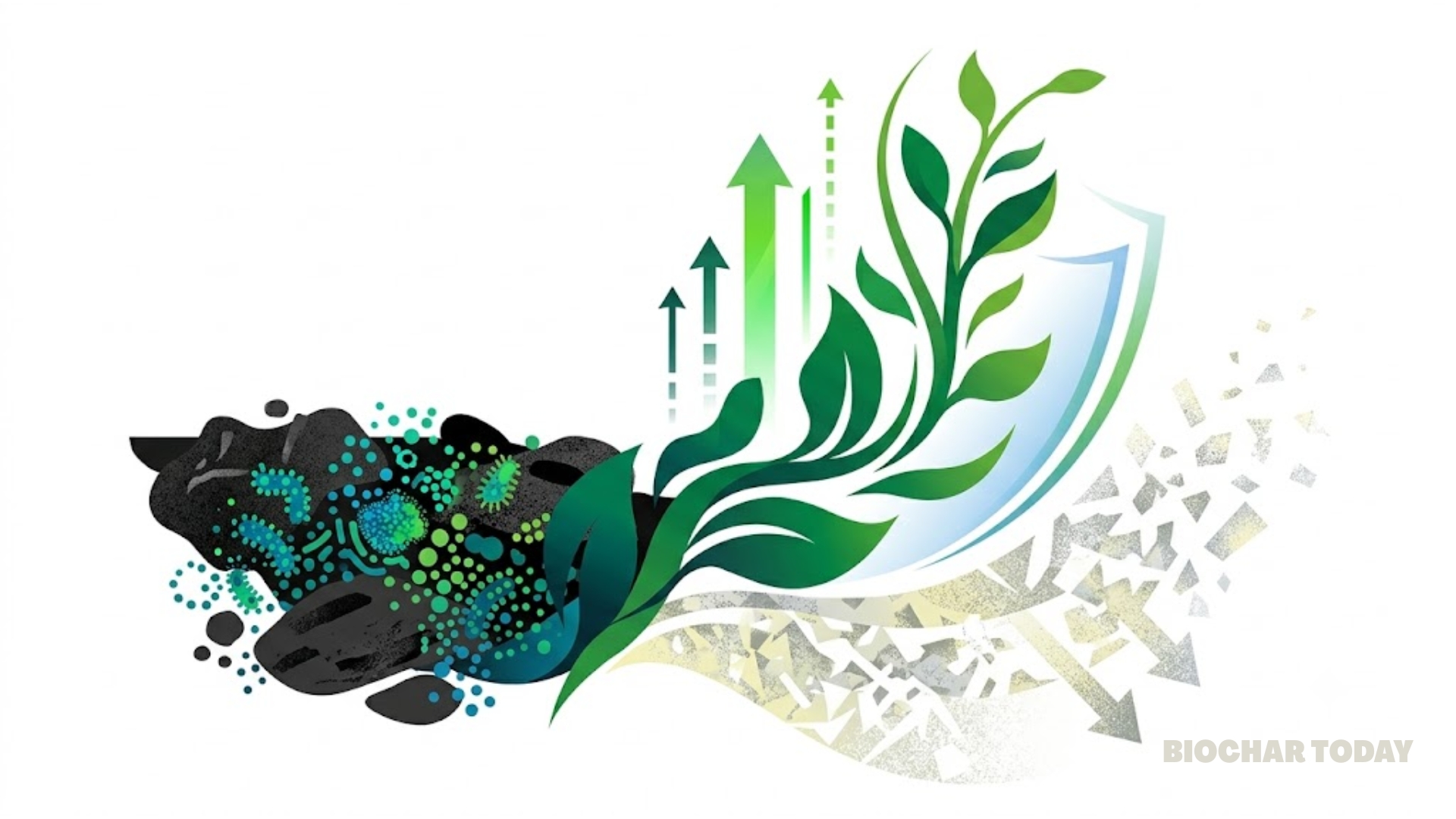
The benefits of utilizing biochar are multi-faceted: it involves the valorisation and recovery of agricultural residues, improves poor soils by reducing acidity and increasing nutrient/water retention, and supports an increased soil microbial load and nitrogen fixationNitrogen is a crucial nutrient for plant growth, but plants can’t directly absorb it from the air. Nitrogen fixation is a process where certain bacteria convert atmospheric nitrogen into a form that plants can use. Biochar can provide a home for these nitrogen-fixing bacteria, enhancing More. Furthermore, it aids in climate change mitigation through the long-term, stable storage of carbon in the soil. The Lahu community, which comprises an estimated 60,000 people in Thailand—with the Black Lahu being the largest subgroup at almost 80% of the population—demonstrates that integrating ancient community stewardship with modern, carbon-smart soil solutions can lead to both ecological and economic resilience in the coffee supply chain.



Leave a Reply