
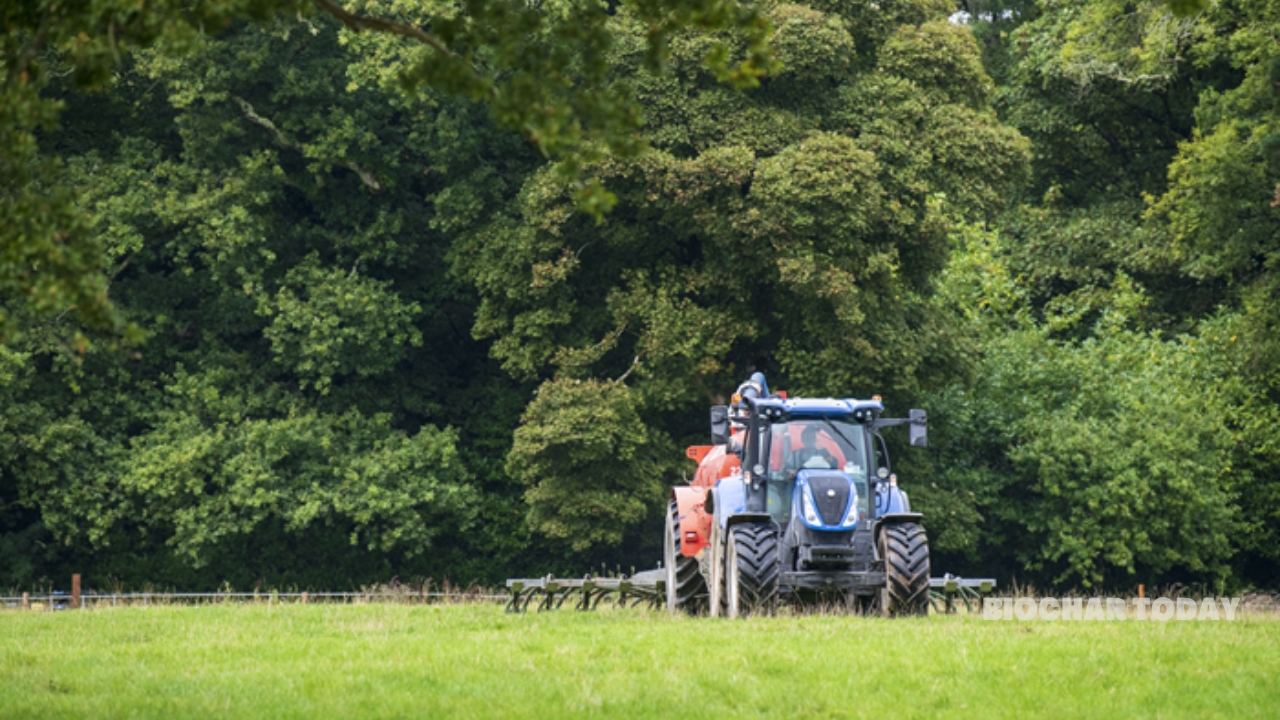
The Irish Agriculture and Food Development Authority, Teagasc, in collaboration with the University of Limerick and various national partners, has initiated the BIOCHAR Project. This multi-year, systems-based research program is designed to provide field-validated evidence regarding the efficacy of biocharBiochar is a carbon-rich material created from biomass decomposition in low-oxygen conditions. It has important applications in environmental remediation, soil improvement, agriculture, carbon sequestration, energy storage, and sustainable materials, promoting efficiency and reducing waste in various contexts while addressing climate change challenges. More in reducing environmental pollutants. Funded by the Department of Agriculture, Food and the Marine and the Department of the Environment, Climate and Communications, the initiative focuses on quantifying the reduction of greenhouse gas emissions, ammonia volatilization, and nitrate leachingLeaching is the process where nutrients are dissolved and carried away from the soil by water. This can lead to nutrient depletion and environmental pollution. Biochar can help reduce leaching by improving nutrient retention in the soil. More within the Irish agricultural framework.
The primary challenge addressed by this research is the significant environmental footprint of livestock management, specifically the emissions of methane, nitrous oxide, and ammonia, alongside nutrient runoff into water bodies. Ireland faces rigorous climate and water quality targets that necessitate a reduction in the nitrogen and carbon losses associated with cattle slurry, poultry litter, and anaerobic digestion systems. Traditional manure management often results in high gaseous losses during storage and land application, which complicates the agricultural sector’s transition toward climate neutrality.
To address these inefficiencies, the project employs a comprehensive experimental approach across two primary research centers, Teagasc Johnstown Castle and Teagasc Grange. Researchers are conducting climate-controlled slurry storage trials to simulate winter conditions and testing the direct incorporation of biochar into cattle slurry. Additionally, the study evaluates biochar as a bedding additive for poultry to suppress in-house ammonia. At the Grange facility, the research focuses on the integration of biochar-amended litter into anaerobic digestion, examining its influence on biogas yield and the quality of the resulting digestate.
The anticipated outcomes of the BIOCHAR Project include the generation of high-resolution datasets for ammonia and greenhouse gas emissions, which will refine national emission factors and Measurement, Reporting, and Verification (MRV) platforms. By providing a technical white paper and conducting large-scale farmer demonstrations, the project aims to establish scalable protocols for biochar use. These results are expected to improve bird welfare in poultry systems, stabilize methane production in anaerobic digesters, and significantly lower nitrate leaching, thereby aligning Irish farming practices with national environmental mandates.




Leave a Reply