

A research team led by Yutao Peng at Sun Yat-Sen University in Shenzhen, China, has developed an artificial intelligence model capable of predicting the agronomic impact of biocharBiochar is a carbon-rich material created from biomass decomposition in low-oxygen conditions. It has important applications in environmental remediation, soil improvement, agriculture, carbon sequestration, energy storage, and sustainable materials, promoting efficiency and reducing waste in various contexts while addressing climate change challenges. More on soil phosphorus dynamics prior to field application. Published in the journal Biochar, the study synthesized 534 real-world measurements compiled from 32 historical datasets to train and evaluate three distinct machine learning systems. The resulting predictive framework eliminates traditional trial-and-error methodologies from sustainable soil management. By modeling complex chemical and physical variables, the computational system provides a reliable mechanism to optimize agricultural nutrient efficiency while mitigating the environmental risks associated with phosphorus runoff.
The study addresses the persistent unpredictability of biochar applications regarding soil phosphorus availabilityPhosphorus is another essential nutrient for plant growth, but it can sometimes be locked up in the soil and unavailable to plants. Biochar can help release phosphorus from the soil and make it more accessible to plants, reducing the need for chemical fertilizers. More and the downstream threat of waterway eutrophication. Although phosphorus is a critical and finite agricultural input, crops typically absorb only 20 percent of applied fertilizers during a growing season, leaving the remainder to bind with mineral ions or leach into aquatic ecosystems. While biochar serves as a tool for nutrient management, its empirical effects on phosphorus are highly inconsistent across diverse soil types. Applications occasionally liberate locked nutrients for crop utilization, yet under alternative conditions, the material binds phosphorus tightly, creating a structural barrier for farmers seeking predictable crop yields and environmental compliance.
To resolve this inconsistency, the researchers engineered a machine learning framework utilizing a Random Forest algorithm that processes 19 distinct input variables to model soil-biochar interactions. The algorithm evaluates complex, non-linear relationships by averaging outcomes across hundreds of independent decision trees. Crucially, the model identified pyrolysisPyrolysis is a thermochemical process that converts waste biomass into bio-char, bio-oil, and pyro-gas. It offers significant advantages in waste valorization, turning low-value materials into economically valuable resources. Its versatility allows for tailored products based on operational conditions, presenting itself as a cost-effective and efficient More temperature as the primary determinant of nutrient behavior, demonstrating that biochars produced at moderate temperatures (460 to 482 degrees Celsius) maximize phosphorus availability. Conversely, higher production temperatures optimize the material for capturing and retaining phosphorus, a characteristic valuable for preventing environmental leachingLeaching is the process where nutrients are dissolved and carried away from the soil by water. This can lead to nutrient depletion and environmental pollution. Biochar can help reduce leaching by improving nutrient retention in the soil. More. The system also integrates secondary variables, including application rates, soil pHpH is a measure of how acidic or alkaline a substance is. A pH of 7 is neutral, while lower pH values indicate acidity and higher values indicate alkalinity. Biochars are normally alkaline and can influence soil pH, often increasing it, which can be beneficial More, and existing nutrient baselines.
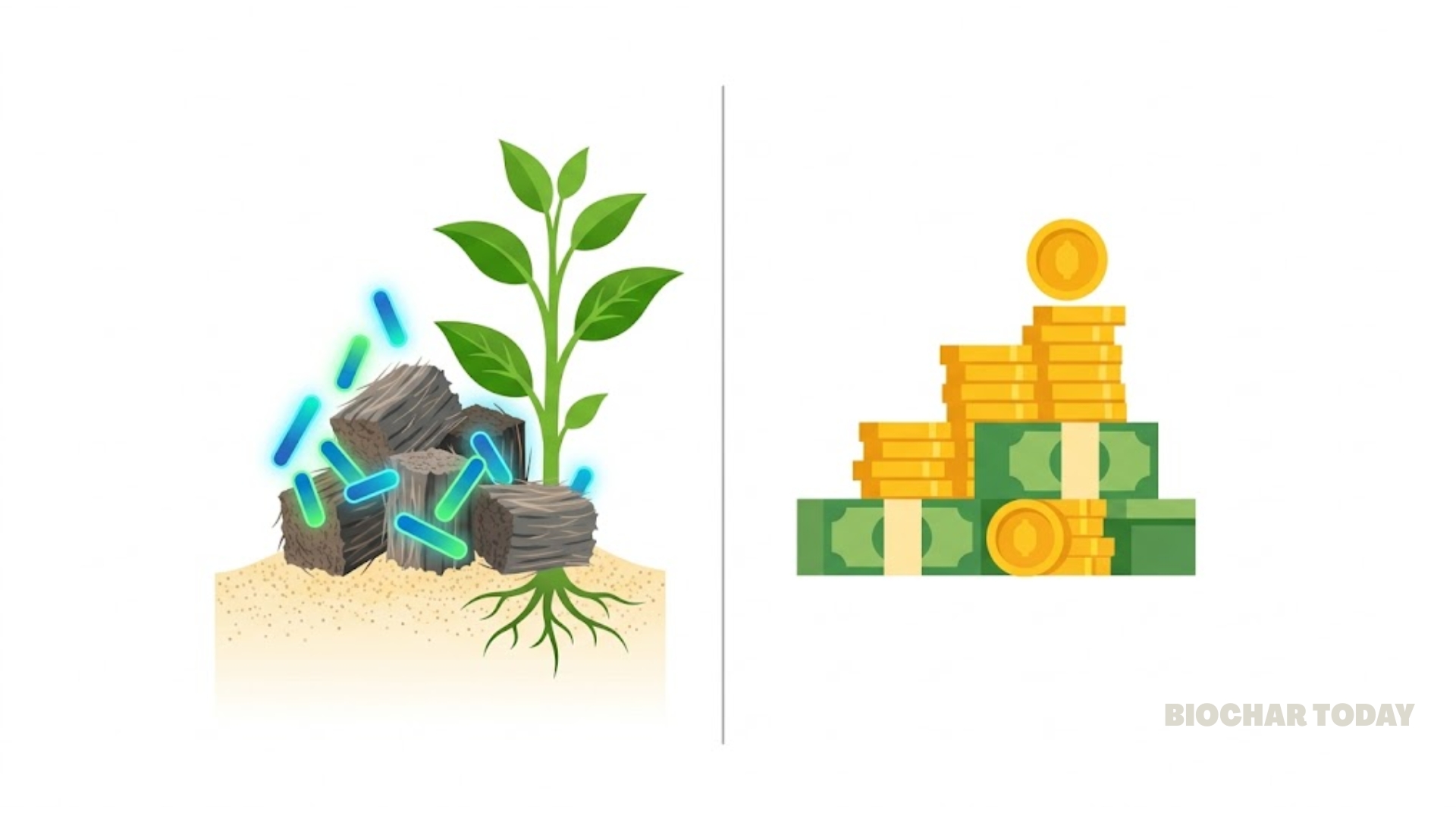
The computational model delivers high-precision diagnostic and economic outcomes for global precision agriculture. The Random Forest model achieved a prediction accuracy rating of 91 percent on novel datasets, successfully transforming an unpredictable field practice into a data-backed science. Furthermore, the model revealed that unmodified, plain plant-based biochars can match or exceed the performance of expensive, laboratory-engineered variants when matched with compatible soil chemistry. This insight lowers commercial entry barriers by reducing production costs and energy requirements. Ultimately, the framework enables agricultural advisors to prescribe specific biochar specifications tailored to individual field profiles, safeguarding local watersheds while optimizing fertilizer investments.



Leave a Reply