
Key Takeaways
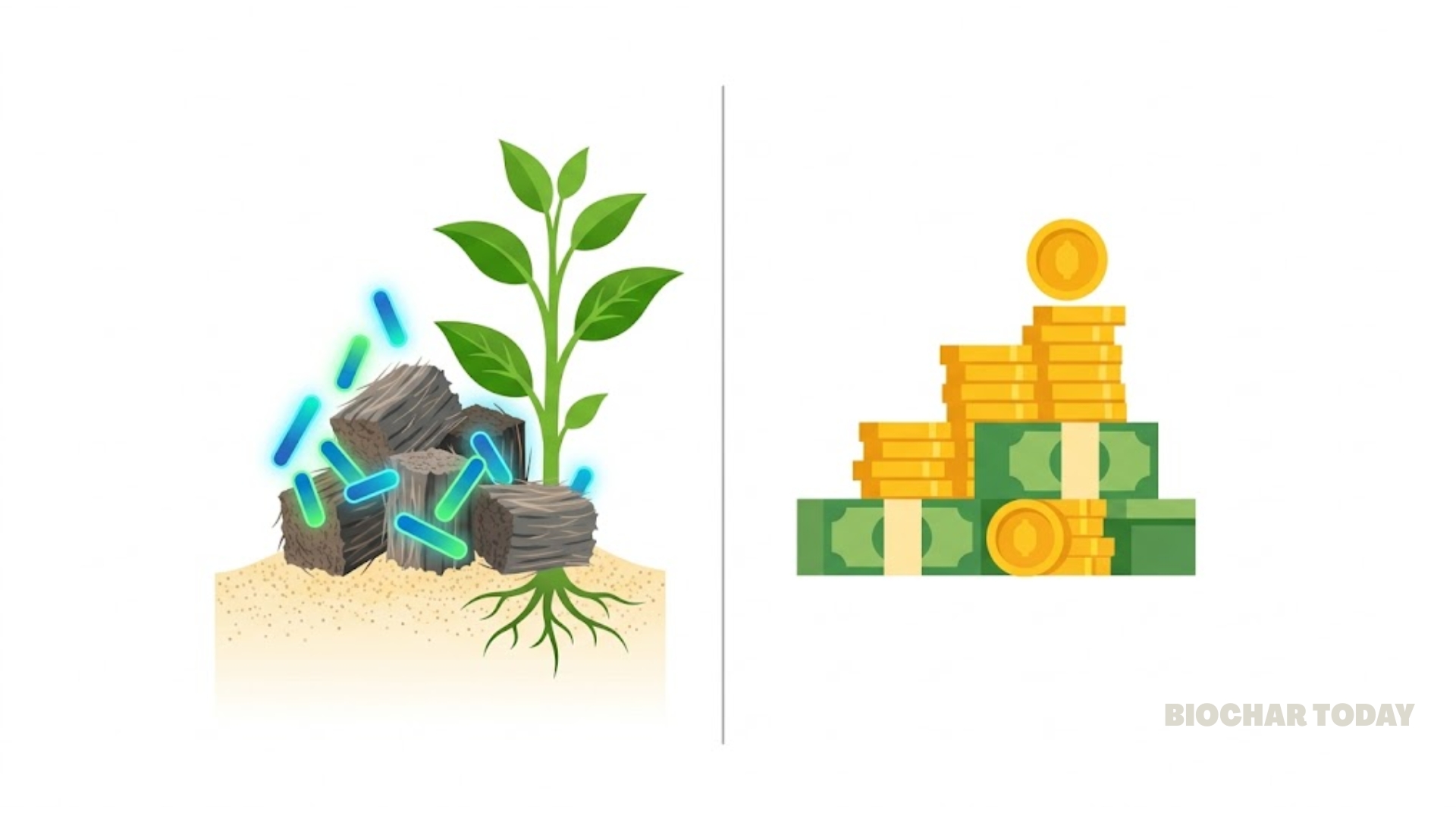
- Combining biocharBiochar is a carbon-rich material created from biomass decomposition in low-oxygen conditions. It has important applications in environmental remediation, soil improvement, agriculture, carbon sequestration, energy storage, and sustainable materials, promoting efficiency and reducing waste in various contexts while addressing climate change challenges. More and specific bacteria increases okra yield by thirty-seven percent.
- Soil water holding capacityWater holding capacity is the amount of water that soil can retain. Biochar can significantly increase the water holding capacity of soil, improving its ability to withstand drought conditions and support plant growth. More rises significantly when using biochar amendments.
- Available soil nutrients like nitrogen and potassium are substantially improved.
- The sequential crop of amaranthus benefits from persistent soil nutrient availability.
- Farmers achieve a higher financial return, reaching a two to one profit ratio.
A recent master’s thesis completed at Kerala Agricultural University, Kerala, India, by Harshitha S. investigates the dual application of seed bacterization and biochar amendments within an okra-amaranthus cropping sequence. The field research, conducted in the nutrient-deficient sandy soils of the Onattukara region in Kerala, India, highlights how strategic organic interventions can revitalize problem soils. By integrating low-cost biochar amendments with beneficial microorganisms, the study establishes a practical framework for stabilizing tropical agricultural production, reducing fertilizer losses, and maximizing smallholder income.
The core findings center on a notable enhancement of crop development and total output. When okra seeds were treated with a beneficial bacterial strain and sown into soil amended with five tonnes per hectare of tender coconut husk biochar, plant growth accelerated significantly. This combined approach produced the highest recorded fruit yield of 14.09 tonnes per hectare, which represents a thirty-seven percent increase compared to standard regional farming practices. The study attributes this growth to the bacteria producing root-stimulating plant hormones and moving nutrients into accessible forms, while the porous charcoalCharcoal is a black, brittle, and porous material produced by heating wood or other organic substances in a low-oxygen environment. It is primarily used as a fuel source for cooking and heating. More holds those resources close to the root zone.
Beyond immediate crop growth, the research notes a transformation in the physical and chemical health of the soil. Sandy soils naturally suffer from extreme drainage and poor nutrient holding capacity, but the introduction of the carbon-rich husk biochar significantly modified these traits. Soil analysis after the primary harvest revealed that water holding capacity climbed to 38.61 percent in the best-performing plots. Furthermore, the combined treatment altered the chemical profile of the field, elevating available soil nitrogen to 276.14 kilograms per hectare and available potassium to 188.83 kilograms per hectare, demonstrating an excellent capacity to secure highly mobile nutrients.
The investigation also tracked the ongoing advantages passed down to a sequential crop of amaranthus raised immediately afterward without any extra fertilizers. Although seasonal flooding from heavy rainfall ultimately leveled the physical green yields among the experimental plots, chemical tracking of the plant tissue confirmed a significant residual carryover effect. The second crop successfully drew high levels of nitrogen, phosphorus, and potassium out of the lingering soil reserves established by the previous biochar application. Specifically, the soil still maintained up to 196.48 kilograms per hectare of available nitrogen and 128.66 kilograms per hectare of available potassium even after the final amaranthus harvest.
Ultimately, the study translates these agronomic improvements into direct economic advantages for rural cultivators. While purchasing biochar and managing bacterial seed treatments increases initial production costs, the subsequent yield gains heavily outweigh the expenses. The integration of biochar with either the specific bacterium known as Bacillus velezensis or standard input methods achieved a benefit-cost ratio of 2.01. This indicates that for every Indian rupee invested in this sustainable soil management system, farmers receive over two rupees in total return, validating the commercial feasibility of using agro-waste charcoal to secure long-term soil health.
Source: Harshitha, S. (2026). Seed bacterization and biochar amendment for okra-amaranthus cropping sequence in Onattukara Sandy Plains (Master’s thesis). Department of Agronomy, College of Agriculture, Vellayani, Kerala Agricultural University.




Leave a Reply