

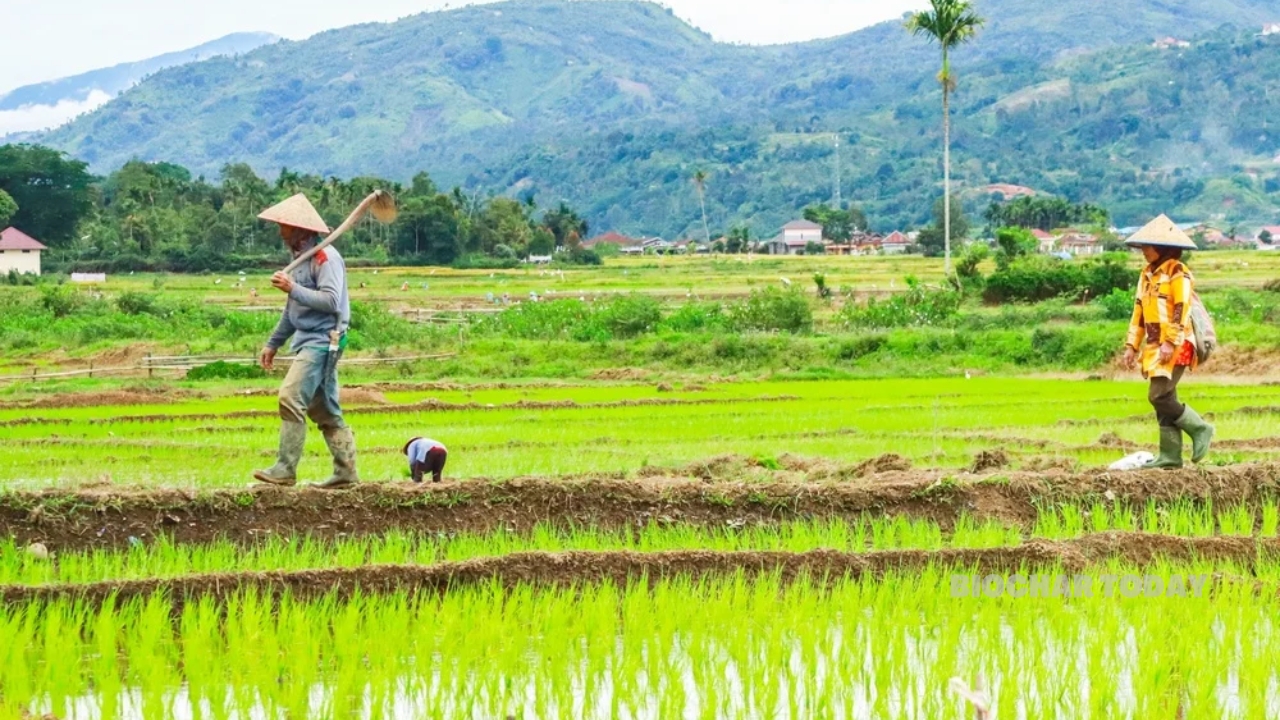
Straw Innovations, a United Kingdom-based agritech company, has announced a strategic rollout of its proprietary rice farming technology in India through a partnership with New Delhi-based clean-tech startup Takachar. Supported by Innovate UK and UKAid, the collaboration focuses on deploying the “Straw Traktor,” a specialized machine designed to manage rice straw residue. This initiative, set to launch in 2026 under the Energy Catalyst program, represents a significant technological transfer aimed at modernizing rice cultivation in one of the world’s largest producing regions.
The primary challenge addressed by this venture is the acute environmental and health crisis resulting from the open burning of paddy straw in North India. This seasonal practice is a major contributor to hazardous winter smog and results in the permanent loss of valuable biomassBiomass is a complex biological organic or non-organic solid product derived from living or recently living organism and available naturally. Various types of wastes such as animal manure, waste paper, sludge and many industrial wastes are also treated as biomass because like natural biomass these More. Additionally, the region’s agricultural sector is under increasing pressure from extreme weather patterns and degrading soil health. Farmers are currently trapped in a cycle where managing crop residue is cost-prohibitive, leading to burning as the only viable option despite its known detrimental impact on air quality and long-term farm productivity.
To combat these issues, the Straw Innovations system offers an integrated mechanical solution that processes straw directly in the field. The Straw Traktor collects waste straw, rotavates the land, and distributes biocharBiochar is a carbon-rich material created from biomass decomposition in low-oxygen conditions. It has important applications in environmental remediation, soil improvement, agriculture, carbon sequestration, energy storage, and sustainable materials, promoting efficiency and reducing waste in various contexts while addressing climate change challenges. More in a continuous operation. By utilizing Takachar’s technology, the system converts the collected biomass into biochar and renewable energy on-site, rather than leaving it to decompose or burn. This process not only eliminates the smoke associated with disposal but also links with energy-efficient milling systems to create a circular farming model that is accessible to smallholder farmers.
The anticipated outcomes of this technology are multifaceted, offering both economic and environmental gains. Reports indicate that the system could increase rice yields by as much as 65% and potentially enable a third annual crop harvest. Environmentally, the method is expected to reduce methane emissions from rice cultivation by fifty percent. Furthermore, by converting agricultural residue into marketable commodities such as compost and fuel, the initiative provides farmers with diversified income streams while simultaneously restoring soil fertility and reducing reliance on chemical fertilizers.

![Eucalyptus Wood Waste-Derived Biochar Achieves a Ninety-Eight Percent Removal Efficiency for Benzo[ghi]perylene in Vehicle-Wash Wastewater](https://biochartoday.com/wp-content/uploads/2026/10/SCIENCE-BLOGS-2026-2026-10-19T160523.703.jpg)

Leave a Reply