
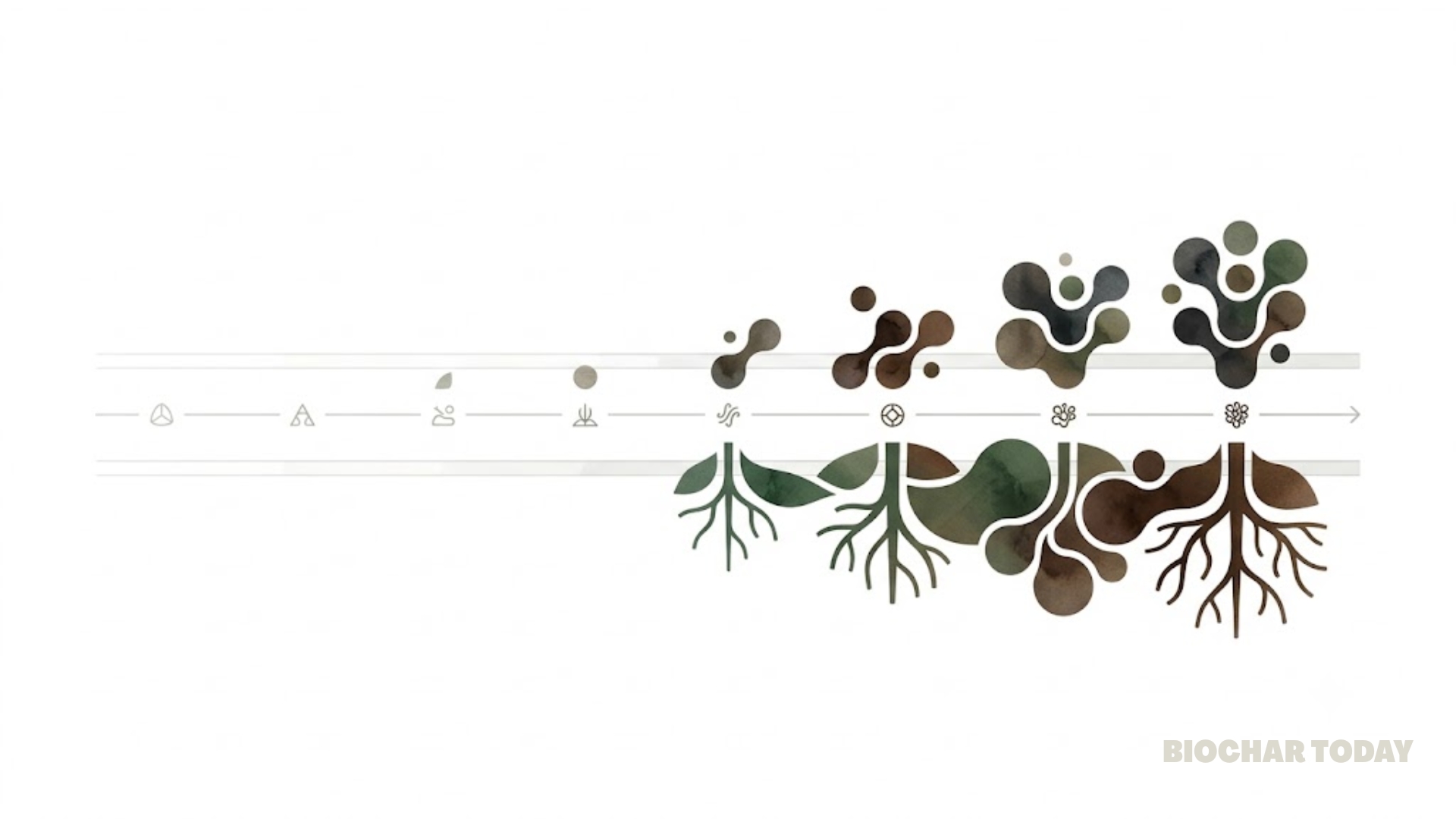
Key Takeaways
- A single biocharBiochar is a carbon-rich material created from biomass decomposition in low-oxygen conditions. It has important applications in environmental remediation, soil improvement, agriculture, carbon sequestration, energy storage, and sustainable materials, promoting efficiency and reducing waste in various contexts while addressing climate change challenges. More application continuously improves soil structure, aggregate stability, and long-term carbon storage in forest soils over a seven-year period.
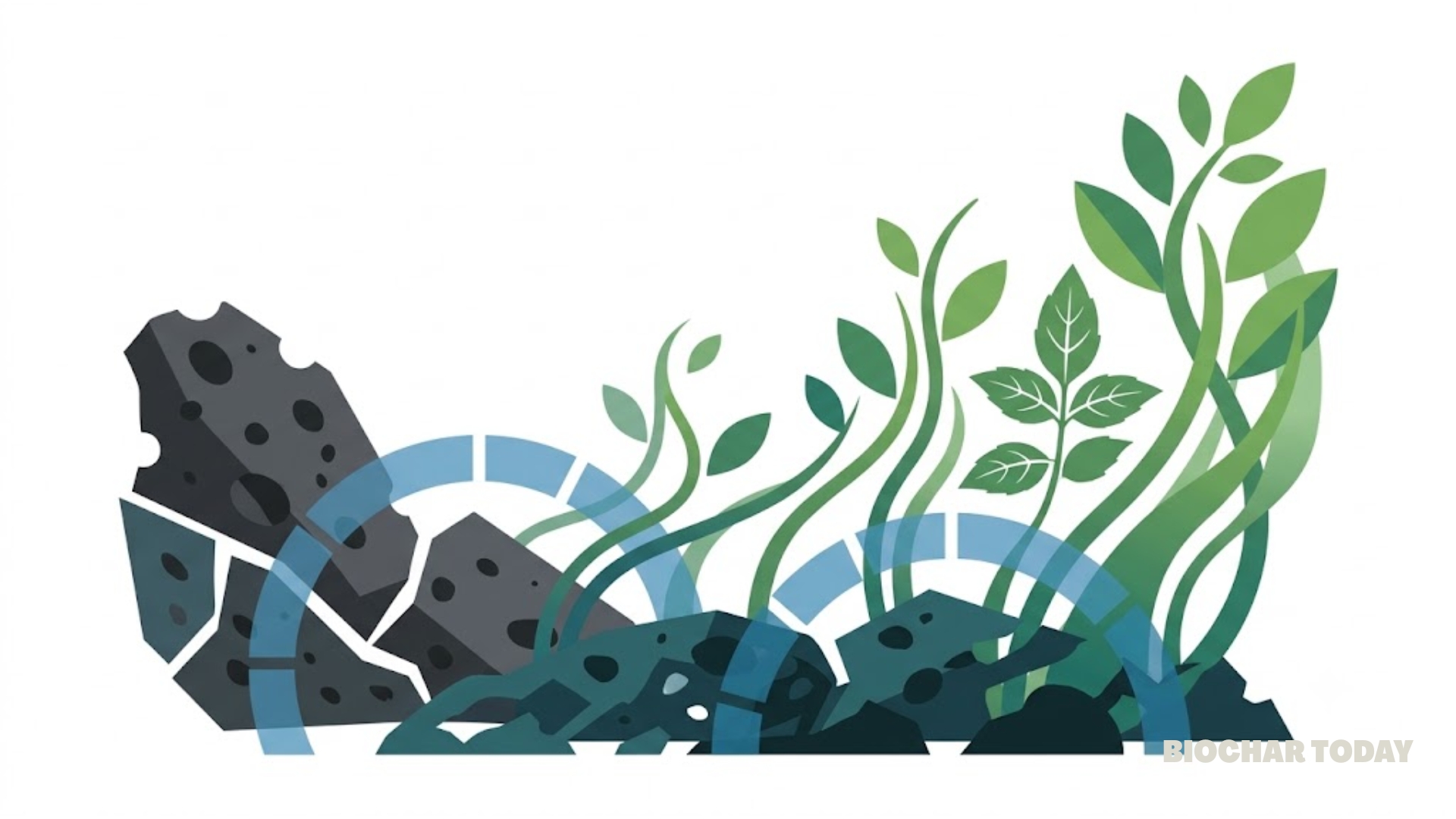
- Biochar facilitates the binding of smaller soil particles into large water-stable aggregates, enhancing the soil’s resistance to erosion.
- Applying biochar significantly increases both bacterial and fungal populations across all soil aggregate sizes, creating a healthier soil ecosystem.
- Higher application rates of four to six percent yield the greatest increases in both stable, long-lasting carbon and active carbon fractions.
- Biochar protects soil carbon through a dual mechanism: physical shielding within soil aggregates and biological conversion through soil microbes.
Forest soils represent one of the largest terrestrial carbon reservoirs on Earth, but intensive management and continuous forestry rotations frequently degrade soil structure and accelerate carbon loss. While traditional soil management strategies like chemical fertilization offer short-term nutrient boosts, they fail to deliver long-term carbon stabilization. Biochar produced through biomassBiomass is a complex biological organic or non-organic solid product derived from living or recently living organism and available naturally. Various types of wastes such as animal manure, waste paper, sludge and many industrial wastes are also treated as biomass because like natural biomass these More pyrolysisPyrolysis is a thermochemical process that converts waste biomass into bio-char, bio-oil, and pyro-gas. It offers significant advantages in waste valorization, turning low-value materials into economically valuable resources. Its versatility allows for tailored products based on operational conditions, presenting itself as a cost-effective and efficient More offers a porous, carbon-rich amendment that acts as a binding agent to physically protect organic matter and support microbial life. However, because most prior research has focused on short-term agricultural trials, long-term field data evaluating how biochar impacts forest soil aggregates, microbial communities, and specific carbon fractions over multi-year timescales has remained limited.
To address this knowledge gap, researchers conducted a seven-year in situ field experiment in a Eucalyptus plantation in northern Guangxi, China, evaluating biochar application rates ranging from zero to six percent. Soil analysis revealed that biochar significantly altered water-stable aggregate distribution, shifting fine microaggregates into larger macroaggregates measuring zero point twenty-five millimeters or greater. In the surface soil layer, macroaggregate proportions rose from fifty-six point eighty-six percent in untreated control plots to seventy-five point forty percent under six percent biochar treatment. Structural stability indicators, including mean weight diameter and geometric mean diameter, increased significantly with higher biochar doses, while the fractal dimension decreased, confirming enhanced physical resistance to soil erosion.
Biochar amendment also fundamentally transformed aggregate-associated microbial communities and carbon fraction distribution. Phospholipid fatty acid analysis showed that biochar significantly increased fungal and bacterial abundances across all aggregate size classes, with the highest microbial concentrations residing within large macroaggregates. Furthermore, biochar application increased all measured carbon fractions—including easily oxidized, dissolved, particulate, microbial biomass, recalcitrant, and black carbon—with the largest cumulative increases occurring in macroaggregates. High-dose treatments of four percent and six percent produced the most substantial improvements across physical, biological, and chemical soil metrics.
Structural equation modeling demonstrated that biochar promotes long-term carbon sequestration through a synergistic dual mechanism. First, biochar optimizes the physical architecture of soil aggregates, providing physical protection that shields organic carbon from rapid decomposition. Second, biochar stimulates soil microbial growth and adjusts community composition, activating the microbial carbon pump to convert labile carbon into persistent, recalcitrant carbon pools. These long-term findings prove that single-application biochar amendments offer a viable, highly durable strategy for building long-term carbon sinks and restoring soil health in fast-growing forest plantations.
Source: Liao, J., Shen, Y., Zhang, D., Sun, Y., Teng, Q., Xu, G., Luo, Y., Huang, K., Shi, H., Tan, Z., Chu, J., & Cao, Y. (2026). Biochar Application Improves Soil Aggregate Stability and Aggregate-Associated Carbon Fractions Through Microbial Community Regulation in Eucalyptus Plantations: A Seven-Year Field Experiment. Microorganisms, 14(8), 1847.


Leave a Reply