


Biochar, a product of sustainable biomassBiomass is a complex biological organic or non-organic solid product derived from living or recently living organism and available naturally. Various types of wastes such as animal manure, waste paper, sludge and many industrial wastes are also treated as biomass because like natural biomass these More thermal treatment, offers significant benefits for soil enhancement. This research delves into the influence of biochar on exchangeable cations, providing insights into its potential role in agriculture.
The study reveals that feedstockFeedstock refers to the raw organic material used to produce biochar. This can include a wide range of materials, such as wood chips, agricultural residues, and animal manure. More type plays a crucial role in determining exchangeable cations in biochar. Notably, sandy loam soil experiences a remarkable over 400% increase in exchangeable K+ after the application of 2% w/w biochar. Moreover, biochar derived from hardwood or cellulosic biomass enhances cation exchange capacity in clayey soils. Biochar emerges as a valuable tool for mitigating soil sodicity, while also demonstrating potential as a slow-release fertilizer by storing NH4+.
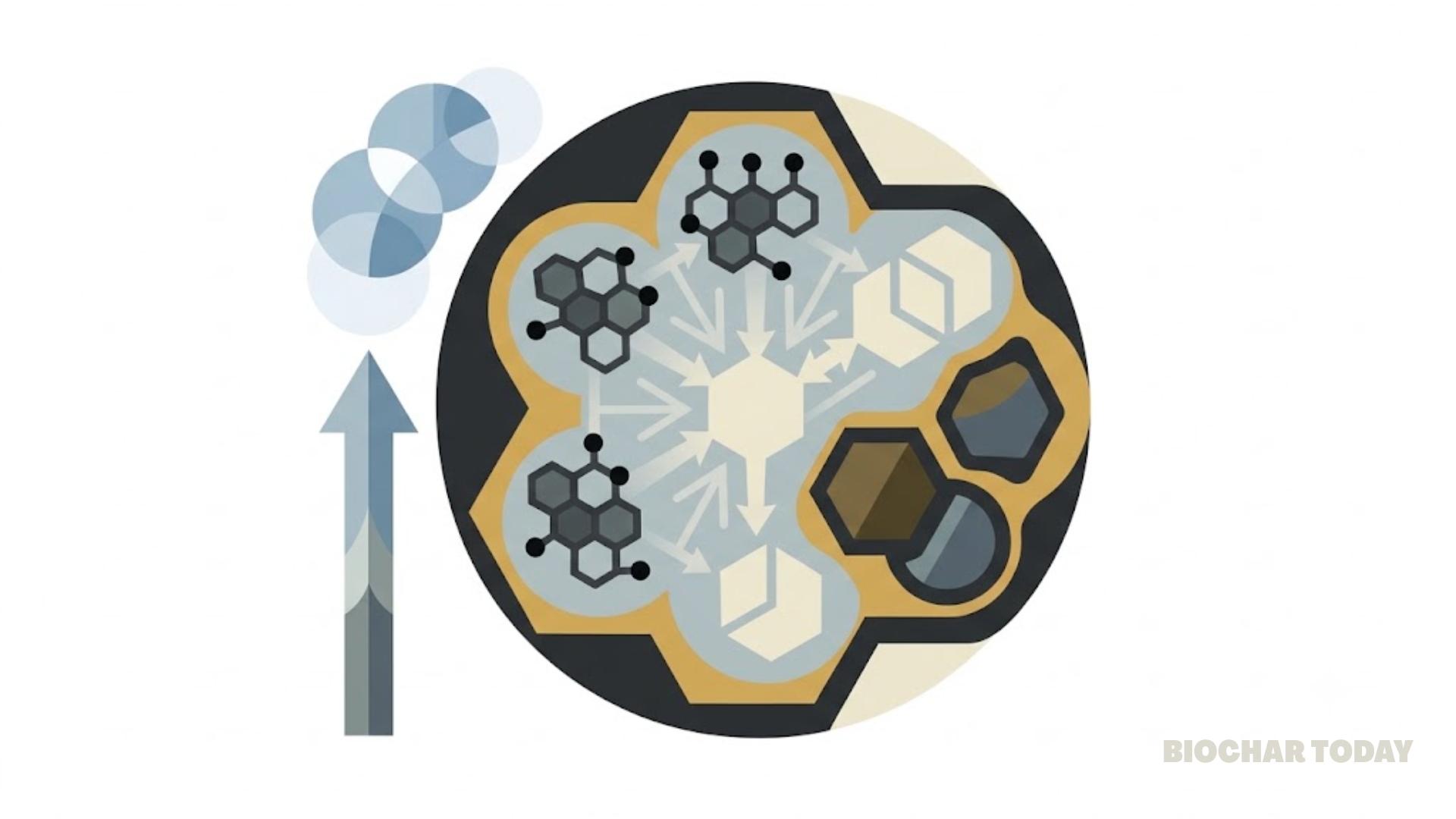
The research introduces a modified method to assess cation exchange, considering both base cations displaced by NH4OAc (CEC-BC) and NH4+ displaced by KCl (CEC-NH4+). Contrary to previous assumptions, the study challenges existing notions by revealing no correlation between CEC and surface area.
Various production variables, including pyrolysisPyrolysis is a thermochemical process that converts waste biomass into bio-char, bio-oil, and pyro-gas. It offers significant advantages in waste valorization, turning low-value materials into economically valuable resources. Its versatility allows for tailored products based on operational conditions, presenting itself as a cost-effective and efficient More temperature, feedstock, and aging, are found to impact biochar’s cation exchange capacity. Factors such as lower pyrolysis temperatures and natural aging are linked to higher CEC, while chemical aging decreases surface area but increases CEC.
Despite the substantial research interest, gaps exist in understanding base saturation and CEC in biochar. Limited studies explore diverse feedstocks and soil types, hindering optimal biochar-soil pairings. Standardized analysis methods for biochar CEC are deemed essential for large-scale applications.
In conclusion, biochar emerges as a promising soil amendmentA soil amendment is any material added to the soil to enhance its physical or chemical properties, improving its suitability for plant growth. Biochar is considered a soil amendment as it can improve soil structure, water retention, nutrient availability, and microbial activity. More, providing a sustainable solution for nutrient-rich and fertile soils. Continued research into standardized methods and diverse biochar-soil interactions is crucial for unlocking its full potential in agriculture.




Leave a Reply