
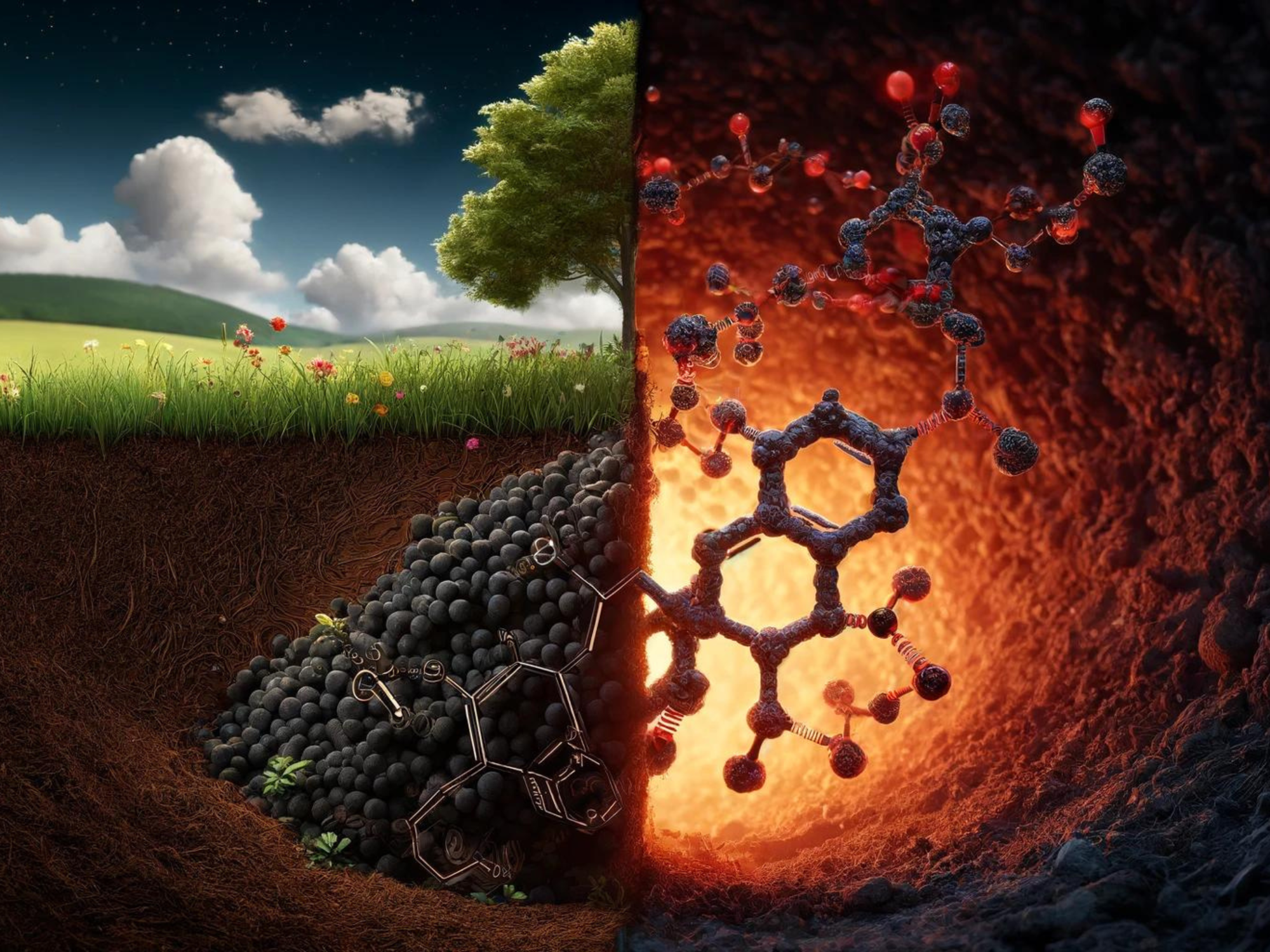

Biochar is a carbonaceous material used for soil amendmentA soil amendment is any material added to the soil to enhance its physical or chemical properties, improving its suitability for plant growth. Biochar is considered a soil amendment as it can improve soil structure, water retention, nutrient availability, and microbial activity. More and environmental remediation, derived from biomassBiomass is a complex biological organic or non-organic solid product derived from living or recently living organism and available naturally. Various types of wastes such as animal manure, waste paper, sludge and many industrial wastes are also treated as biomass because like natural biomass these More through pyrolysisPyrolysis is a thermochemical process that converts waste biomass into bio-char, bio-oil, and pyro-gas. It offers significant advantages in waste valorization, turning low-value materials into economically valuable resources. Its versatility allows for tailored products based on operational conditions, presenting itself as a cost-effective and efficient More under low oxygen conditions. While biochar has numerous environmental and agricultural benefits, it can also contain polycyclic aromatic hydrocarbons (PAHs), which pose potential environmental and health risks due to their toxic, mutagenic, and carcinogenic properties.
The content of PAHs in biochar typically increases with pyrolysis temperatures, particularly between 500–600°C. These compounds originate from various feedstocks and are influenced by pyrolysis conditionsThe conditions under which pyrolysis takes place, such as temperature, heating rate, and residence time, can significantly affect the properties of the biochar produced. More such as temperature, heating rate, and the type of carrier gas used. Understanding the formation mechanisms of PAHs, primarily through diels-alder condensation and free radical reactions, is crucial for developing strategies to minimize their presence in biochar.
Research has shown that the concentration of PAHs can be moderated by altering pyrolysis conditions. For example, adjusting the flow rate of the carrier gas and modifying the pyrolysis temperature have proven to be effective. Methods such as chemical modification and co-pyrolysis have also been explored to reduce PAH levels, although these can sometimes increase the concentration of more toxic PAH compounds, indicating a trade-off in mitigation strategies.
Given the variable impact of PAHs based on their molecular weight— with low molecular weight PAHs forming at temperatures below 500°C, and high molecular weight PAHs at higher temperatures— it is evident that comprehensive risk assessments are essential. These assessments should consider the total and bioavailable concentrations of PAHs in biochar to evaluate their ecological and health impacts accurately.
Future research should focus on the fate of PAHs in biochar, particularly how they interact with the environment once the biochar is applied to soil. Studies should also explore the effectiveness of remediation strategies in real-world applications to ensure the safe use of biochar in agriculture.
In conclusion, while biochar remains a promising tool for environmental management, the associated risks of PAHs require careful consideration and management through scientific research and technological innovation, ensuring its benefits outweigh the potential harms.




Leave a Reply