
Singh, R., Naik, D.V., Dutta, R.K. et al. High surface area biocharBiochar is a carbon-rich material created from biomass decomposition in low-oxygen conditions. It has important applications in environmental remediation, soil improvement, agriculture, carbon sequestration, energy storage, and sustainable materials, promoting efficiency and reducing waste in various contexts while addressing climate change challenges. More for the removal of naphthenic acids from environmental water and industrial wastewater. Environ Sci Pollut Res(2024). https://doi.org/10.1007/s11356-024-34127-7
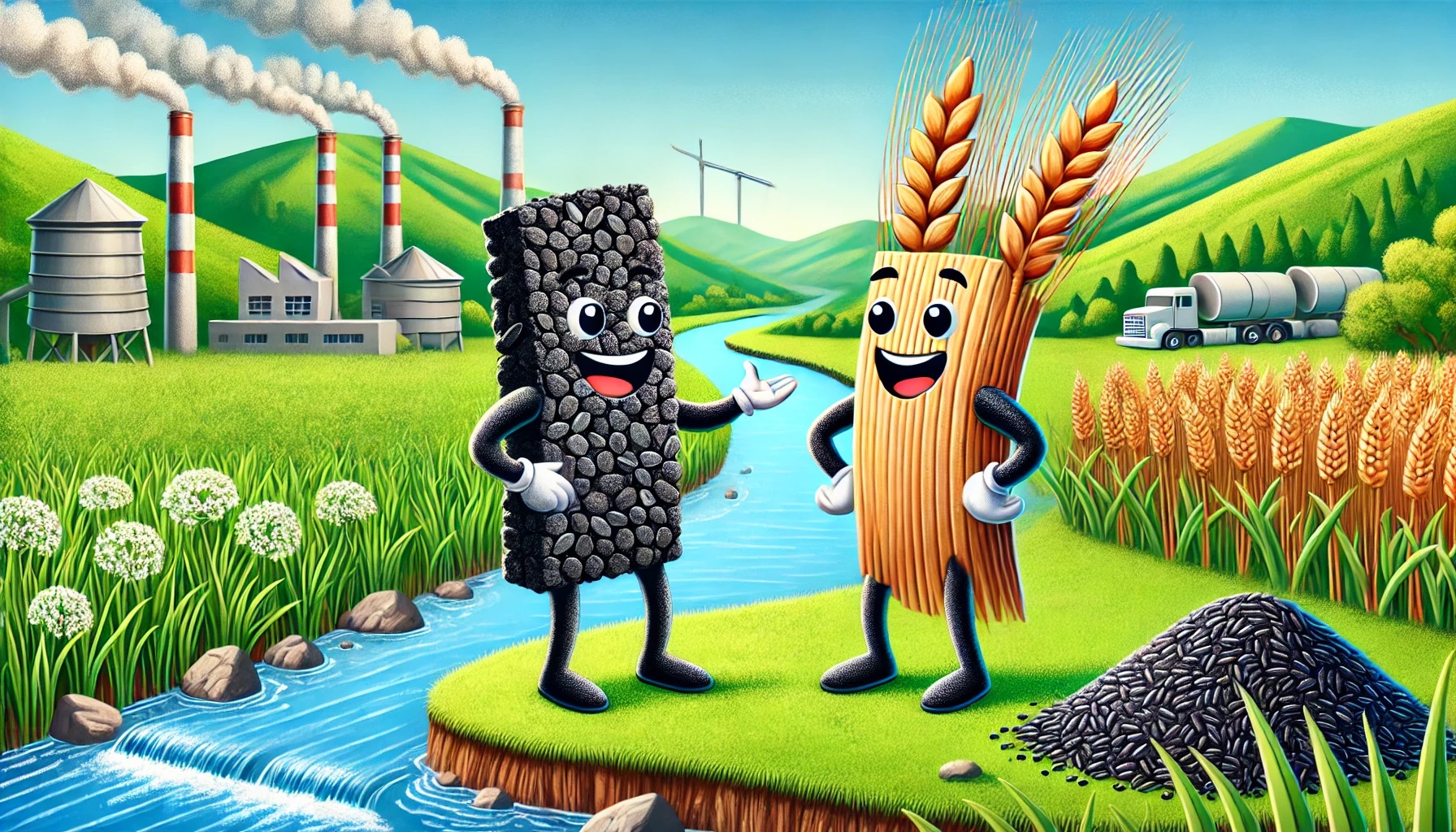
Researchers have found a way to turn rice and wheat straw, common agricultural waste products, into effective biochar adsorbents to remove naphthenic acids from water. By using an alkali treatment method, they significantly increased the surface area of biochar, reaching 2252 and 2314 m2/g for rice and wheat straw, respectively. To optimize the adsorption process, benzoic acid served as a model compound, achieving maximum adsorption capacities of 459.55 mg/g for rice straw biochar and 357.64 mg/g for wheat straw biochar.
The adsorption process was identified as exothermic, with low Gibbs free energy indicating physical adsorption. Kinetic studies showed the adsorption followed pseudo-second-order kinetics with adsorption capacities of 200 mg/g for rice straw and 194 mg/g for wheat straw. Remarkably, these biochar adsorbents maintained their efficiency for up to ten regeneration cycles, demonstrating good recyclability.
Tests with real-world samples, such as river water and industrial effluent spiked with naphthenic acids, confirmed the biochar’s effectiveness. The rice and wheat straw biochars removed 130.3 mg/g and 74.6 mg/g of naphthenic acids, respectively. Various interactions, including weak van der Waal’s forces, pore filling, π-π stacking, and ionic interactions, facilitated the adsorption process.
This study highlights a cost-effective and environmentally friendly method to utilize agricultural residues for removing pollutants from industrial wastewater, particularly from petroleum refineries.


![Eucalyptus Wood Waste-Derived Biochar Achieves a Ninety-Eight Percent Removal Efficiency for Benzo[ghi]perylene in Vehicle-Wash Wastewater](https://biochartoday.com/wp-content/uploads/2026/10/SCIENCE-BLOGS-2026-2026-10-19T160523.703.jpg)

Leave a Reply