
RESEARCH SUMMARY: Boriwal (2023) Experimental Investigation for Humic Acid Extraction from Parthenium Derived BiocharBiochar is a carbon-rich material created from biomass decomposition in low-oxygen conditions. It has important applications in environmental remediation, soil improvement, agriculture, carbon sequestration, energy storage, and sustainable materials, promoting efficiency and reducing waste in various contexts while addressing climate change challenges. More. The Pharma Innovation Journal, Vol. 12. https://www.thepharmajournal.com/archives/2023/vol12issue11S/PartF/S-12-11-53-779.pdf
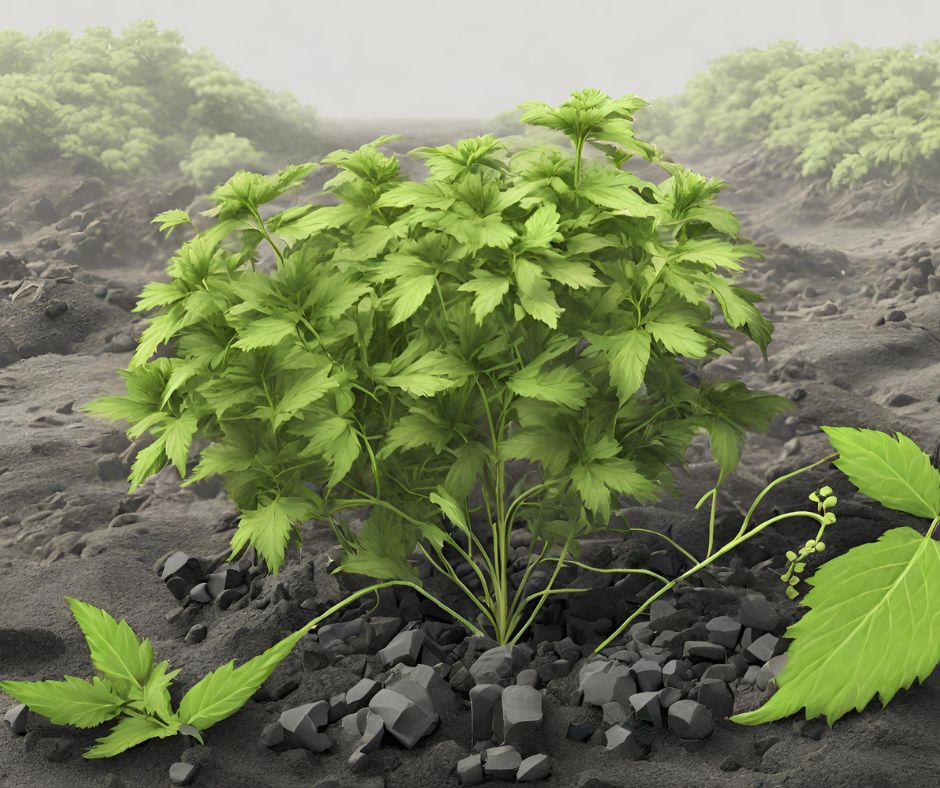
Parthenium weed is a major threat to biodiversity and human health in many parts of the world. This study explores a promising approach for managing this weed: converting it into biochar and humic acid, both valuable resources for agriculture and environmental remediation.
The research used a portable pyrolyzer to convert Parthenium biomassBiomass is a complex biological organic or non-organic solid product derived from living or recently living organism and available naturally. Various types of wastes such as animal manure, waste paper, sludge and many industrial wastes are also treated as biomass because like natural biomass these More into biochar at temperatures between 450°C and 600°C. The biochar produced had a remarkably low moisture content (4.61%) and a high volatile matterVolatile matter refers to the organic compounds that are released as gases during the pyrolysis process. These compounds can include methane, hydrogen, and carbon monoxide, which can be captured and used as fuel or further processed into other valuable products. More content (74.69%), indicating its potential for various applications.
Furthermore, the study investigated the extraction of humic acid (HA) from the Parthenium-derived biochar using a hydrothermal method. The HA yield was approximately 11%, demonstrating the feasibility of this approach.
These findings suggest that Parthenium weed can be transformed into valuable biochar and HA, offering a sustainable solution for managing this invasive plant and improving soil health.
Key takeaways:
- Parthenium biomass can be converted into biochar with desirable properties, such as low moisture and high volatile matter content.
- HA can be extracted from Parthenium-derived biochar with good yield using a hydrothermal method.
- This approach offers a sustainable way to manage Parthenium weed and improve soil health by adding valuable biochar and HA.
Further research:
- Investigate the specific applications of Parthenium-derived biochar and HA in agriculture and environmental remediation.
- Optimize the biochar production and HA extraction processes for scalability and cost-effectiveness.
This research provides a promising avenue for managing Parthenium weed and turning an environmental problem into a valuable resource. By exploring the potential of Parthenium-derived biochar and HA, we can develop sustainable solutions for agriculture, environmental protection, and waste management.



Leave a Reply